

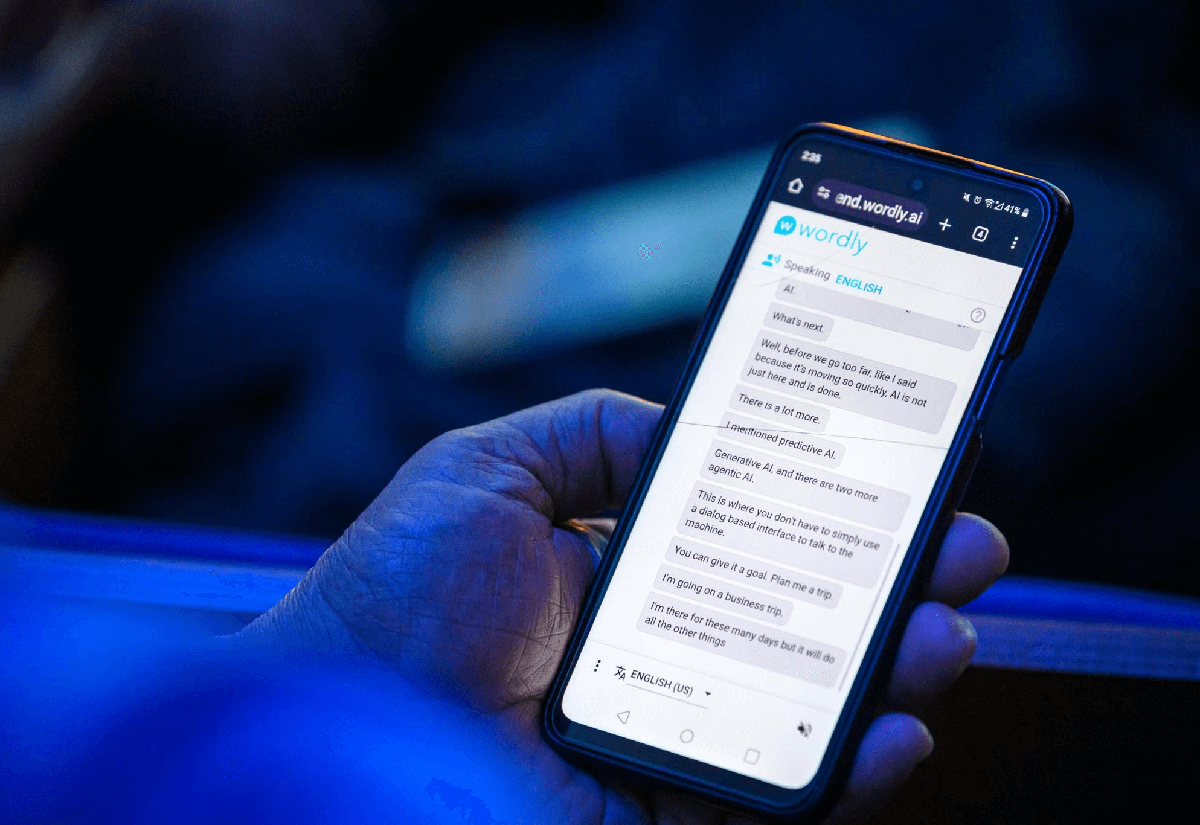
 As b-to-b audiences become increasingly international, and brands prioritize accessibility and inclusivity, real-time AI language translation is becoming a powerful addition to the event marketer’s toolkit.
From traditional, large-scale conferences to sales kickoffs and beyond, companies are investing in AI-powered translation tools and platforms designed to enhance engagement on-site, and save time and resources behind the scenes. And for some audiences, it’s becoming an expectation.
“If it’s an industry conference, it could be the fact that you’ve truly got people coming in from a wide range of locations around the world,” says Dave Deasy, cmo at AI translation company Wordly. “Or, in a lot of cases, you simply happen to have people that maybe aren’t traveling far, but their primary language is different than the language the event’s being held in. And, whenever you’re talking about internal events, most companies do have employees around the globe.”
The technology isn’t foolproof yet—platforms haven’t fully mastered things like tone and niche contextual references. But according to the experts we spoke with, it’s a game changer that is only becoming more accurate, and more essential, with time.
The other good news? They say the majority of the solutions on the market won’t break the bank, and the software-based options are a cinch to set up.
Read on for more pro tips and insights on leveraging AI language interpretation tools, and all of their supplemental features, in your b-to-b events.
INCLUSIVITY & ACCESSIBILITY
One of the obvious advantages of AI-powered translation is that it enables organizers to easily create a more inclusive experience for attendees who don’t speak the language the event is being presented in, which translates to engagement. It’s hard to keep the interest of audience members who don’t fully grasp the messaging.
What’s more, some translation platforms include ASL within their language services, which makes events more accessible for attendees who are deaf and hard of hearing.
“Inclusivity, in terms of empowering deaf or hard-of-hearing [attendees], is very important because we want to hear all voices—not just those who are able or are privileged enough to speak English or any other language that we offer,” says Aleksander Alski, head of region, USA & Canada, at translation technology company Vasco Electronics.
CULTURAL SIGNIFICANCE
While inclusivity is a core benefit of AI-powered language translation, leveraging the tech for cultural impact can be equally important.
“If you’re doing a keynote for a multinational audience, there’s an expectation that, at least in the languages where it matters culturally, it’s being broadcast,” says Brad Rankin, associate director-technical architecture at Opus. “So it’s not as much about the accessibility aspect of it as it is around the cultural significance of presenting something locally.”
TECHNICALITIES
There are a number of technical details to consider while developing an AI-based translation strategy, including the number of people in attendance, which languages will be represented in the audience and how many sessions or presentations will be taking place simultaneously. “There are certain limits to all the solutions that exist on the market, so that’s extremely important,” explains Alski.
HUMAN SUPERVISION
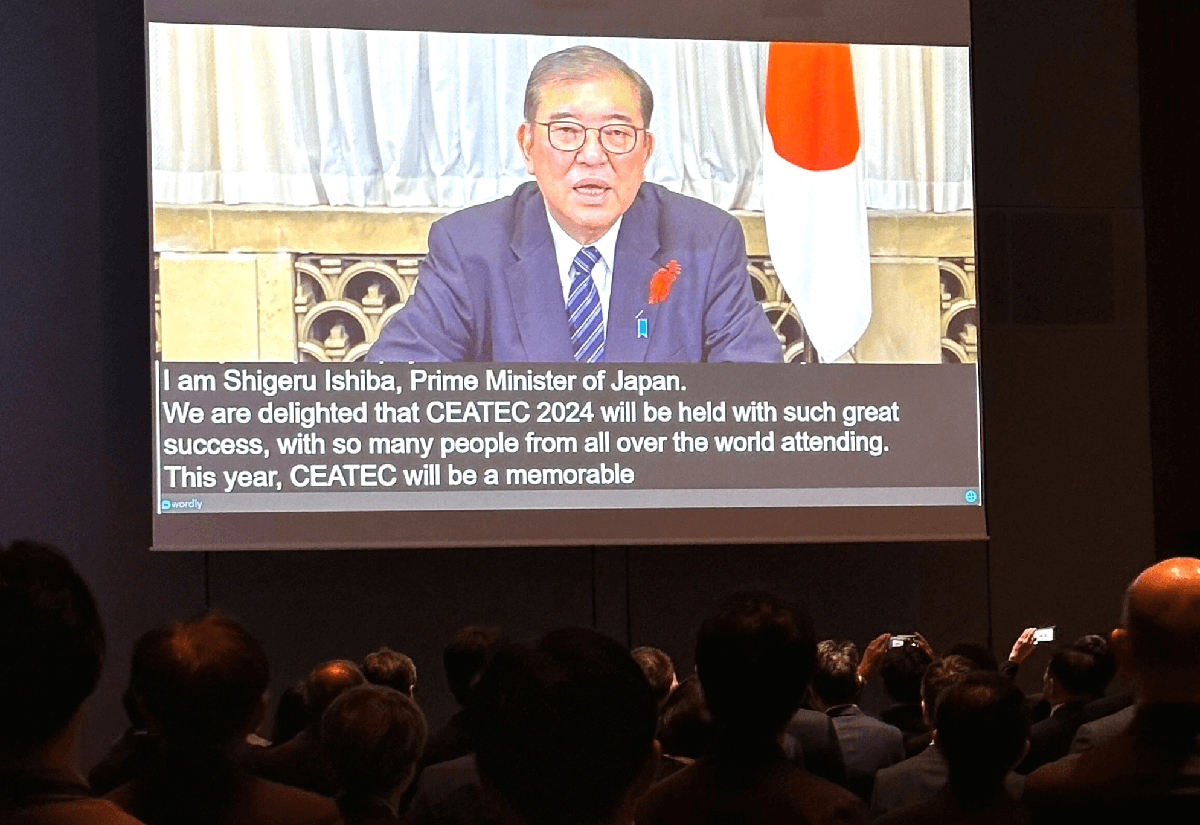 The engineers behind most AI translation platforms are on a mission to provide event organizers with autonomous tools that they can essentially “set and forget” without the need for human supervision.
“The whole idea is to make our customers independent,” says Alski. “And the biggest value of our solution is that it is extremely easy to set up. It takes literally a minute to create the event in your app and generate the QR code. And after you do that, there is basically nothing else you have to do.”
But some experts argue that until the technology is perfected, there should always be a human overseeing the process. It’s all fun and games until AI pronounces the ceo’s name wrong.
“The promise that AI technology makes to us over and over again in all aspects of our lives is that it’s going to do it as well or better and more efficiently than humans—and sometimes that promise is kept, sometimes it’s not,” says Michael Dalton, svp-strategy at LEO Events. “We are responsible for being skeptical about that as emerging technology is explored and embraced… Unless it’s perfect, without fail, we will always provide human oversight.”
Rankin agrees, pointing to a recent instance in which an AI translation service failed to grasp the context of the content, and misrepresented the word “Shogun,” which in Japanese translates to a military commander. The interpretation was completely irrelevant.
“I don’t see a world at this point in time where you’re using AI translations without some sort of human oversight,” he says. “There’s context and names that needs to be accurate. No event planner is going to broadcast a localized keynote without oversight.”
DATA & PLATFORM SECURITY
It’s easy to get swept up in the outward-facing benefits of using AI language translation services, but the reality is that the platforms are capturing data in the background, and that makes selecting a trusted platform, and complying with data privacy regulations, imperative.
Platforms like Wordly, for instance, are supported by ISO 27001 certification and SOC 2 Type II compliance, ensuring attendee data, session content and communications meet top security standards. Compliance with Europe’s GDPR is also critical.
“It’s no different than a show,” says Phillip Johnson, vp-production at LEO Events. “There are the flashy screens and lights and what have you, but the real operation happened in the pre-production stages and on the back side of that drape that the audience never saw to make sure that it was successful in the rollout and implementation.”
And as the prevalence of AI translation services grows, and more companies offer it, experts also advise fellow event profs to do their due diligence when selecting a platform.
“Some type of AI model inference requires data to be transferred to a different location before the model can give an accurate response,” says Sebastien Jouhans, technology director at Jack Morton. “So the data leaves the premises, is sent somewhere else, comes back to you, and then gets sent to the user. So it’s understanding how the model works and the technology behind it. You don’t want your data to be exposed to a third party or bad actors.”
CUSTOMIZABLE GLOSSARIES
Every industry has its own jargon, references and framework, which can trip up language translation systems if there’s no option to teach them unique terminology ahead of time. With that in mind, selecting an AI model that offers customizable glossaries as part of the translation service is key, particularly for fields with intricate lingo, like health care.
“We do a lot of medical conferences, and one of the big questions we often get is, ‘We have all these very complex terms that aren’t commonly used, or we have a lot of internal names for products, can your product handle that?’ And we do it with our customizable glossary,” Deasy says. “And then that helps significantly increase the accuracy.”
INTELLIGENT SUMMARIES & REUSABLE CONTENT
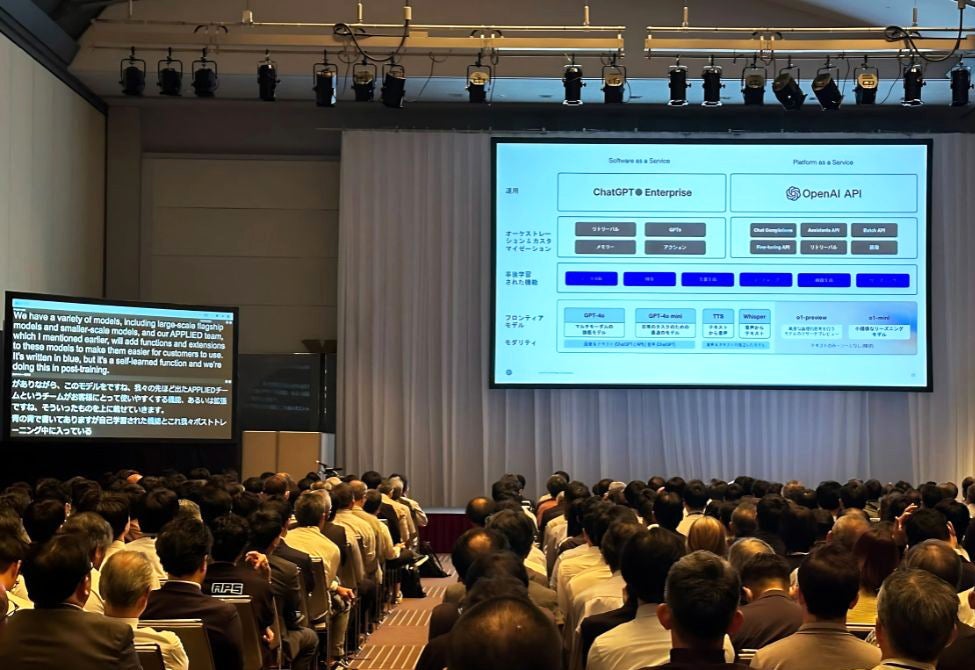 Beyond the language translation service itself, many platforms offer supplemental features, including access to full transcripts, as well as captions and audio files that can be repurposed for video content.
The most impactful tool, however, may be the intelligent summaries offered by many platforms, which provide companies an efficient way to repurpose, and hyper-target, their content. Voxo, for example, can record sessions, and within minutes, deliver a branded PDF summary of the presentation.
“We’re seeing those as opportunities to not only tailor session summaries to the attendee based on who they are, but also to localize. Where, rather than localizing word for word what is happening live, there are supplemental downstream opportunities to localize key pieces of information and tailor that information to who individuals are,” Rankin says.
He adds: “We’re at the phase now where we have the tools to interpret and understand and process all of this data. So what I’ve seen consistently across clients is that there’s at least an organized, strategic effort on how to streamline data flows so that they can be processed really efficiently by a lot of these AI tools.”
LOOKING AHEAD
As the technology currently stands, there are still improvements to be made. No AI language translation service on the market is 100-percent accurate, some latency issues persist, and the ability to capture nuances like tone, humor, emphasis and contextual references is far from perfect. But the tech is improving rapidly, especially considering how scarce it was just 12 months ago.
“Because of what you can do within the AI landscape, things are getting better and more accurate all the time,” Jouhans says. “I think clients would trust this approach more now than they would have a year ago. I’d say we’ve used it four times in the last 12 months—and before that, it was not even part of the conversation.”
At the end of the day, the decision whether or not to implement AI language translation services at events should be made on a case-by-case basis. But for any brand catering to an international audience, the experts say it should be a top consideration.
“The adoption of AI has made those decisions easier to make. It is often a drop in the bucket, budgetarily, given the value that you receive,” Dalton says. “Because if you fail to serve even a small number of audience members in this basic way, when it comes down to comprehending the material and the content that you’re trying to distribute in a b-to-b environment, you’re effectively not having the conversation they came to your event to have. So when you portray the risk/reward in that way, it’s a pretty easy decision.”
Photo credits: iStock/Andrey Suslov; Wordly