

The Participants:
• Keri Ibbitson, Director-Scientific Engagements and Events, Danaher
• Meredith Diehn, SVP-Marketing, Goodwipes
• Shanise Anderson, Director- Global Equity and Brand Experience, Neutrogena
• Ashley Jex Wagner, Head of Live Experiences, Supercell
• Becky Katz Davis, Head of Consumer Communications and Events, Uber
• Jenn Cammarota, Associate Director-Partnership Activation, Verizon
What areas of opportunity are biggest for event marketers right now?
SHANISE ANDERSON: Creating experiences that are just as useful as they are inspiring to attend. So, it’s not just about how the brand shows up in the experience, it’s about how it adds real value in ways that feel personal and lasting, as that’s what makes the experience truly memorable. For me, it’s activations like hydration stations at outdoor festivals or giving away scrubs at the American Academy of Dermatology annual conference. When giveaways evolve from throwaways into items people can actually use every day, it creates a moment of surprise, delight and impact.
KERI IBBITSON: To build off that, you have to be doing something that gives [the attendee], at least in our space, a return on time. We engage health care professionals, and for them especially, time is such a valuable commodity. It’s typical in events for us in the corporate space to look at what the commercial impact is, but some of our events are built around developing thought leadership in scientific spaces. When we look back at an event, it comes back to did our attendees feel like they walked away with actionable insights and did they feel like this was a really good use of their time?
People are limited to travel to certain activities now, too, and so they really can only pick a couple of things a year where they might be able to go and learn. While you’re setting your own objectives, you have to really be thinking about your audience and whether you’re delivering something that helps lift your voice above all the other noise.
ASHLEY JEX WAGNER: I agree. How we measure return on impact, on our experiences, is an area that can grow. There are a lot of new frameworks and new methods that can help to tie shorter-term business goals—more visibility, awareness, brand lift to long-term strategic goals, things like brand loyalty, brand equity over time. And it’s been very difficult to measure. There are a lot of tools and tricks, but they don’t always align. Sometimes what you need is dwell time. You need time and space. And so, I think that’s an opportunity across the industry: how we get tighter and crisper about connecting those two sides of it. You think about experiential as the pipeline at the top that can lead toward long-term fandom and brand loyalty. How do you track and measure that across it with quantitative and qualitative metrics?
JENN CAMMAROTA: Events are no longer just about presence; they’re about creating connection at scale. The biggest opportunity I see is integrating brand storytelling seamlessly into cultural touchpoints, from live music and sports to fashion and entertainment. Leveraging partnerships and technology, events can move from one-off activations to ongoing ecosystems that build loyalty. At the Super Bowl this year, we created House of Verizon which combined football, music and fashion under one umbrella, and was something we had not done before. It was this connection point around our message that we power and empower people to live, work and play, and it drove home that, ultimately, we are a lifestyle brand because we allow and enable people to do the things that they love. It’s possible to make connections across all these passion points, and create this incredible through line, with experiential.
BECKY KATZ DAVIS: The most memorable events are the ones that resonate deeply with guests, whether it’s a well-timed nod to a cultural moment, a special connection to the host city, or an unexpected performance. We have to always strive to deliver those money-can’t-buy experiences that leave an indelible mark on our Uber One members and guests.
MEREDITH DIEHN: I might be biased working for a personal hygiene company. But bathrooms at events are generally an underwhelming, if not unpleasant, experience. It’s been really fulfilling to activate for Goodwipes, where we focus on elevating the bathroom experience for guests, to solve a real pain point for consumers.
What’s keeping you up at night?
JEX WAGNER: For me, doing fan experiences, it’s the demand of people’s attention and time. How do you stand out? How do you make things that are truly interesting and unexpected that people will see and talk about? And it’s difficult right now. There’s so much content out there in the space. We’re not even competing with other events; we’re competing with games, with media, with TV shows and movies, and films and sports. So, it becomes a challenge in how you cut through. The solution stems from deeply understanding your audience, knowing what their motivations are, knowing how they want to engage with a brand, and then finding those fun ways to connect.
IBBITSON: Where we want to spend our dollars and where we want to spend them smartly. And yes, forever defining how we measure success, and when that pipeline isn’t linear, how do we do that in a way that is compelling to justify what it takes to do events? Events, especially in person, are expensive and always going to be expensive, and it’s easy to look at a number on a spreadsheet and say, “Oh, we have to cut 10 percent off of that,” and that 10 percent can be debilitating sometimes, right? Or it can be the difference in an experience and the level of quality. And so being able to justify every dollar and have a really strong plan of how we’re going to define and mark success against that spend is a constantly evolving conversation.
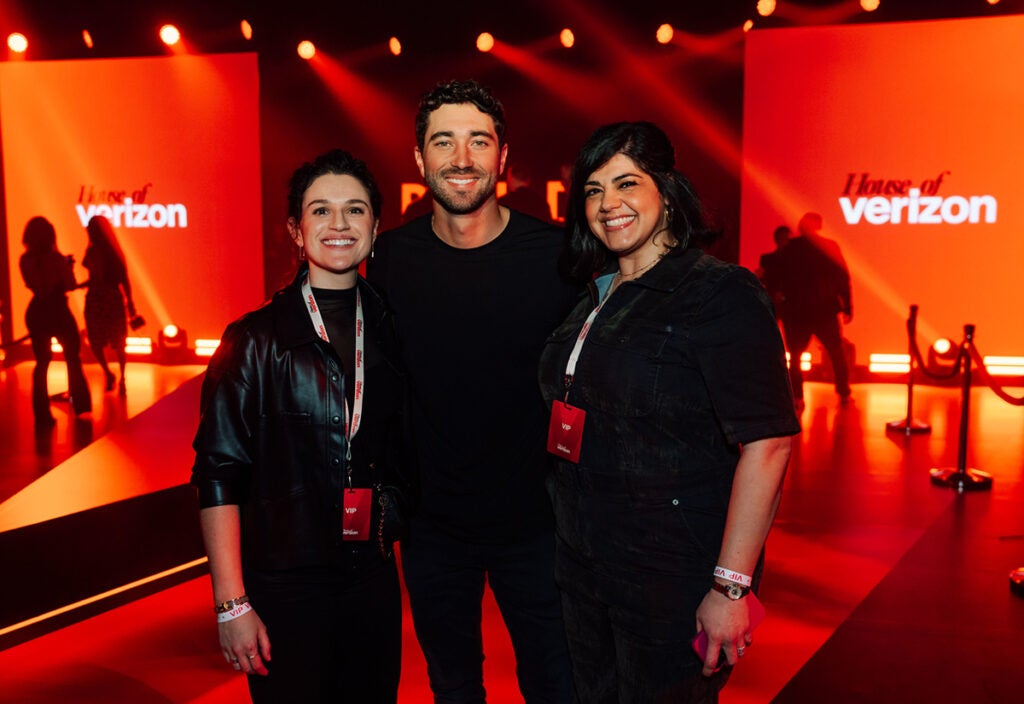
Courtesy of Jenn Cammarota
“Events are no longer just about presence; they’re about creating connection at scale. The biggest opportunity I see is integrating brand storytelling seamlessly into cultural touchpoints…”
–Jenn Cammarota, Associate Director-Partnership Activation, Verizon
ANDERSON: Expectations are rising, but budgets, teams and attention spans are shrinking. It really comes down to prioritizing what matters most and keeping the consumer at the center of everything you do to help you make the right choices on what will drive impact. Experiences are not just about creativity or flawless execution, it’s about how we use our time, talent and investment to drive real results, while ensuring people feel genuinely connected to the brand.
CAMMAROTA: The challenge is balancing creativity with measurement. Brands want breakthrough, buzzworthy moments, but they also want proof those experiences drive business results. Finding ways to translate emotional connection into hard ROI is an ongoing hurdle for marketers. We’ve shifted toward measuring brand love and earned media, the positive or neutral sentiments we’re getting. A big ask that we have made with our partners, like the NHL and the NBA, is around leveraging their channels to reach our fan bases. That engagement that we can get with customers by reaching them organically through the leagues and teams they love is huge.
KATZ DAVIS: I think the key indicator of a great event is the way that it makes a guest feel—this goes well beyond guest response and attendee metrics. The atmosphere, design, f&b, programming—every element contributes to an energy that simply can’t be translated into a hard metric because, ultimately, events are an art and not a science.
Ashley, what is working working well for you as far as presenting success?
JEX WAGNER: We set ambitious goals grounded in data and insights. We use data to build our hypothesis for what success should be and set clear goals to measure the outcome. We also draw on benchmarks and past experiences, giving us both targets and room to evolve. Did we hit our goals, as well as achieve what we hoped to learn from the experience? Knowing that everything we do in events is an evolution, we’re constantly learning from our audiences, changing and adapting. Audiences expect us to adapt and evolve, as well. And so, if you’re not constantly coming into it with that approach, how can you really know when you need to change?
Personalization, immersive entertainment, AI… Are you tackling one or all?
CAMMAROTA: For us, AI is starting to play a role in personalizing customer journeys, whether that’s smarter ticketing, tailored content or predictive insights on what fans want most. Immersive experiences come to life when brands lean into culture and design moments people want to share—and AI and personalization can certainly make those moments feel uniquely theirs.
KATZ DAVIS: We ground our events in the overall experience, and we design them to be as immersive and personal as possible. Everyone’s time is precious, so when a guest chooses to spend their time at our event, we take that seriously and aim to exceed their expectations.
DIEHN: Our Goodwipes Porta Palace is as immersive as it gets. Strategically, we want to ensure that our brand events operate as a memorable and valuable brand experience beyond product sampling. We bring a fully customized mobile restroom trailer to many of our events. Not only can attendees get a chance to use our products, but the inside of each bathroom stall is like being immersed into the Goodwipes brand world.
ANDERSON: At Neutrogena, we have been blending personalization, immersive entertainment and AI together to create meaningful brand moments. Immersive experiences are most powerful when people feel part of the environment—fully engaged and connected. Influencers help personalize that experience by speaking directly to their communities in ways that feel real and relatable, often telling the brand story more authentically than we could ourselves. Last but not least, AI is a powerful accelerator. It helps us plan, optimize and spark creativity behind the scenes, but it never replaces empathy or consumer insight, as that human connection must stay at the heart of everything we do.
JEX WAGNER: We’re employing strategies across all three. I prefer to use the term “world-building” because we have these beautifully rich worlds of games that are already created, and players already inherently engage with them in certain ways.
So, for us, we think about every experience that we build as an opportunity to realize that world in the real world. And then we use those touchpoints of engagement to pull people deeper into a story. It’s mission-critical for us because that’s what players expect, that’s what fans expect, and if we can create that translation in a way that’s meaningful to them, it creates connection to our IP, but it also can create shared connections to each other. It’s really about how we center around this idea that immersive and world-building can help to further that connection. It changes the entire approach to how we even think about brand activations.
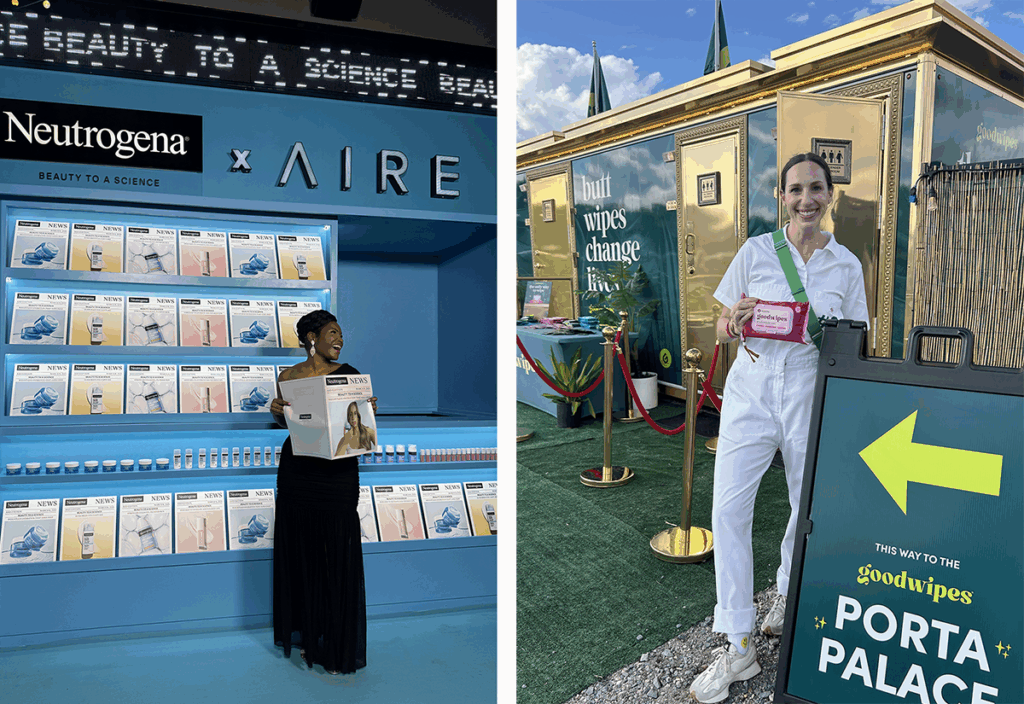
Courtesy of Shanise Anderson (left) and Meredith Diehn
Keri, the health care space inherently holds a lot of red tape. How do you navigate that while innovating?
IBBITSON: It’s one of the reasons we’ve stood up one of our own proprietary events, trying to personalize the story a little bit, meet them where their challenges are. Bringing them together with other leaders who are experiencing the same challenges that they are, which feels like influencer marketing on a different level. There’s nothing like getting in a room with somebody who’s having the same challenges day to day that you are. Women in Events here is an example. We’re all in completely different industries, but the foundation of some of what we go through is all the same. And the reason we participate is for the validation, the idea-sharing and the networking that comes from getting to spend time and ideate over topics with other people in your space.
And that’s the same thing we’re trying to do, is bring these people together to overcome common goals in really complex spaces with complex needs and never losing sight of the patient in front of us and what that impact is. It’s a different type of immersive experience. Not necessarily brand or consumer, but still telling these impactful stories and allowing health care professionals to place themselves in the center and understand where their impact is and what that ripple effect can be. And creating that environment for them to do so in a way that allows them to walk away feeling like we’ve helped them do something that’s actionable, or connected them to somebody that’s going to help them partner to do something life-changing in the development of a drug or a disease state. It’s huge, and it’s not quite like brand activations I’d done back in the day, but it’s still a really exciting thing to do.
Moving on to the workplace itself. There are four generations at work and at your events in some cases. What superpowers are you seeing the different generations bring to events?
JEX WAGNER: I’d say for Gen Z, our primary audience, and Gen Alpha as well, I’ve always been so impressed with how they’re disrupting our ways of working and challenging the norms of how we show up. You think about how Gen Z has really become champions of causes like mental health and how we approach that not only inside the workplace, but how we approach it with experiences.
CAMMAROTA: Gen Z brings a demand for authenticity and purpose; millennials push for balance and innovation; Gen X often bridges strategy with execution; boomers contribute deep institutional knowledge and relationship building. At the best events, these “superpowers” blend—innovation with wisdom, strategy with creativity. House of Verizon was an example of this, with ideas and conversations shared and had among different experiences across our team, and the result was awesome.
IBBITSON: We’ve heard a lot about reverse mentoring recently. We were actually just at an event for immunologists, and the demographic there was very young. A lot of them were students in the latter part of their education, getting ready for their turn to be in health care, and it was lovely to see there’s a different hunger, a different excitement that they bring to the table at events. This desire for learning. Ashley said it really well, there’s a disruption that they bring that I think is really refreshing and was exciting to see at this particular event.
Can we dig more into reverse mentorship?
IBBITSON: There was a lot of focus on reverse mentoring in this event, especially because a lot of students have been born with tools and technology that some of the previous generations, as much experiences as they have, are just not as familiar with and are not native to those tools. And so, there’s just as much that they can learn from each other. That’s something new we’re seeing where the traditional mentor-mentee status looks a little bit different. And now there’s this real openness to see if we can bring everybody’s superpowers together, both the expertise, but the native technology use and that open-mindedness. I think we’re in a really beautiful moment where those two places are going to be able to come to together better than before, and we’re really going to see some tremendous impact and changes in the workplace and events because of it.
ANDERSON: I think one of the strengths of this industry is how naturally it brings together multiple generations to contribute, collaborate and shape the final outcome. Younger voices bring bold creativity and digital-native instincts. Their superpower is pushing us to think differently and embrace new platforms and formats. At the same time, more seasoned professionals offer a depth of experience and perspective that helps us stay grounded and connect the dots between what’s worked before and what’s possible now. That blend of innovation and wisdom is what makes our industry so dynamic. It’s not just about generational diversity, it’s about how we harness those different superpowers to build something better, together.
JEX WAGNER: I think it’s important, too, to recognize the superpowers of millennials and Gen X as well. We’re kind of in the middle of these new ways of thinking, with institutional knowledge, but we can serve as that bridge. We remember time before the internet, we know how to translate, and how to connect different audiences and how to create that bridge across all four quadrants. Gen X are pragmatic stabilizers, really there to kind of help nurture, teach, coach and train these younger generations and how we should show up with what professionalism looks like, but also just be great at understanding where all of the different opportunities lie across all the different generations.
The event marketing profession has unique challenges, and sometimes there’s no clear trajectory beyond an event role. What has worked for you as far as growing your career?
DIEHN: Support networks with other fellow marketers have been a true lifeline through my career. I’m lucky to be part of a few great Slack groups that serve as great resources to bounce ideas, get feedback and share resources among other female marketers in the CPG industry.
IBBITSON: When I meet people who are stepping into events or are thinking about where their next best step is, I remind them that the beauty of being in events is we get the chance to wear so many hats. We see an entire marketing lifecycle through an event. We’re working cross-functionally. We get to see all these different facets of the organization at work. I’ve known plenty of people who have moved into product marketing roles, and they have really thrived getting to know a certain segment that they’ve been supporting in events. And then I’ve known people who are lifelong event people thriving in logistics and being that magician.
But then, it’s figuring out what that leadership role looks like. Every organization looks different depending on where you sit, whether you’re in a brand function, a comms function, a marketing function. But it opens the doors to a lot of things for you to explore what really speaks to you in your skill set.
ANDERSON: Women in events, whether they’ve been in the industry for one year or 10, are driving impact from end to end, touching every part of the experience. We’re shaping strategy, building partnerships, managing budgets, making decisions and bringing it all to life.
But when it comes to long-term career growth, it’s not just about recognizing that contribution, it’s about making sure women are being sponsored and advocated for, especially in rooms where they’re not yet present. I’ve seen how that kind of support can open doors and completely shift someone’s career path.
That’s been true in my own journey. A few years ago, a senior leader who was serving as a segment president at the time and had been a sponsor of mine was in a meeting where they were discussing a new global role to lead brand experiences at Neutrogena. It was a position that had never existed before. I wasn’t in the room, but she spoke up and recommended me based on my extensive marketing background and ability to collaborate effectively across teams. That moment changed everything—all because advocacy and opportunity came together. It also speaks to the importance of creating visible pathways for advancement. Regardless of what department the event role sits in, it shouldn’t be seen as a stepping stone, but instead as a destination for leadership.
JEX WAGNER: You read reports like the “ElevateHER” report, which found that women hold a majority of roles across events, but we only hold 16 percent of the leadership positions. And so it’s not always easy to see what’s my path, what’s my personal journey toward my long-term goal. And I think where we could redefine expectations is how we are teaching, coaching and training people to find their own personal path, whether that is down a path of more events and logistics or going into more of a compliance role.
Keri, what you said really resonated with me because everyone’s journey is different. My journey was definitely in different iterations. I’ve also been made redundant multiple times and had to pivot and change things. And I think sometimes when you’re in the event industry you get a little bit siloed into this event scope, or always the planner, always the doer, never a strategic mind, never a voice that could help to have impact across the entire marketing funnel. And so, I think if we had more resources where we could help women really define the path that they want to go, and they see themselves represented in roles where they can make an impact, I think we’re going to actually see a little bit more change.
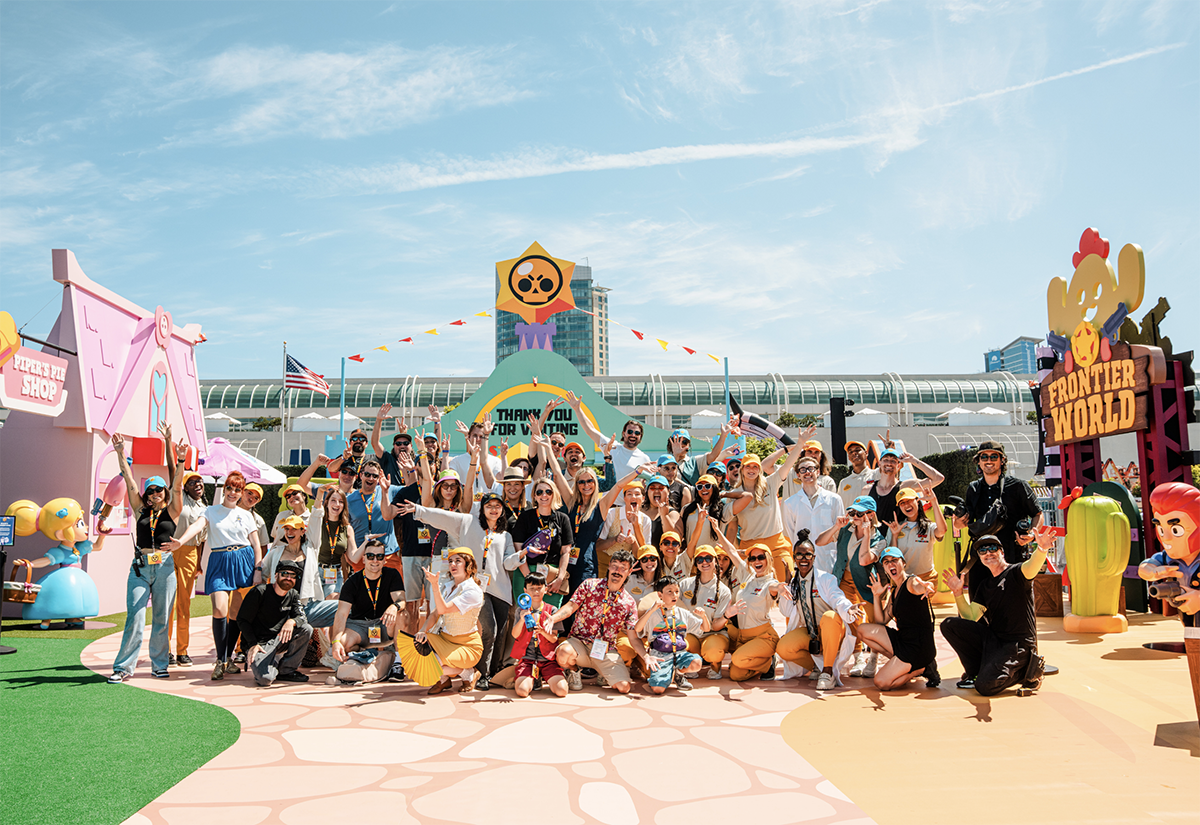
Courtesy of Ashley Jex Wagner
“You think about experiential as the pipeline at the top that can lead toward long-term fandom and brand loyalty. How do you track and measure that across it with quantitative and qualitative metrics?”
–Ashley Jex Wagner, Head of Live Experiences, Supercell
Clearly, mentorship is critical to a fulfilling and successful career in events. What best practices can event marketers lean on to be better mentors?
ANDERSON: As a best practice, mentorship should go beyond advice. It should include sponsorship and advocacy. At every stage of my journey, I’ve had mentors who gave me the confidence to stand by my ideas and made sure my name was part of the conversation, even when I wasn’t in the room. That kind of support opens doors and can completely shift someone’s career path. Having experienced that firsthand, I’m focused on paying it forward. I spend most of my time making sure other women who are just as brilliant get into the room, onto the right projects and in front of the right leaders as that visibility can accelerate their career.
IBBITSON: Shanise, you nailed it on the sponsorship side. I recall a big event I delivered, and my cmo introduced me to our ceo and said, “Hey, Keri helped deliver this for us.” And that light moment of recognition, the way it still sits with me 10 years later, is crazy. But it was big. And again, there have been those who have spoken my name in rooms that I haven’t been in, and now I try to do the same knowing what those little moments of recognition can mean to somebody.
JEX WAGNER: I very much feel the same way. I will say I have seen the biggest growth in my career when I’ve had someone who’s championing me along the way, advocating for me, clearing a way where I could do my best work, but then also being willing to have the tough conversation, giving me the feedback that I need to hear in the moment so I can grow. I’ve really valued that sense of stewardship, that you want to pay it forward. Somebody created this opportunity for me, they opened their hearts and were kind to me, and saw something in me that I didn’t even see in myself. And so, you feel a certain amount of responsibility to do that for the next generation. And I think as women, the more we can do to support each other and advocate for each other, it makes it easier for us to advocate for ourselves.
KATZ DAVIS: I’ve been fortunate to have always worked with strong, smart and fun women from the very beginning of my career. Some paved the way and opened doors, while others were (and still are!) in the trenches with me. In this industry, relationships are everything, and if you’re lucky enough to work with people you love to be around, the work doesn’t feel like a job at all.
CAMMAROTA: Mentorship has been a constant in my career—having trusted advisors to challenge me, guide decisions and open doors. Sponsorship, though, has been critical: leaders willing to put my name forward for opportunities or trust me with marquee projects. These moments helped build confidence and created career-defining growth. We all need that someone who is our cheerleader. We all have days where we think, “I got this.” And then we have days where we ask, “Do I?” And you need someone who has been in the same position before saying, “No, you do!”
My mentor Kat had faith in me—someone who didn’t have a sports background at the time, suddenly working in sports sponsorships—and she always said, “You’ll get it. You know how to run projects, and that’s what I need.” These moments of growth that some people allow you to have help make you a strategic thinker and, ultimately, a strong leader down the road when it’s your turn to believe in somebody and what they bring to the table. And then that creates an even stronger organization.
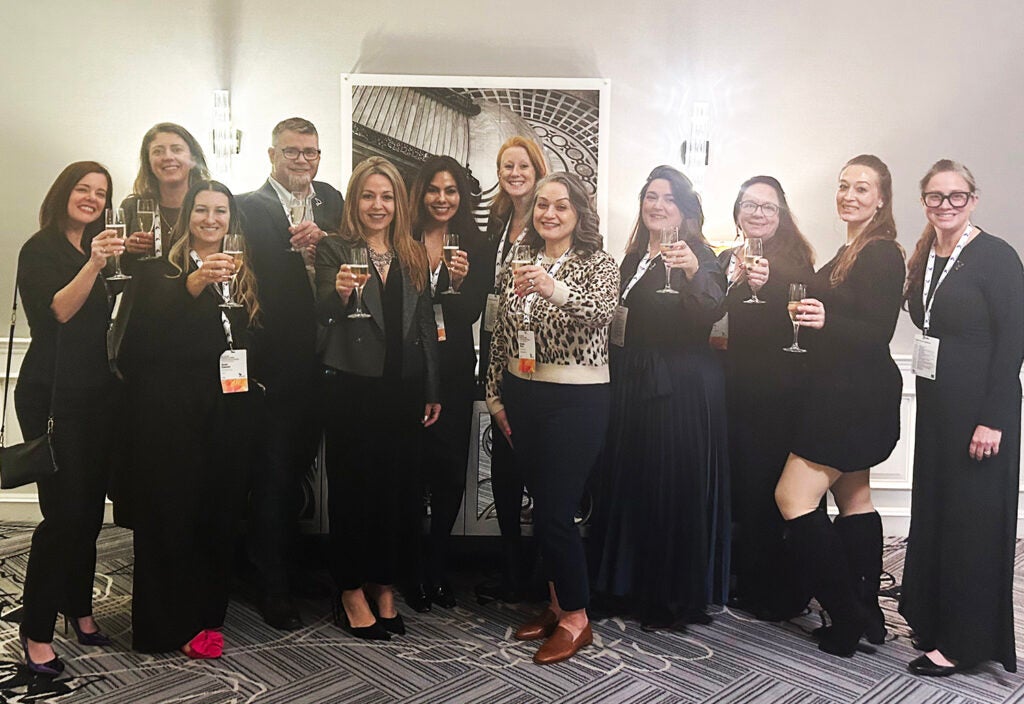
Courtesy of Keri Ibbitson
Featured image credit: iStock/wongmbatuloyo