
 Brands across every industry and discipline are laser-focused on harnessing AI, but as one of the world’s biggest chipmakers, AMD has some serious skin in the game. So when the company delivered a keynote at CES 2026 to position itself as a leader within the AI ecosystem and illustrate how its technologies are already driving real-world impact, the stakes were about as high as they come—and the caliber of stage production had to match the moment.
Naturally, AMD relied heavily on AI itself to drive its messaging home (how meta is that?) and keep attendees, both in person and online, fully engaged. The keynote kicked off with an AI-produced film that explored the future of the tech and set the tone for the presentation about how AI is advancing human potential.
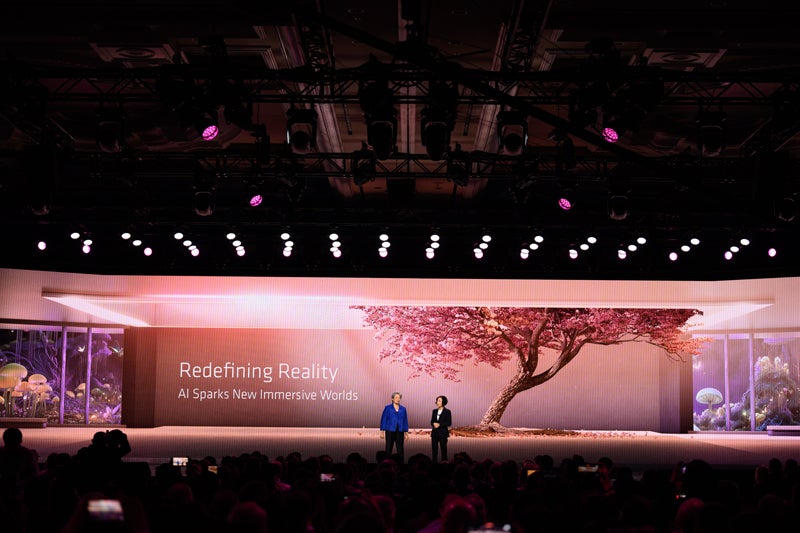
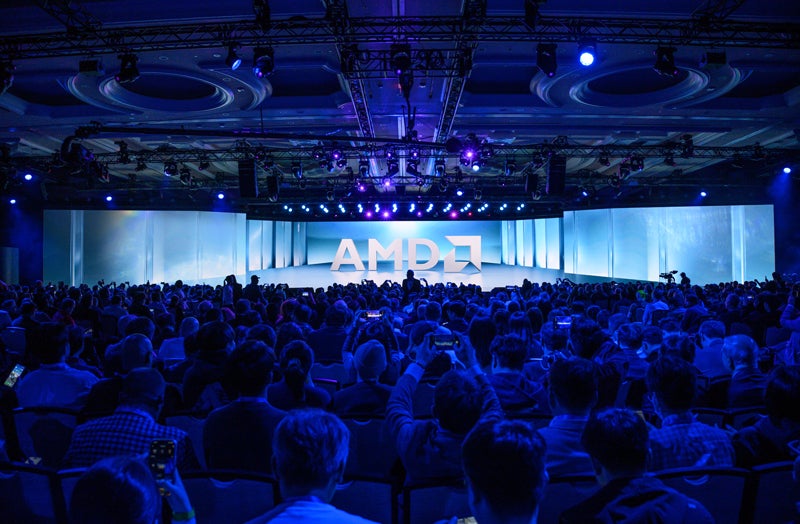
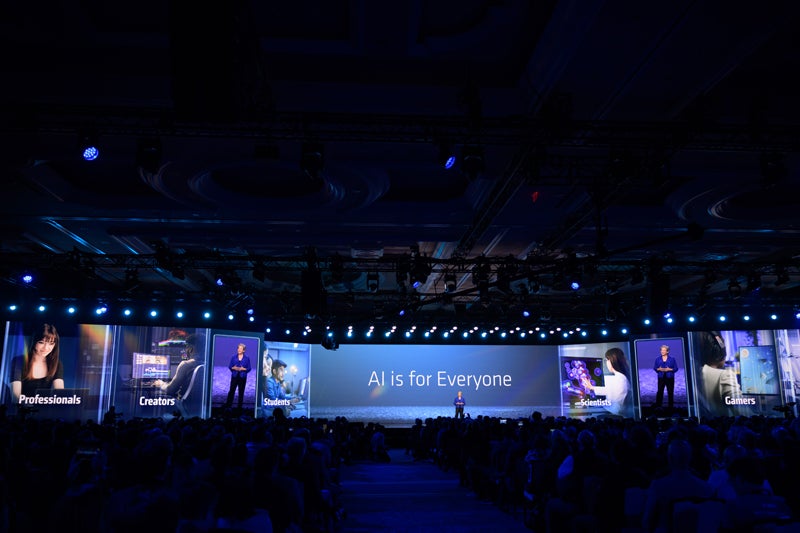
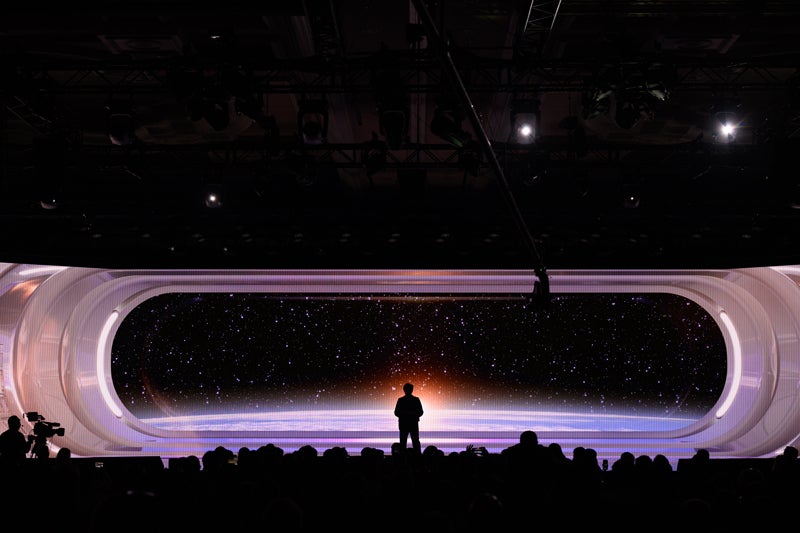
The brand’s chair and ceo, Dr. Lisa Su, then took the stage with a revolving door of partners and customers, who helped showcase the broad reach of AMD’s solutions and how AI can be “everywhere for everyone” with the aid of bleeding-edge technologies and production techniques. Chief among them—a massive nine-screen display that transformed the stage into a series of 3D environments that amplified each partner’s story. Among brands that took the stage: AstraZeneca, OpenAI and Blue Origin.
The keynote’s scope and level of sophistication marked a “step change” in how AMD shows up at tentpole events, according to Steve Fund, corporate vp-brand, creative, and marketing operations at AMD.
“It was totally non-traditional, and hopefully we opened up the door to how people can utilize AI in major keynotes, and think a little bit differently about that immersive experience,” he says.
With Fund having just tackled one of the world’s biggest stages, we asked him for further tips and insights on producing an AI-driven keynote without losing the human touch. (Agencies: George P. Johnson; Spinifex Group; Tool)
Refine your narrative.
Keynotes have always been designed for seamless transitions and unified messaging, but brands have the power to deliver an even more cohesive story by “refining” their narratives with the aid of AI. At CES, AMD told one continuous story that fluidly evolved through a range of AI-powered environments, from outer space to a Zen garden, that enhanced its on-stage partners’ perspectives and reiterated its central role within the ecosystem.
Make the most of your real estate.
With a giant, nine-screen display at its disposal, AMD leveraged the setup to ensure every last inch of its stage real estate was used to keep the audience tuned in.
“It was a creative challenge to make sure that we really utilized that canvas and didn’t just repeat exactly what was in the middle on the side screens,” says Fund. “Sometimes we brought out data or had charts on the side [screens]… There was a lot of information to convey, but it couldn’t be these dry, PowerPoint-driven presentations. That’s why we brought to life the key points in ways that were somewhat unexpected and, again, utilized the real estate that we had available to us.”
Keep it relatable.
AMD typically address a highly technical audience, but CES attracts more of a mainstream crowd, which prompted the brand to adjust its approach to the keynote, and lean heavily on both its partners and the AI-driven environments that conveyed their stories.
“CES is more of a mainstream audience, so it was more about thought leadership and positioning AMD at the forefront of this revolution,” says Fund. “We wanted to tell a message in a way that could connect and be relatable to everyone in the audience. So, how AI can impact you if you’re a content creator, or impact you if you’re in healthcare, or impact you if you’re into robotics. We wanted to showcase the broad reach of our technology, and we did it through our partners.”
Take the risk.
For AMD, the CES keynote was not only a chance to demonstrate its AI expertise, but to emphasize its status as a global powerhouse—something the brand hasn’t been focused on in the past. To deliver on both objectives, the company teamed up with new production partners, and ditched previous “tried and true” production tactics in favor of taking some risks.
“We’re one of the top 30 most valuable companies in the world, but people don’t necessarily think of us that way, and historically, we haven’t shown up in a way that is consistent with a company of our size and stature. So I intentionally wanted to bring on the best of the best,” says Fund.
He adds: “My advice would be to get out of your comfort zone. Don’t be afraid to try something new, and don’t always rely on what’s been proven in the past. If you really want to do something that’s breakthrough, you have to take a little bit of risk. You could play it safe, but it will yield similar, ‘safe’ results.”
Watch the AI-Driven Keynote:
Photos: Courtesy of AMD