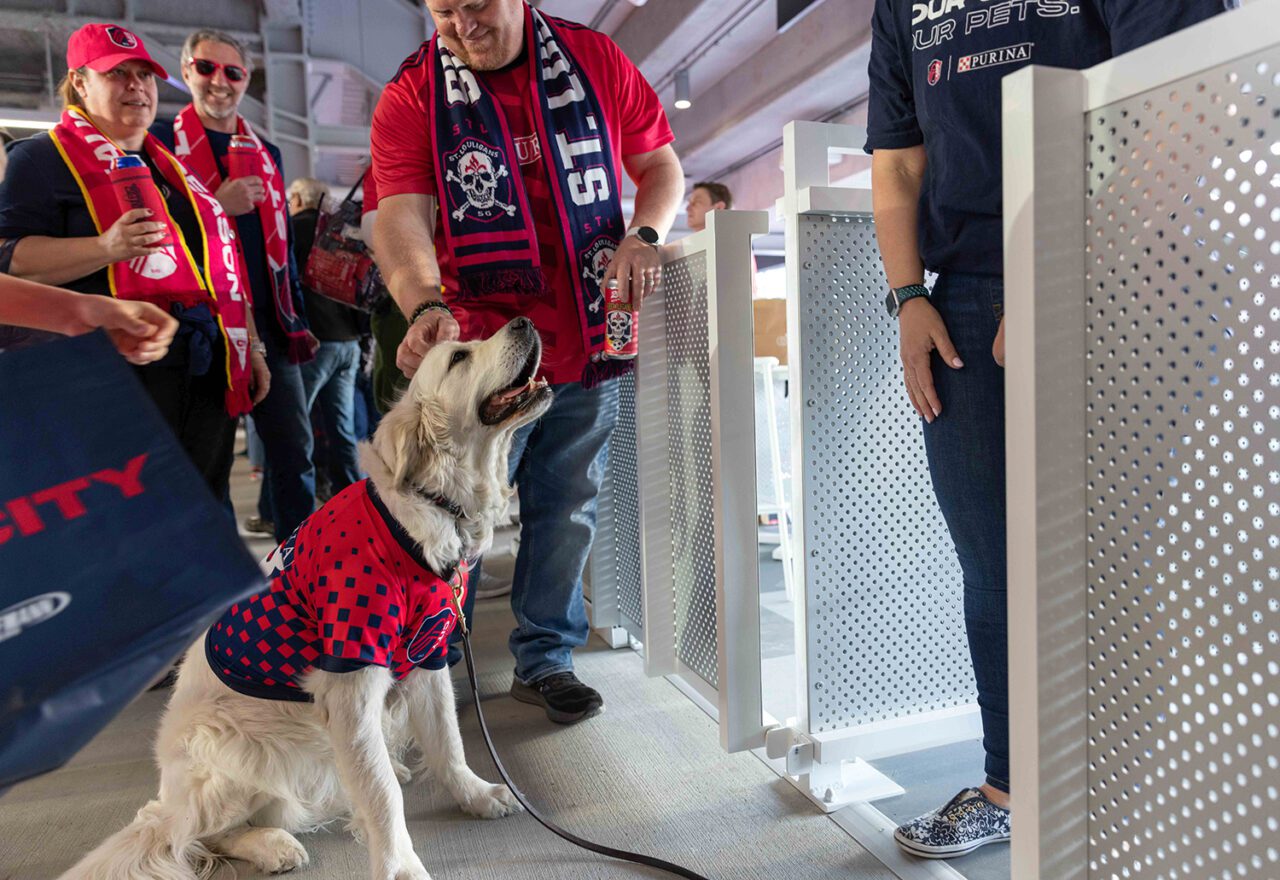
If you’ve noticed a recent uptick in dog-friendly events and venues, you’re not alone. A tidal wave of pet adoption gripped the U.S. during the pandemic, and now that the world has reopened, pet parents are seeking to participate in experiences that accommodate their furry companions. And brands are starting to deliver. Look no further than the Purina Club, the first permanent dog-friendly section to be built into a Major League Soccer stadium, which opened in May at CITYPARK, home to the St. Louis CITY SC (Momentum Worldwide handled). The space was designed with canines in mind from stem to stern, which begs the question: What does it really mean to create a “pet-friendly” experience?
To ensure the safest and most comfortable matchday experience possible for both dogs and humans, Purina enlisted several of its pet behavioral experts to work hand-in-hand with stadium architects and CITY SC staff to design the Purina Club. At the helm was Dr. Annie Valuska, a principal scientist focused on pet behavior and welfare at Purina, whose role across the brand’s events is to spend time in each space viewing the environment from the pet’s perspective and determining what their needs will be, then translating those insights to key partners involved in developing the experience.
Events for Pets:
- Purina Fetches the First Permanent Pet-friendly Section at an MLS Stadium
- Bark & Co. Celebrates Pet Ownership
- Subaru Carves Out Micro-events, Adventure for its 2022 WinterFest Tour
In Valuska’s opinion, not all so-called “pet-friendly” environments are created equal. “There’s a difference between a space being completely designed for humans that allows pets, and a space that is truly taking the pet’s perspective into mind and is designed to make sure that the pets are comfortable and safe and having as great of an experience as their human counterparts are,” she says. “The latter is the definition Purina likes to use when we refer to spaces as ‘pet-friendly.’”
For more best practices on creating dog-friendly experiences that are as safe and enjoyable for fur babies as their human counterparts, we tapped Valuska for her top tips.
Enlist Behavioral Experts
Regardless of how many events you’ve executed for humans, if your understanding of how to design dog-friendly experiences is limited, it’s time to recruit the experts. Brands would do well to enlist the expertise of pet behaviorists who can help interpret and convey animals’ needs to event stakeholders and ensure that all canine accommodations are properly implemented. Even Purina, a company that strictly sells pet products, employed the help of Valuska and several other pet experts to help architect the ideal pet-friendly environment for the Purina Club.
Control Sensory Elements
Limiting loud sounds is an essential part of creating dog-friendly experiences. For a place like the Purina Club, which is in the center of a noisy soccer stadium, the brand worked with engineers from AcoustiControl to conduct an acoustic study on the space, and incorporated the findings. But controlling aromas within the setting is equally critical.
“One that people often miss is the olfactory environment. Humans are a very visual species, and that’s what we tend to focus on and be distracted by. But for dogs, their primary sense is smell,” says Valuska. “Some of the things that we might not think of, but that can be very irritating to dogs, are the types of cleaning materials that are used—if they have a very strong odor that is left behind, that can impact dogs’ enjoyment of the space. Same thing with air fresheners. At the soccer match, the pyrotechnics that they use can create an odor, so we recommended installing a fan above the seats to help clear that odor out as quickly as possible.”
Another pro tip: Make sure the space is easily cleaned, as the scent of prior canine guests can linger and distract or disturb the next pups to occupy it.
Eliminate Hazards
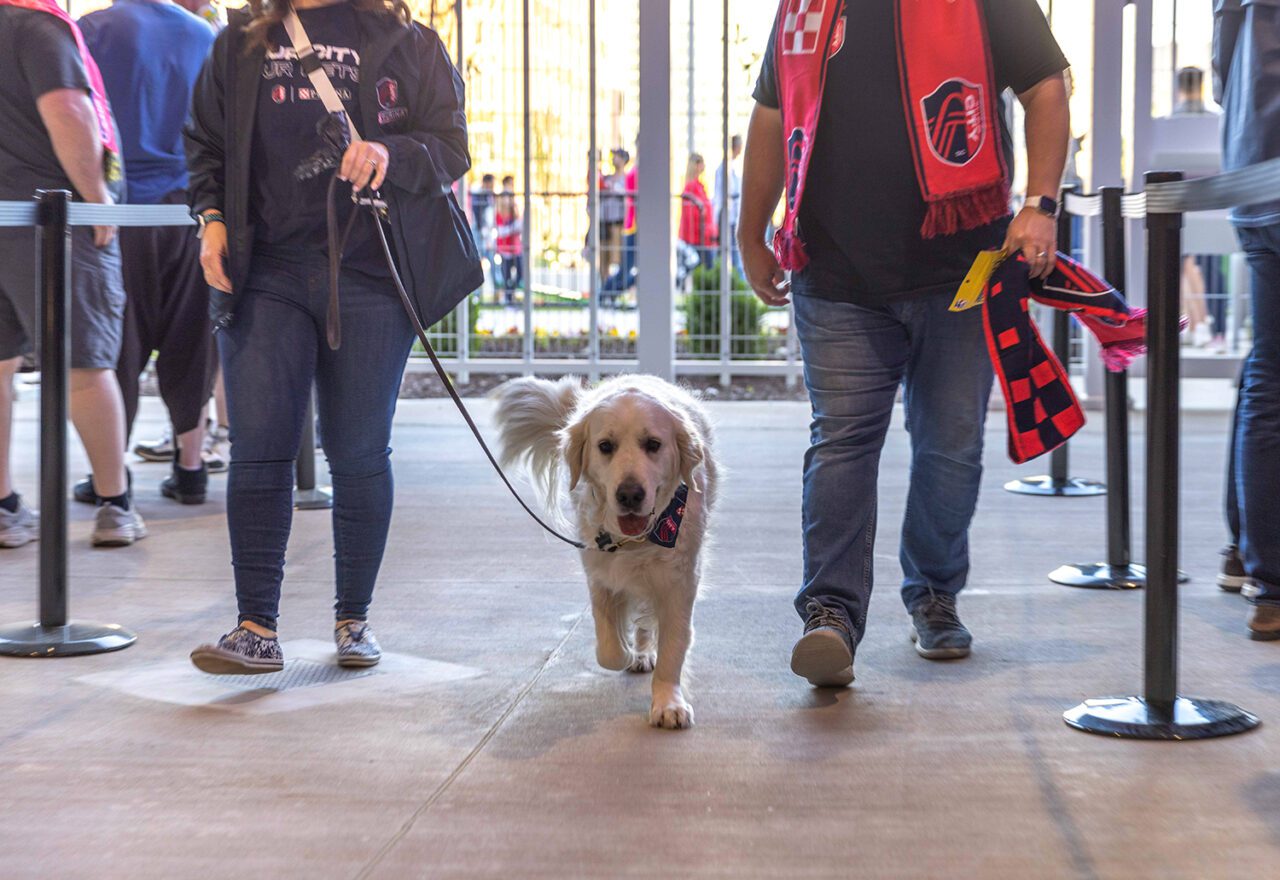
What’s easy to navigate for humans can be nerve-wracking for dogs, so Valuska recommends thinking through all foreseeable hazards, from the time the pups step onto the property to the time they leave, and ensuring those dangers will not be part of the experience. For instance, common event entry systems, like turnstiles, are stressful for dogs, she says. Organizers should also ensure that flooring materials used in the space aren’t too slick for four-legged attendees.
Avoid Bottlenecks
Building an environment that gives dogs space from other canines and humans is an important part of making them feel safe throughout the experience. And that makes preventing bottlenecks paramount. Valuska encourages event marketers to ask themselves: “Where are there going to be opportunities for bottlenecks where [dogs] are going to be forced into proximity with other people and other pets? What can we do to avoid those?”
Incorporate Strategic Relief Areas
Providing a place for dogs to relieve themselves on-site is non-negotiable, and dog-friendly experiences should include the strategic construction and location of waste stations, Valuska says.
“You wouldn’t want [the relief area] to be in an environment where they might feel like they’re closed off, in case there are multiple dogs that need to use that space at the same time,” she explains. “Then in terms of the substrate, [use] something close to grass or even mulch. Something that a pet is used to going to the bathroom on is going to be better than something like concrete, for example.”
Adds Valuska: “Make sure that the plants in that space, if it is going to be outdoors, are pet-safe. You wouldn’t want anything that’s toxic to pets growing in that area.”
Set Policies in Place
Setting some parameters for how the pet-friendly event space is used and who has access to it should be implemented. “What policies do you want to have in place to ensure that you’re setting yourself up for success and helping owners know whether their dog would be a good fit for that environment or not,” Valuska says.
Overall, Valuska’s top tip is to thoroughly understand the pet’s perspective from the get-go.
“Think through, step by step, from the time they park in the parking lot to the time they’re going to get where you want them to be, what is their experience going to be like? What will they be sensing—the temperature of their paw pads, the slickness of the floor. What will they be smelling? What will they be seeing?… Looking around the space and trying to experience it like a pet would is No. 1 with a bullet for me.”