

By Matt Sincaglia, Board Member, Experiential Marketing Measurement Coalition
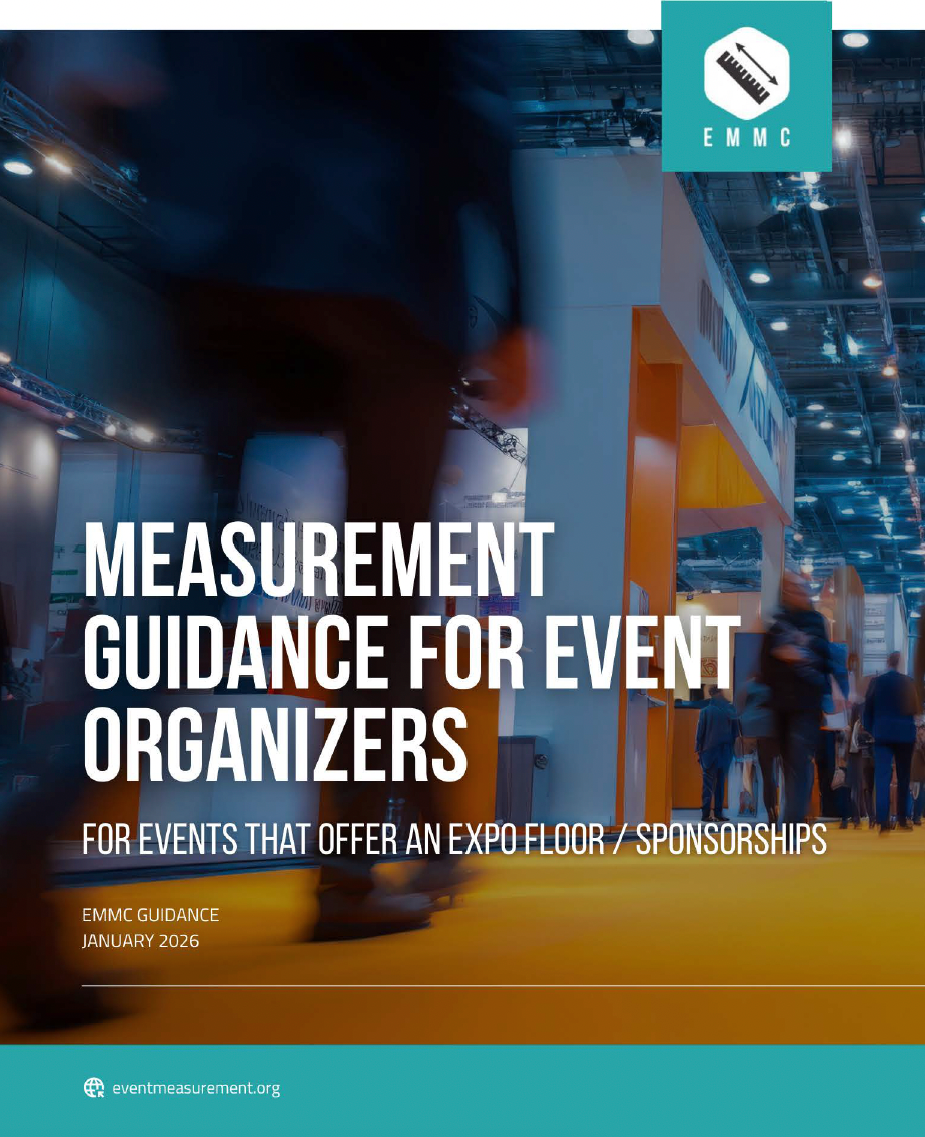
Available Now for EMMC Members.
If you organize events with exhibitors or sponsors, whether it’s a trade show, corporate conference, or consumer festival, you already know the uncomfortable truth: success isn’t judged by a single audience. You’re accountable to three. Attendees. Sponsors. And your own organization.
Too often, measurement in this space defaults to revenue, as the easiest to track metric. Tickets sold. Booth fees collected. Sponsorship dollars closed. While important, these numbers tell only a fraction of the story. Long-term event growth depends on something more nuanced, a mutual value equation where all parties feel their investment of time, money, and energy was worthwhile.
That belief is at the heart of the Experiential Marketing Measurement Coalition’s playbook for events organizers. The premise is simple yet powerful—value must be assessed and communicated using clear, credible data.
Start by Defining Value for Every Audience
Sponsored events have two types of “customers.” Attendees invest their time and attention. Sponsors invest resources, talent, and often significant budget. Whether or not either group pays a formal fee is irrelevant. Both are making a real investment.
Attendees typically seek connection, enjoyment, new ideas, and access to relevant solutions. Sponsors look for qualified prospects, brand lift, and business outcomes (e.g. leads, sales). Organizers, meanwhile, care about revenue, reputation, and repeat participation.
Your job isn’t to favor one group over another, it’s to design an environment where value can be created for all three. Measurement is how you prove success.
Measure Perception Before You Chase Scale
Event reputation is a leading indicator of future growth. If people believe your event is valuable, relevant, and credible, attendance and sponsorship follow naturally.
That’s why post-event measurement should go beyond satisfaction scores. Ask attendees and sponsors to rate the value they received for their time, measure shifts in perception of the event, track Net Promoter Scores, and intent to return. These signals tell you whether your event is building affinity or eroding it.
Questions should be asked of sponsors as well as attendees. Their experience matters just as much.
Prove You’re Attracting the Right People
Sponsors don’t just want crowds, they want the right crowds. Data should demonstrate audience quality as much as quantity.
Registration and ticketing data can help you understand who is attending and whether they match sponsor targets. Tracking attendance-to-registration ratios also matters as high no-show rates undermine sponsor confidence and operational planning alike.
Transparency here is critical. When organizers withhold attendance and audience-quality data, sponsors are left guessing, and often hesitate to return.
Relevance Is the Currency of Sponsorship
Not all sponsors add value simply by showing up. Attendees should perceive sponsor presence as relevant and useful. Post-event surveys can assess whether sponsors felt aligned with the event, and whether attendees felt the same.
This is where organizers play a pivotal role curating sponsorships that make sense for the audience and delivering the qualified access sponsors were promised.
Revenue Is the Outcome, Not the Objective
Financial results matter, but they’re the byproduct of delivering mutual value, not the measure of it. When attendees feel fulfilled and sponsors see credible returns, revenue takes care of itself.
In a crowded event landscape, measurement isn’t about proving success after the fact. It’s about building trust, improving experiences, and creating events people and sponsors are eager to return to. Mutual value isn’t just good philosophy, it’s smart strategy.
For full access to our latest guidance, join the EMMC at eventmeasurement.org/join-the-emmc.