Objective of Event: Drive consumer consideration
-
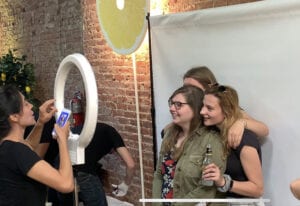
The Washington Post and Mike’s Hard Offer Edible Photos, Facial Recognition
A 10-market campaign by the The Washington Post and Mike’s Hard Lemonade was aimed at steering consumers toward some good news. And two nifty technologies were at play. One was emotional recognition software, capable of reading participants’ response to news content. The other, deployed at a Manhattan pop-up shop, was an “edible photo booth” that […]
-

Anaplan’s Motion-Responsive Tunnel Serves as a Conference Centerpiece
To build excitement as guests entered general session presentations at the Connected Planning Conference, Anaplan built a motion-responsive tunnel. Intended to serve as the conduit from the event’s expo to the general session venue, the space became the event’s centerpiece. It used draped LED mesh that was triggered by depth-sensing Intel RealSense cameras to produce […]
-

Microsoft’s DialStyle Web Experience Turns Consumers into Fashion Designers
“Make Believe Happen” leveraged NFL players’ interests in music, fashion and art to show how dreams can become reality. One of the components was a clothing design contest that used a web-based experience called DialStyle. Consumers could enter any word or phrase; a Microsoft algorithm found the top image result online and converted it into […]
-
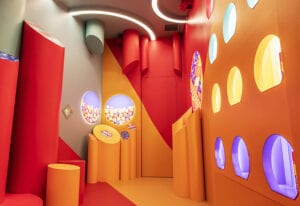
SK-II Targets Affluent Women with an Augmented Reality-Powered Pop-up
Aiming to reconnect with younger, affluent and digitally savvy Japanese women, the Japanese premium skincare brand invited consumers to a Tokyo pop-up shop called SK-II Wonderland. The space was part interactive art exhibition, part virtual scavenger hunt and part all-immersive experience. Upon entering, attendees received a mobile device preloaded with an AR app. Using location-dependent […]
-
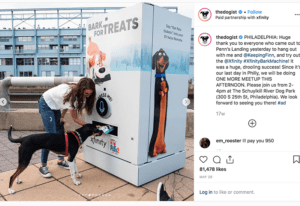
Comcast Targets Dog Owners with a Bark-Activated Vending Machine
You might think Comcast would prefer its consumers to stay on their couches watching TV. But its campaign around the “The Secret Life of Pets 2” revolved around getting people into movie theaters. An in-home component was built around Comcast’s voice-activated remote controls, which let viewers speak the name of a program or channel to […]