You can’t afford not to measure your trade show or event investment. Without data, there’s no evidence to justify them or make improvements. But measurement doesn’t have to be expensive, argues Dax Callner, founder and president of the Event Marketing Measurement Association (EMMA).
“Don’t let cost be a barrier,” he says. “If you’ve got great budgets, do robust measurement, but there are economical, sometimes free, ways to measure.”
Granted, “free” comes with a caveat: Somebody still has to put in the time. Before investing in another platform, exhibitors can tap into resources, data, people and technology they may already have access to. Here are five ways to start.
1. Lay the Groundwork
A measurement strategy is only successful when it’s built into the experience designed around appropriate KPIs. Free resources can help to identify the event’s unique set of KPIs, as well as the data sources to streamline the measurement process.
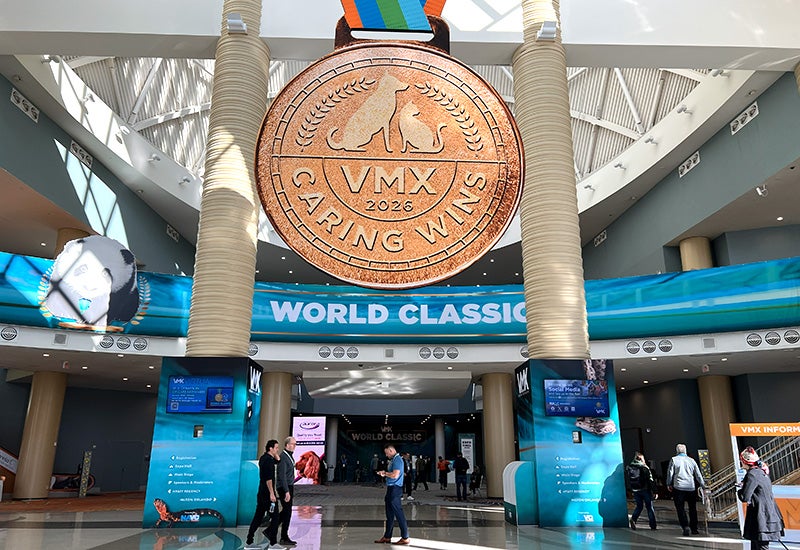
For VMX, the North American Veterinary Community has developed the Exhibitor Success and ROI Center, featuring downloadable planning, cost-control and financial performance tools, including the “Measure Your Performance & ROI” worksheet to help exhibitors design an experience grounded in results.
Industry partners provide resources developed from experience. Exhibitus offers a free mini-assessment and measurement guide with details on metrics to consider in order to justify budgets and present a case for program growth.
“It’s been said that what gets measured gets funded,” says Lynn Reves, executive vp-marketing and results, Exhibitus. “I encourage event marketers just delving into metrics to become comfortable in working the ROI model and proactively having the discussion with stakeholders, understanding deeply the data points that drive that calculation, and, most importantly, explaining why ROI is only a portion of the value the program brings to the company.”
2. Ask the Organizer What They Already Know
“A lot of exhibitors don’t realize that data the organizer pays to collect may be available and can help with benchmarking, especially when getting started,” says Robyn Davis, a trade show exhibiting expert and author of the upcoming book “Exhibit Smarter.”
Organizers might have data from previous shows, including attendee roles and titles, decision-making authority, industry segments, company size and historical attendance. Some organizers collect deeper intelligence, including attendees’ goals, dwell time in the exhibit hall, purchasing budgets and whether they accomplished what they came to the show to do. Some take it a step further with behavioral data generated through beacons and other traffic-tracking technologies.
Not everything can be shared, but Davis says that even when organizers can’t provide exact figures, they may be able to identify top categories or other benchmarks that give exhibitors something against which to evaluate their own performance.
3. Deploy Staff as Eyes and Ears
Sometimes measurement is as low-tech as watching and reporting what happens. Callner recommends assigning someone on the team, or outside of it, to observe the exhibit with a specific task of documenting what works and what doesn’t.
Booth staff surveys can also be a useful source of intelligence. Callner says, “It’s important to let people know they will be asked for their observations so they are making mental or actual notes to include in their survey responses.”
4. Turn Survey Data into Insights
Plenty of platforms offer free ways to host a simple booth exit survey, Callner points out. Keep questions short and tied to the exhibit objective, such as message recall, usefulness of the interaction and likelihood of taking a next step. Open-ended comments can reveal what attracted visitors and where the experience fell short. For a 0–10 recommendation question, a free NPS calculator can turn visitor feedback into a comparable benchmark.
5. Put AI to Work
“From co-creating survey questions to designing and hosting surveys, helping with data analysis and visualization, there really are many ways free AI can help,” says Callner.
The Exhibitor Advocate recently launched an AI Prompts for Measurement guide. Executive director Jessica Sibila shared this high-level prompt for analyzing and summarizing an exit survey with fewer than 75 responses:
“Analyze the results from this on-site booth exit survey completed by 75 exhibit visitors. Summarize who visited the booth, the quality of the audience, and how visitors rated the overall experience, staff interactions and information received. Highlight key strengths and weaknesses, including notable differences by role or visitor type if relevant. Summarize insights from open-ended comments and provide clear, practical recommendations to improve booth performance, visitor engagement and business outcomes at future events. Provide the results in a PowerPoint or Word doc format that I can present to my stakeholders.”