Today’s fast-paced, digital-centered world bombards consumers with messages at every turn, an overwhelming array that makes in-person, experiential marketing that much more valuable.
Perhaps it’s no surprise then that some of the most impactful experiential marketing pushes back on progress, evoking nostalgia and the promise of “a simpler time.” These marketing tactics are—quite literally—standing the test of time. Here are five powerful reasons the appeal of nostalgia continues to deliver results:
Cross-Generational Appeal
The best period pieces appeal as much to those who lived through that time as those who didn’t, as any teenaged fan of “Stranger Things” would attest. When those fans are experiencing an era they didn’t witness first-hand, they are less concerned with exact accuracy and more with interpretation, allowing brands to lean into romanticism over exactitude, or vibes over validity.
Researchers call this vicarious nostalgia, and note that younger consumers yearn for the sense of belonging and connection that it can provide. This sense of nostalgia can also contribute to a feeling of reliability and collective identity that in turn contributes to brand loyalty.
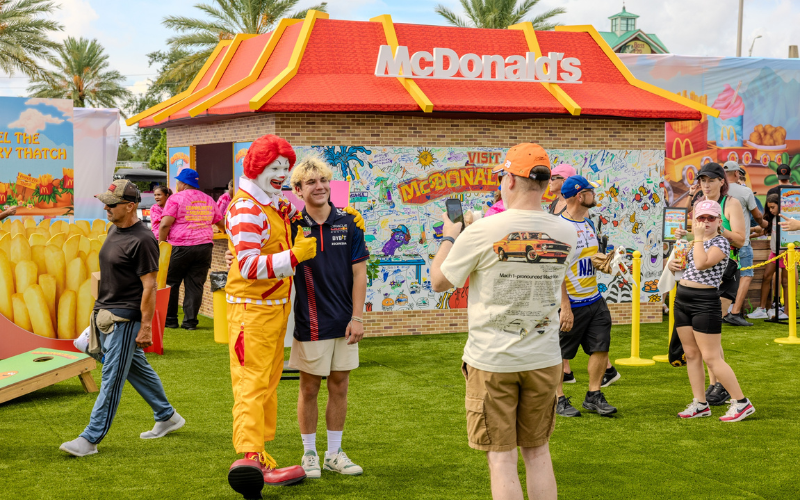
McDonald’s conjured up its 1980s and ’90s vibe when Chicago-based experiential shop Turnkey recreated the McDonaldland experience—complete with Mt. McDonaldland, Birdie’s treehouse, the Hamburger patch, and Ronald McDonald and Hamburglar characters. Parents and kids would smile broadly for photos, even if the youngest ones might mistake Grimace for Barney the dinosaur.
The ultimate goal was to distribute samples of the Mt. McDonaldland milkshake, which was new, but the experience felt straight from today’s parents’ childhoods.
Emotional Connection
Nostalgia can instantly evoke an emotional feeling of safety and familiarity, something that is magnified in times of uncertainty or constant change. Given today’s world of economic uncertainty, political dichotomy, and AI everything, it’s little wonder that people of any age might find comfort in days gone by.
Nostalgic marketing, at its best, offers a sense of escapism where brands can connect with those ideas of stability and reassurance. When combined with other emotions associated with successful experiential marketing—like joy and surprise— consumers take away a valuable lasting impression.
Something as simple as recognizing a name on a personalized can from the “Share a Coke” campaign can produce a smile (and then, perhaps, a fond memory of an old jingle). Those emotions are priceless ways for brands to build loyal bonds with fans.
Hands-on Experience
Event marketers are familiar with the power that comes from activating all five senses, and not just the sights and sounds that can be delivered on a screen.
Consider the Polaroid instant cameras so many teenagers carry around today, or the collections of vinyl records whose value to their owners go beyond their authentic sounds. The promise of something to hold—and not just store in the cloud—lends these items added importance.
On location, marketers can offer tangible connections to the past, like that 15-foot Mt. McDonaldland slide. A replica of the Marmon Wasp—the first car to win the Indianapolis 500—or the chance to shake hands with a former All-American are other ways marketers can capture fans’ attention with a nostalgic twist.
Location-Based Benefits
So many of the locations where event marketers activate offer built-in opportunities for nostalgia, whether that is an iconic professional sports stadium or the site of a memorable concert or music festival. For some marketers, sometimes that’s a series of locations.
Turnkey helps MINI manage its bi-annual loyalty program, MINI Takes the States. The program recreates the classic American road trip for owners, cruising scenic highways and stopping in small towns along the way. Once a vibrant community gathering spot, the drive-ins of the 1960s were replaced by drive-thrus in the ‘80s. MINI throws it back to the former, giving its customers a place and time to physically gather and celebrate their shared passion.
Inspired to Share
Nostalgia-based activations can seamlessly make the leap into the modern world when participants are inspired to share their experience on social media thanks to captivating imagery or a TikTok-worthy audio clip.
At SXSW 2026, Verizon created a photo op inspired by a 1990s soccer fan’s bedroom to promote their “Soccer Meets America” documentary. As North America prepares to host the 2026 World Cup, the scene was set in 1994, the first time the event came to the United States. With a corded telephone, beanbag chair, low-def tube TV set, and vintage soccer posters on the wall, it was ready made for any Gen Xer to share a photo of how things looked—if not how they looked—when they first discovered the beautiful game.
These types of experiences can connect not just with consumers on location, but to their networks as well.
* * * * *
Studies have shown that nostalgia, when executed well, can positively influence brand trust and overall consumer spending, even related to charitable giving. The old-school appeal, in combination with modern marketing touches and measurable metrics, can fuel sales, brand loyalty, and long-term success.
For all the reasons above, the power of nostalgia promises to remain strong now and in the ever-changing future.