At the beginning of the year, 2016 made a resurgence on social media, as users became nostalgic for the music, fashion, memes and Instagram filters of the time. Now, it’s our turn to look back.
2016 marked the first time that Event Marketer focused its annual Dream Team recognition program on event marketers from the world of b2b—“those intrepid conference, meeting and trade show marketers working hard to acquire customers, build lead pipelines and spread the corporate vision.”
Mastering social media and new technologies were top priorities, and sales alignment and identifying and targeting qualified leads were top challenges. Today, the acceleration and adoption of tech is helping b2b marketers close in on them and zero in on value-driven investments.
Here, we time-machine-it back to business in 2016 to explore the themes, find out what was driving b2b event marketers’ passion to solve business challenges and look at how far they’ve come.
Related: Meet the 2026 B-to-B Dream Team
MAPPING THE CUSTOMER JOURNEY
In 2016, many b2b marketers were developing road maps for the customer journey, with content becoming a key tactic to help connect the dots between the events and their impact on the business. Tania Weidick, vp-corporate event marketing at Oracle (now vp-event marketing at Datadog), homed in on where, when and how every prospect in the sales funnel engaged at her events.
“We monitor before events, and then we’re able to target customers who have expressed interest in certain topics online. And we do the same afterward to see if we increased engagement,” she said in 2016. “We can track a company—how many people they send each year, whether it’s a different mix of people, what those people do online after the event, before the event, in preparation or as follow-up. Are they going to webcasts? Are they downloading content? Are they looking at white papers? From there, we can funnel it all off to sales as a much more qualified lead.”
 EXPERIENTIAL AS THE FUTURE
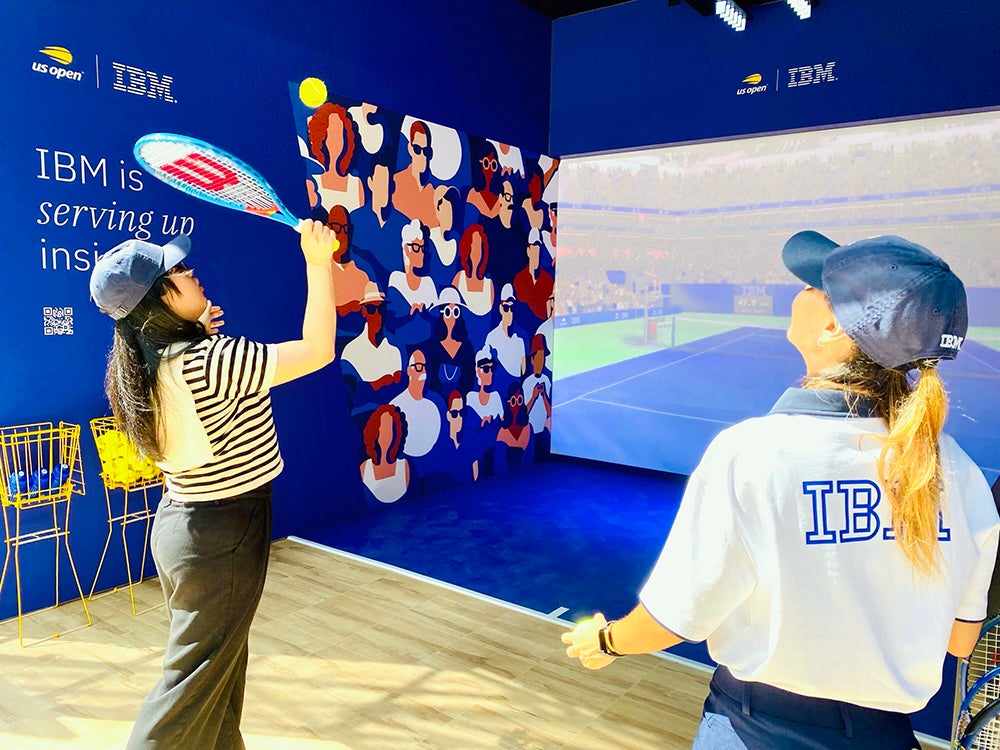
It’s no surprise that an organization as robust and forward-thinking as IBM was going all in on treating business audiences as the experience-seeking consumers that they were—and still are.
“I want [customers] to walk away blown away by what they saw, learned and networked around; get their hands dirty; and really experience things so they have a greater under-standing than if they just sat in a chair and listened to someone for an hour,” said Colleen Bisconti, vp-global conferences and events at IBM, in 2016. “The challenge facing us as event marketers, and the event industry, is how to marry the need to have that face-to-face and build the digital extension.”
CREATING GLOBAL VIEWS OF IMPACT
Greg Schneider, senior director-global event marketing at Dell (now senior director-corporate marketing, global events at Boomi), used the proprietary Event Score methodology that combined quantitative data with qualitative insights to help shape his organization’s road map for event investments and to understand ROI. Today, events are widely accepted as the engines to successful, 360-degree marketing strategies.
“We have to treat events like we would treat buying media,” he said at the time. “Like we would treat investment in digital, or invest-ment in news or print.”
ALWAYS FOLLOWING A NORTH STAR
Heather Henderson Thomas, senior manager-strategic operations at Cisco (now director-global Cisco Live operations and sponsorship), tied the success of Cisco Live 2016 to the team’s commitment to four strategic pillars identified ahead of the show. Indeed, clear objectives continue to serve successful event organizations well.
“It can sound like a lot of corporate speak sometimes, but when it’s done right, and it’s really made a part of the daily fabric of how we operate, it enables us to be able to continue to innovate and meet the needs of our attendees,” she said, adding, “As an ops gal, I don’t do ‘strategery’ well.”
A PREDICTION: THE RISE OF VIRTUAL EVENTS
Four years later, in 2020, b2b event marketers everywhere would be stretching their creative and operational skill sets as the pandemic forced the closure of most events worldwide for many months. In 2016, our Dream Teamers recognized the potential and opportunity in virtual event content.
“I’ve noticed a marked increase in live streaming of content and sessions, and I think the virtual space is poised to become an integral part of b2b events,” Christopher Tillman, program manager-event technology at Google (now program manager-experience integrations) said 10 years ago. “The more they can be involved with the content, the more engaged they will be.”
“People can get so wrapped up in the ‘wow’ that sometimes they forget why they are in that booth. Finding that balance is where events are going. You want that ‘wow’ factor but still want attendees to walk away with knowledge about your product or solution.”
–Lynette Clayton, Senior Program/Project Manager-Events, AT&T (now Lead Product Management and Development)
ANOTHER PREDICTION: THE CONSOLIDATION OF EVENTS
Jonas Törnqvist, senior global event manager at Sony Mobile (now senior project manager-business development at Contrast AB), predicted a consolidation among smaller events in the tech industry. Eventually, many organizations post-pandemic would reprioritize investments, lean less heavily on mega-shows and more on roadshows and one-on-one versus one-to-many opportunities.
“The big ones will continue, but the small-er ones are going to merge,” he said, noting the costs involved in attending the shows and the time away from the office. “People may be physically there, but they’re spending time on their phones and laptops… Attendees need to have the opportunity to actually be a part of the event as they do their normal day-to-day business.”
BREAKING DOWN BARRIERS, FOREVER
Even 10 years ago, Shantel Gascoigne, digital marketing manager-partner community marketing at Microsoft (now senior director-integrated marketing) cringed at the idea of being called a social media expert because “social and digital changes so often you can’t really be an expert in anything,” she said. To her, it was more about embracing the social world as a disruptor. Good thinking, Shantel.
“A lot of people are intimidated by social media, but at the end of the day, it’s just people and it’s just a different place where the connections and conversations are all happening,” she said in 2016.
Indeed, our B2B Dream Teamers have always said that to be successful, event marketers and the events they lead must always be evolving in order to keep up with “business as usual.”
The key is to be flexible, and “don’t get stagnant,” said Juliana Jou (formerly Yoon), marketing manager-trade show customer acquisition at American Express (now director, head of experiential marketing and social media at Bitwise Asset Management).
Featured image credit: iStock/amgun