How the brand led with loyalty, and altered perceptions, at Coachella and Stagecoach
As Alaska Airlines continues its evolution from a regional to a global carrier, and settles into its merger with Hawaiian Airlines, its experiential marketing strategy is gaining altitude.
With Gen Z and millennials in mind, the brand touched down at Coachella and Stagecoach this year as official airline of both festivals to meet younger audiences where they are, and renew their perceptions of the brand. And it didn’t hurt that the airline could tout Palm Springs as one of its major hubs.
“We are trying to reach that younger consumer and where they want to be, and start to convert this aspiration into action,” says Hilary Palanza, managing director-marketing at Alaska Airlines. “Travel, we know, is such a big passion point for them; we know the audience really cares about experiences and travel over buying things. So this was the perfect moment for us to just show up and start connecting with this audience so they can get to know us better.”
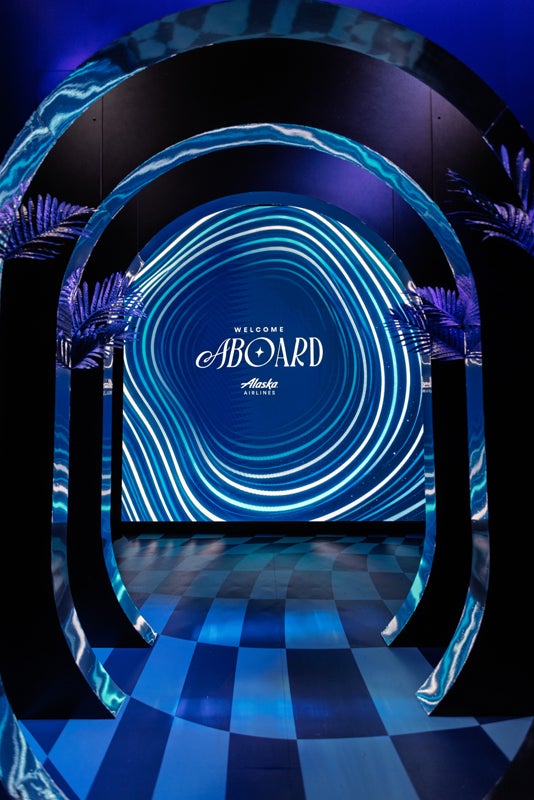
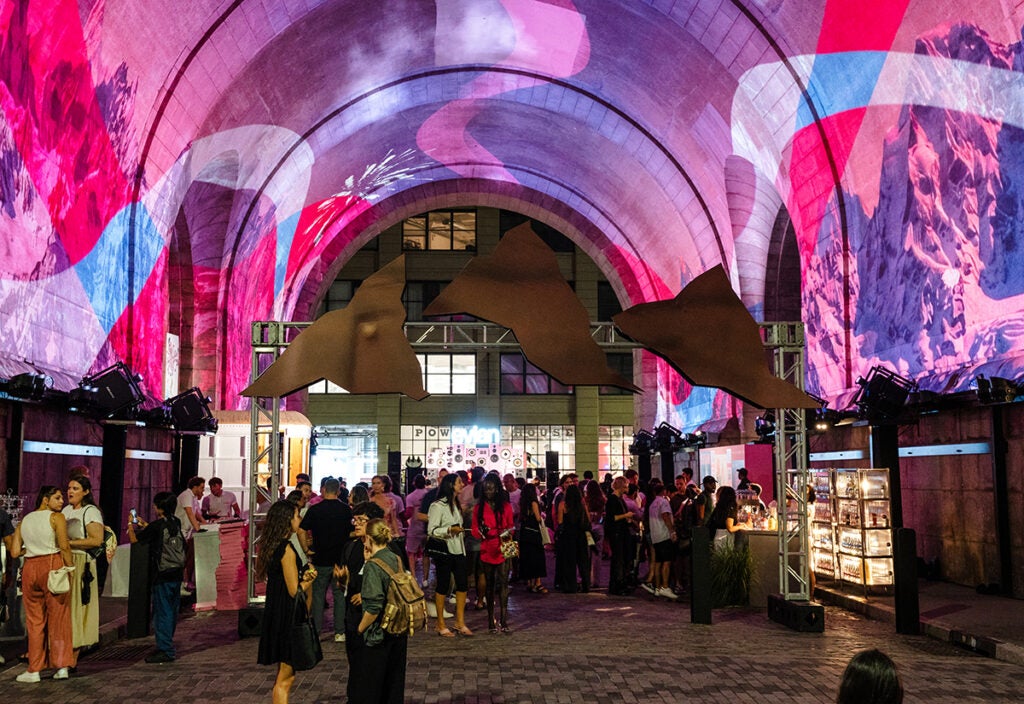
That endeavor began at Coachella, and was shortly followed up by Stagecoach, where Alaska transported its in-flight experience to the festival grounds, and used the perks of its new Atmos Rewards loyalty program to draw attendees inside a dreamy footprint.
Ultimately, across all three festival weekends, the brand distributed 1 million Atmos Rewards. Here, we break down the airline’s steps to festival sponsorship success. (Agency: BeCore)
Shaking up the Queue
Among Atmos Rewards benefits, members have access to Starlink, a complimentary high-speed Wi-Fi service now available on all Alaska Airlines flights.
So with the long lines and spotty cell service that are pervasive at major festivals, the brand extended the reach of its Wi-Fi to the outdoor perimeter of its activation, where those waiting in line (or hanging out after the experience) could connect to Starlink for free and start getting acquainted with the loyalty program.
Linking Gamification to Loyalty
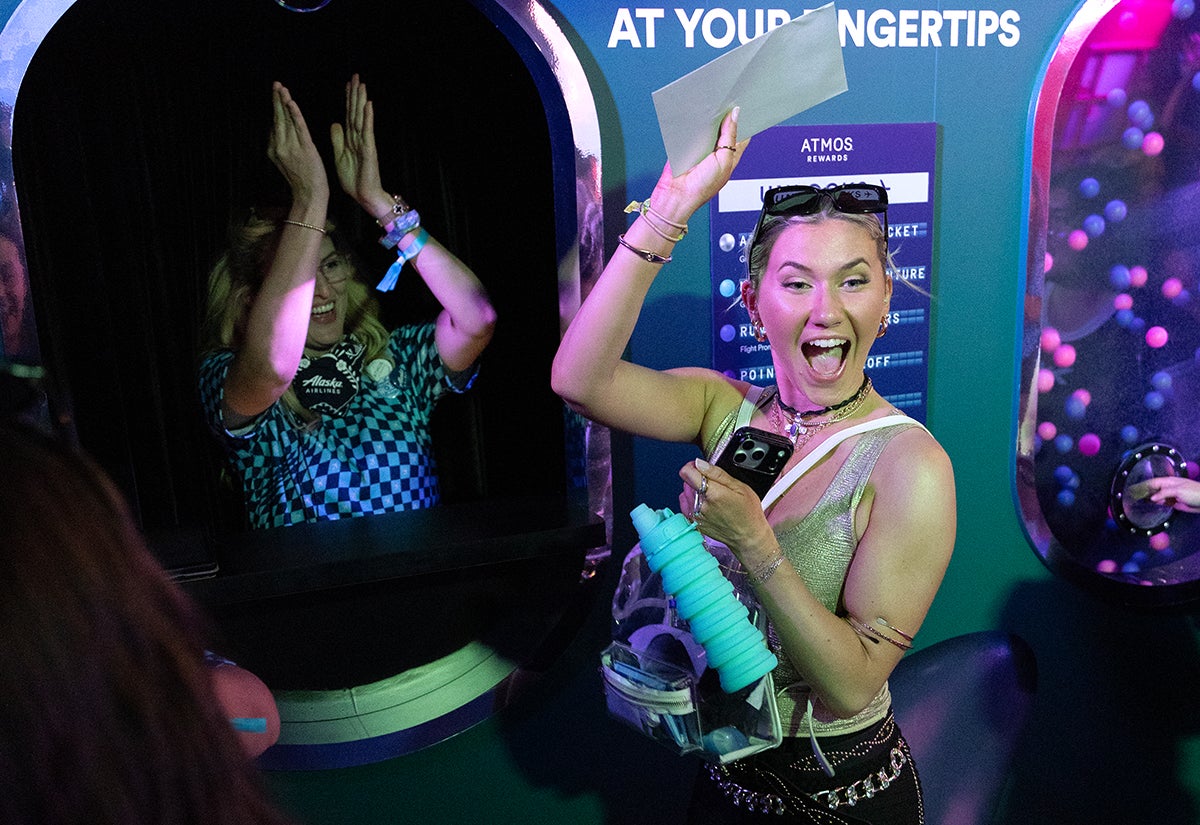
Once inside the air-conditioned footprint, attendees were encouraged to sign up for, or log into, Atmos Rewards to unlock a “boarding pass” that fueled a series of gamified experiences that earned them loyalty points.
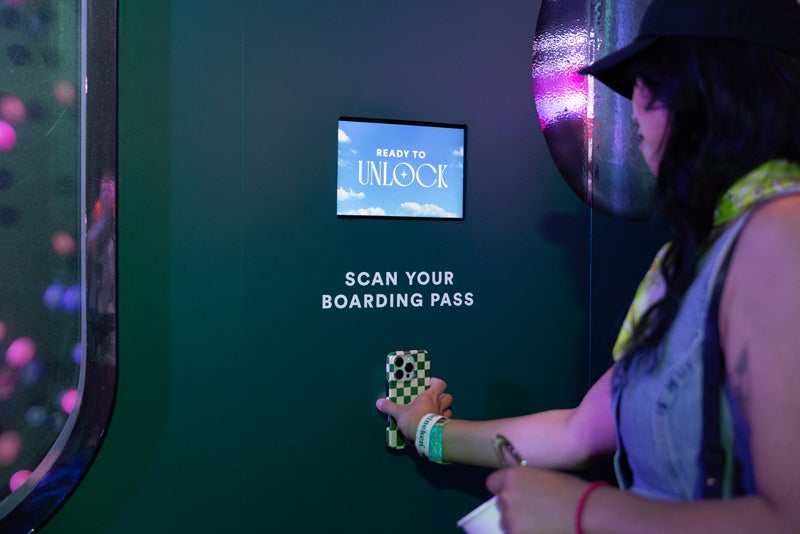
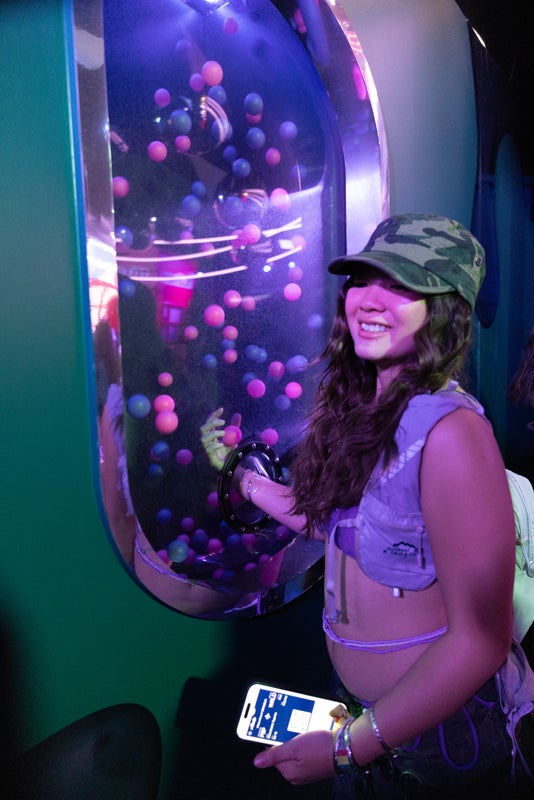
A highlight was the Globe Grab, which had participants reaching into a vessel to snatch at colorful, flying orbs (think: air-mix lotto machines). Depending on the color of the ball they caught, it could be redeemed for an Atmos-related reward, including 10,000 loyalty points, and the grand prize, an all-expenses-paid trip to Hawaii.
The perks of signing up for Atmos were also highlighted via daily giveaways, and a daily Cloud Social happy hour for members during which they could enjoy the snacks and beverages that the brand serves in-flight.
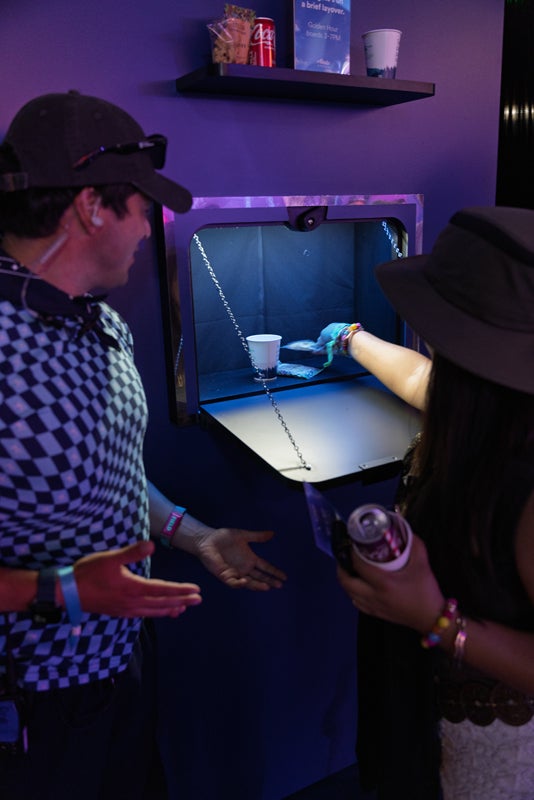
Design-Led Storytelling & Engagement
With long-haul routes to promote, and a fresh narrative around being a global airline partner, Alaska told much of its story through design, delivering a surrealistic world featuring monuments and vignettes that brought key locales to life.
Themed installations like a classic red phone booth and a mini version of the Coliseum nodded to the brand’s new international destinations, including London, Rome, Tokyo and Seoul.
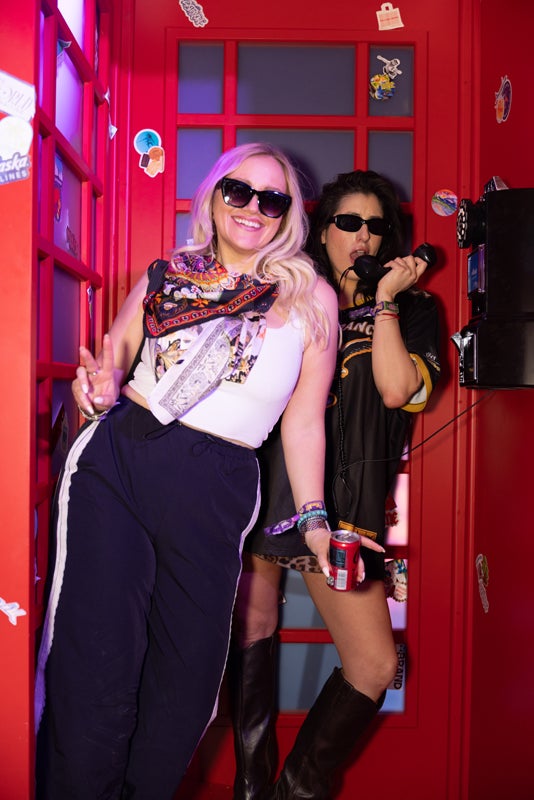
Design was also a way for Alaska Airlines to speak to the different demographics that each tentpole festival attracts, with Coachella drawing influencers who seek content-capture moments, and Stagecoach pulling in more laid-back music fans that embrace the country Western aesthetic.
At Coachella, the brand leaned into blue tones and a glossy environment, and employed a dedicated influencer strategy. Meanwhile, at Stagecoach, an orange-red hue dominated, ambassadors sported Western-themed uniforms, and the playlist was updated to reflect the crowd.
Measuring Success
Throughput was among the KPIs Alaska tracked for each festival, but the bigger focus was ultimately on loyalty program sign-ups and “stickiness.”
“For the people who came through the space, do they remember us? What was their experience?” says Palanza. “So we want the engagement with the brand to be No. 1. Obviously, foot traffic is part of it, but people engaging with us, walking away with a new perception of who we are, is equally as important to us as the number of people who come through the space.”
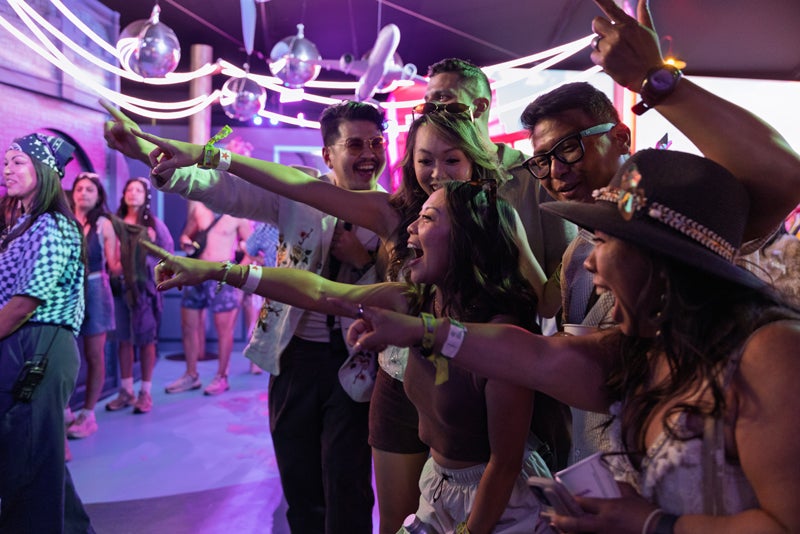
Photo credit: Joseph Nicolas Duarte