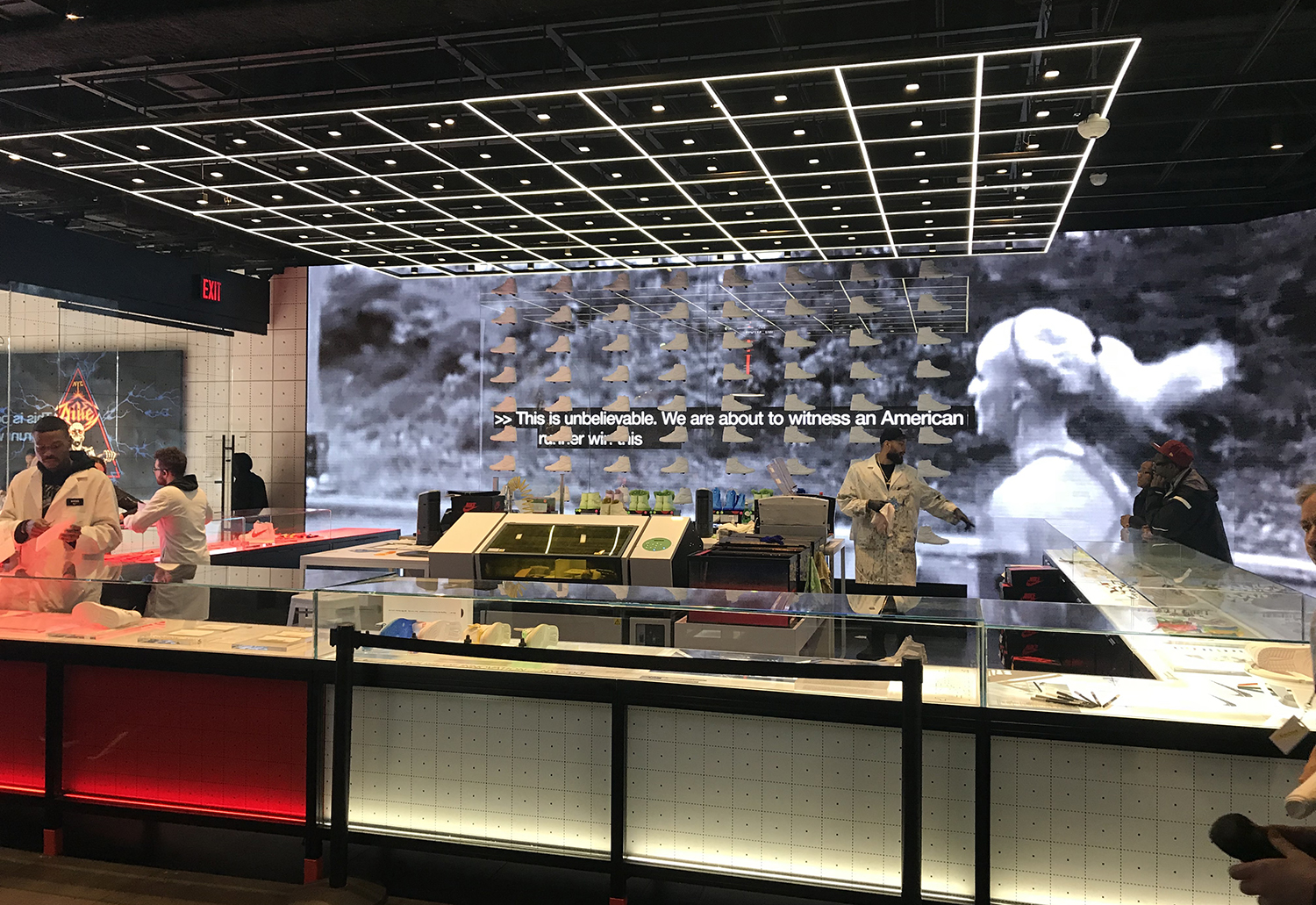
The first activation consumers encounter is the Arena Sneaker Bar, a sneaker customization station. It featured at the time the Noise-Cancelling Collection, which consists of five different shoes worn by athletes who wowed New York City with an inspiring athletic feat, effectively “cancelling out” the noise of the crowd. In the background, oversized video walls showed vignettes of the athletes featured in the collection, including Shalane Flanagan, the first American female runner in four decades to win the New York City marathon.
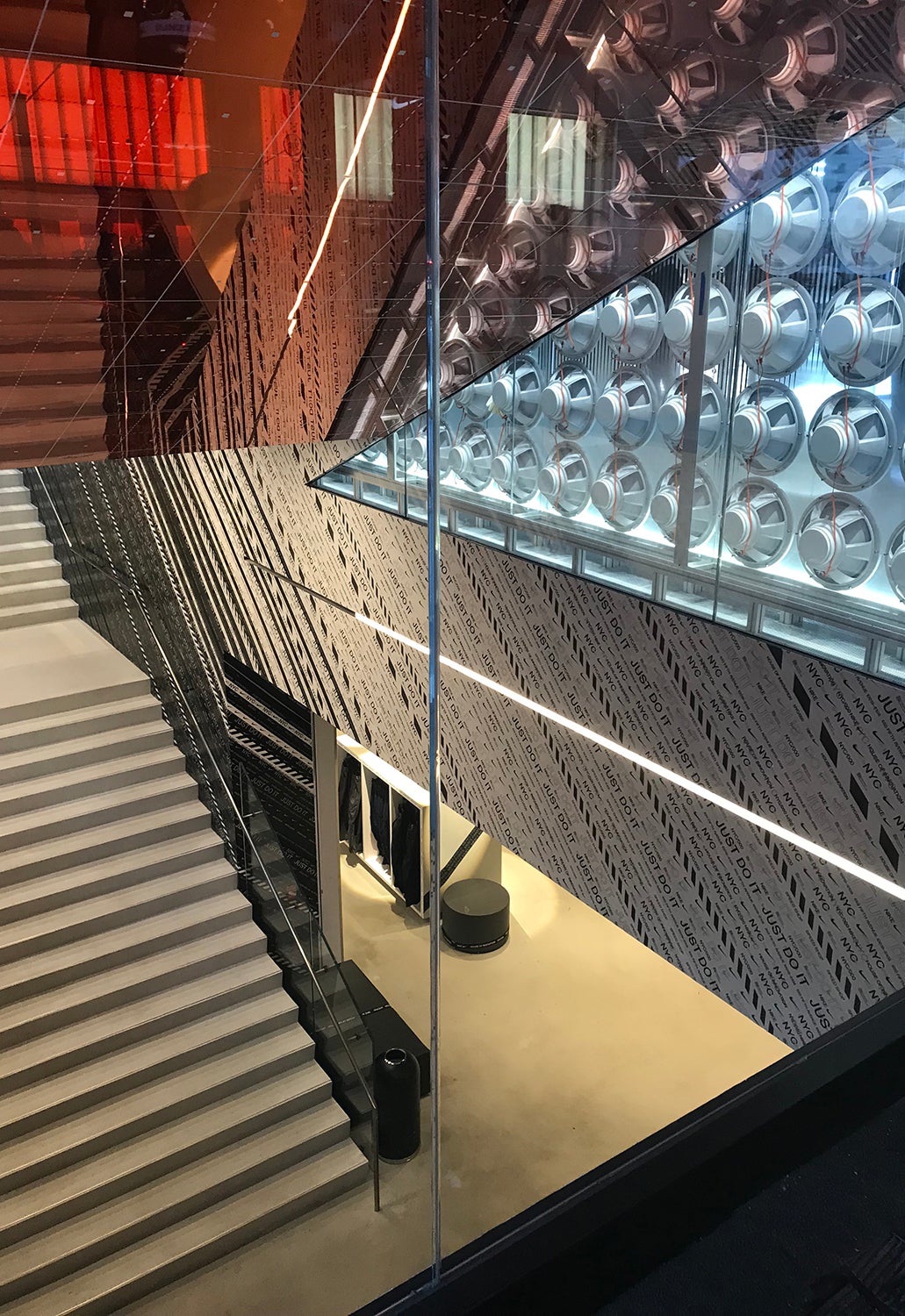
The design of each floor was dominated by clean, intersecting lines, copious branding and reflective surfaces.
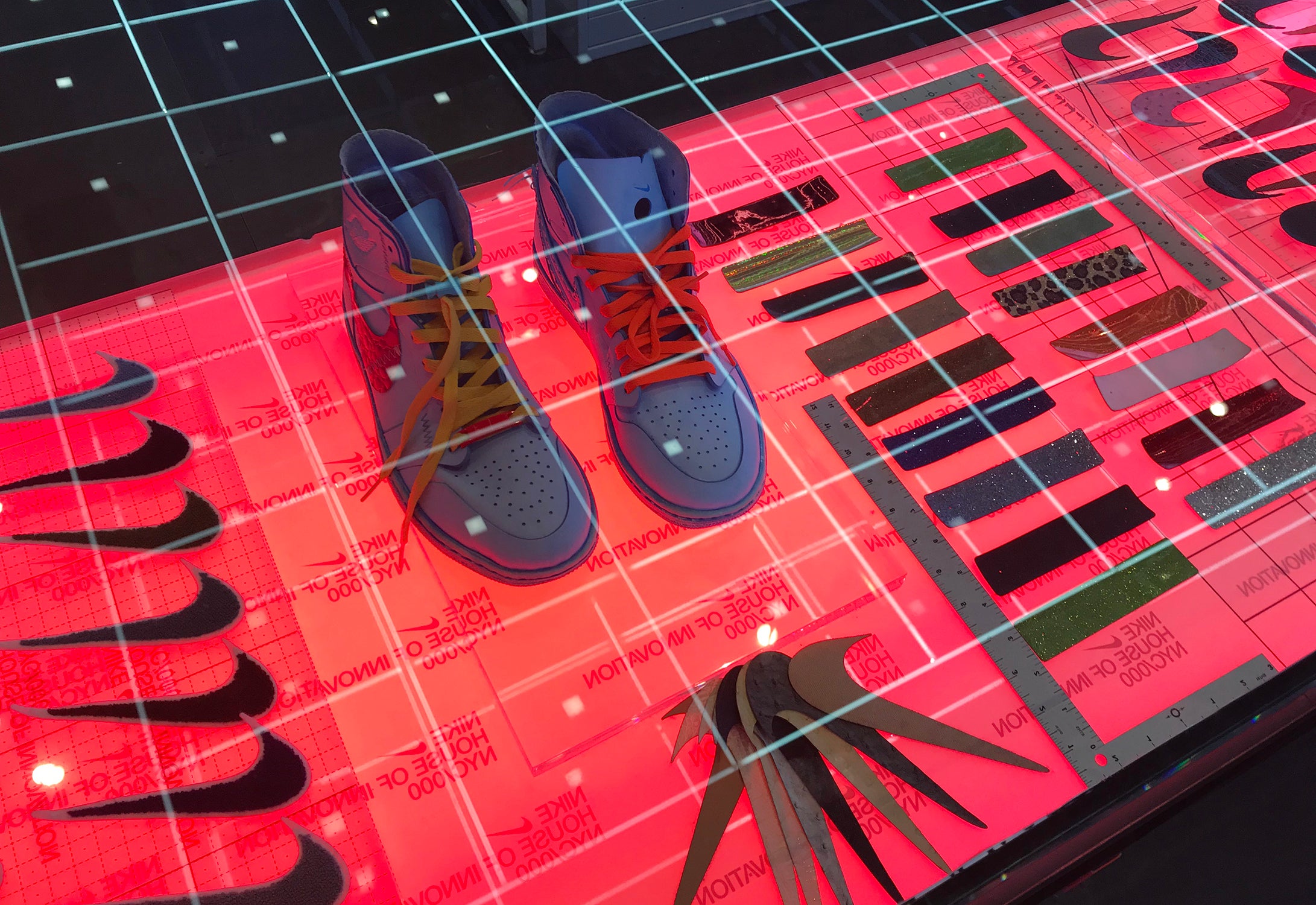
Here’s a look at colored swooshes, tongue tag designs and colored laces on display in the Arena Sneaker Bar. Design note: mirrored, transparent and shiny surfaces were ubiquitous, making the store photo-worthy at almost every turn.
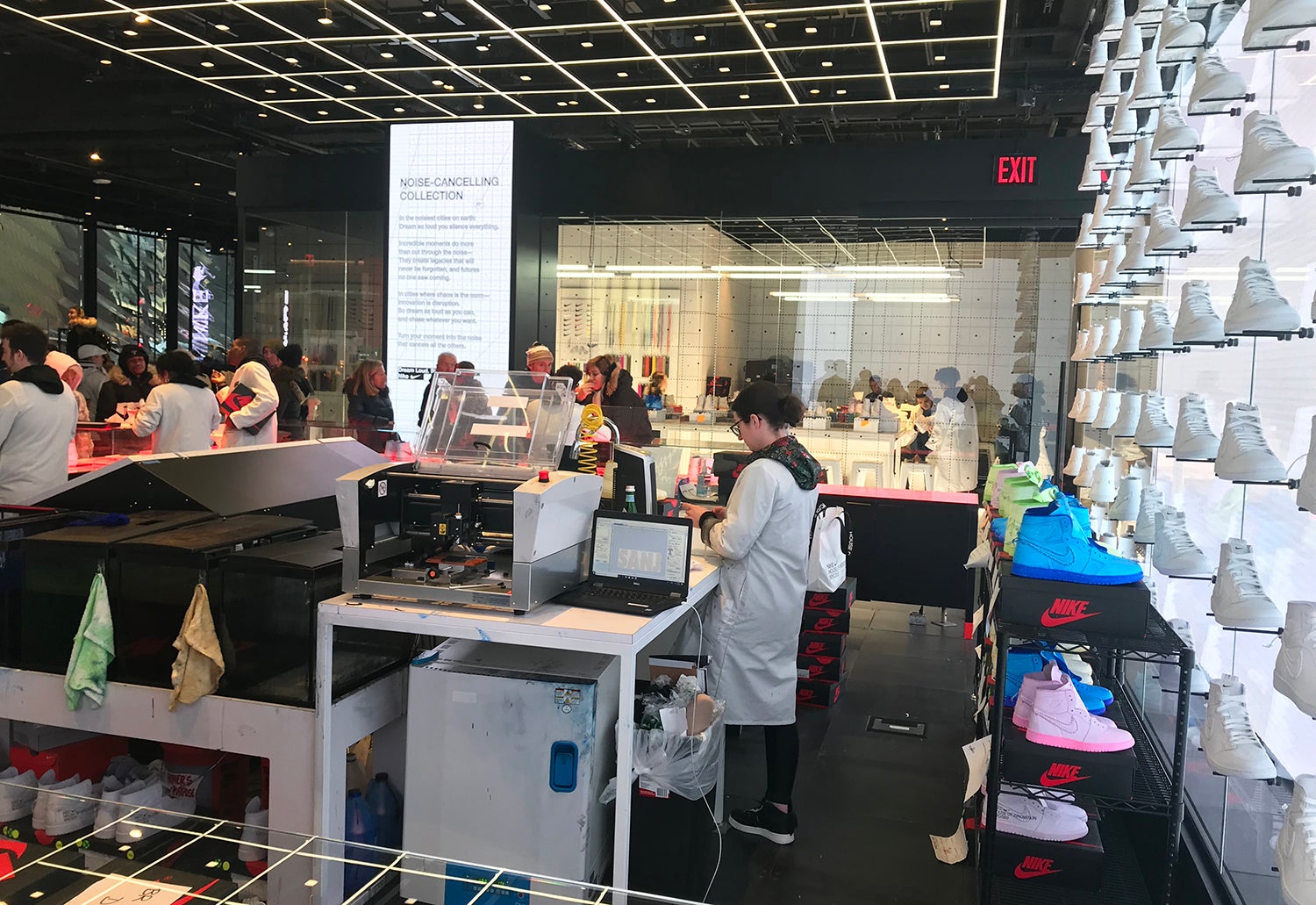
The sneaker available for customization that week was the Air Jordan 1 High, worn by Nigel Sylvester, a BMX rider from Queens. Staffers behind the sneaker bar wore lab coats and pitched the service to curious shoppers. To take part, consumers filled out a form to schedule a one-hour appointment with a large group inside one of the store’s two Maker Studios.
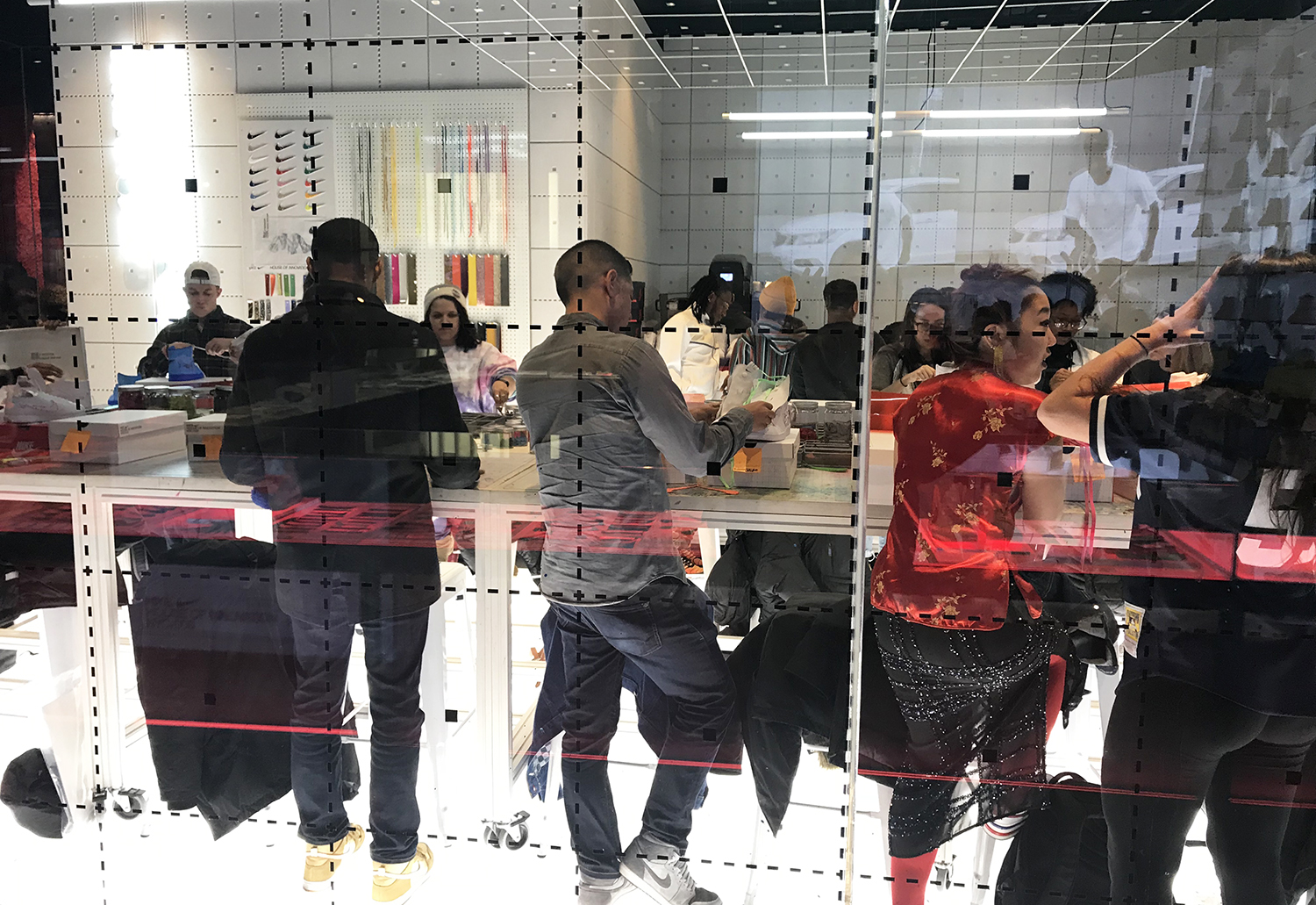
Here’s a group customizing their kicks, with dip-dying (though coloring the shoe would require a wait of one to two days), shoelace color, swoosh color, decals, embroidery, patches, lasering, zippers, tongue tags and more.
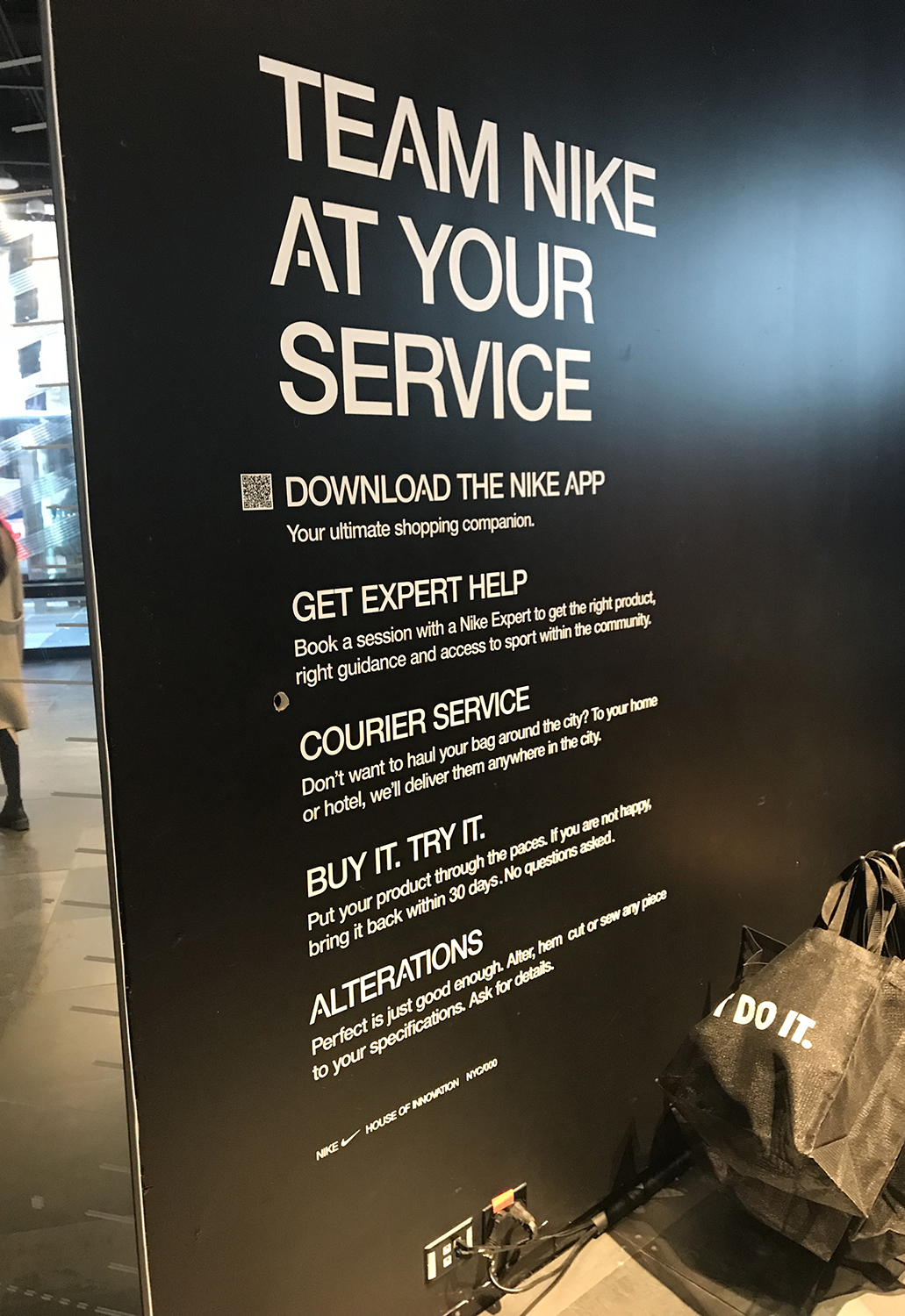
Before heading down to the basement floor, consumers learn about the Nike app’s digital features, from booking a private style session with a Nike expert to courier service to free alterations.
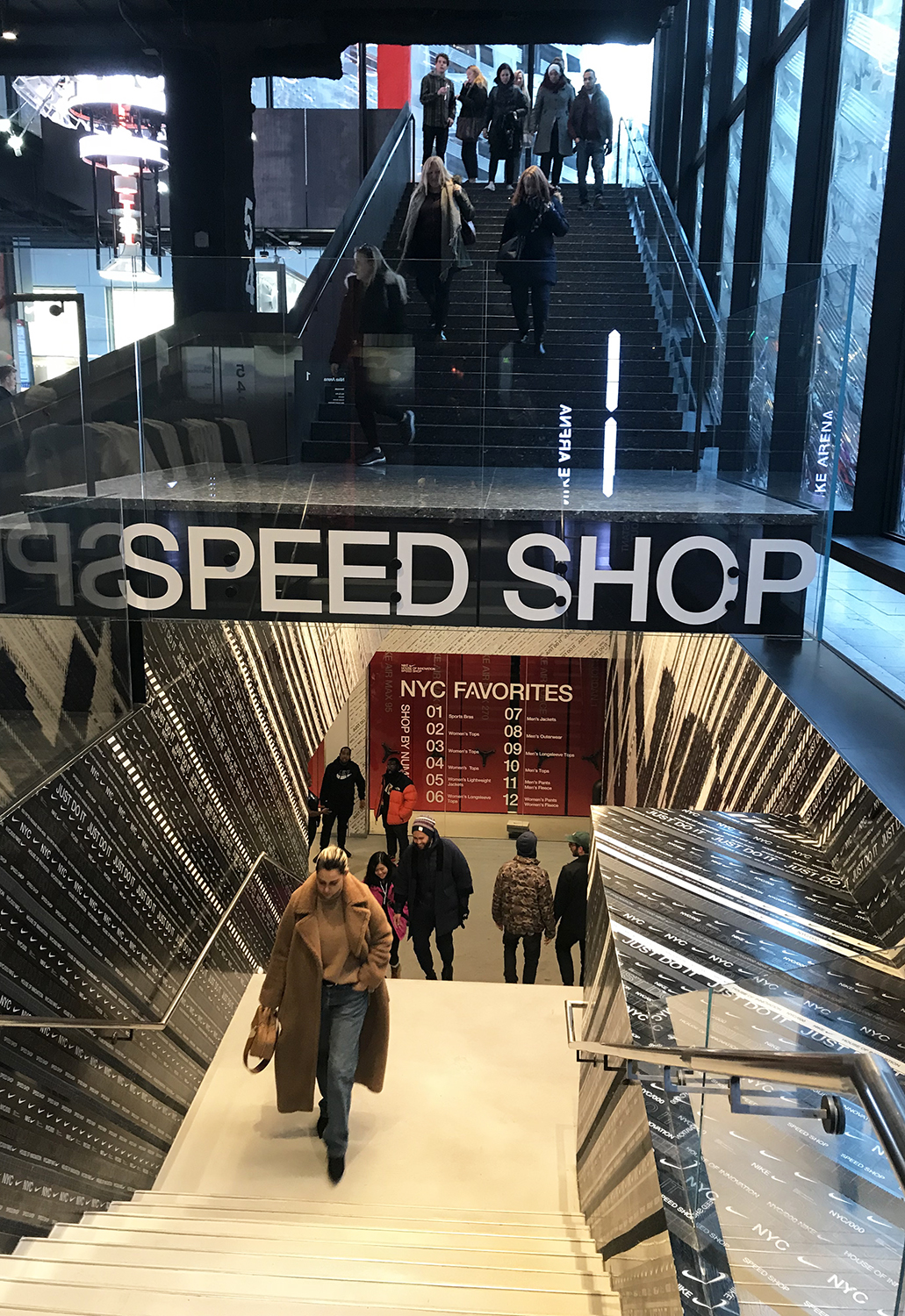
On the basement floor, called the Speed Shop, the brand took a page from its Nike by Melrose store, using digital data to pre-stock and feature the most popular products bought within the store’s zip code. Designed for locals who want to get in and get out—or for those who want to shop the local trends—the process allows Nike+ exercise- tracking members to reserve products ahead of time to try on in the store.
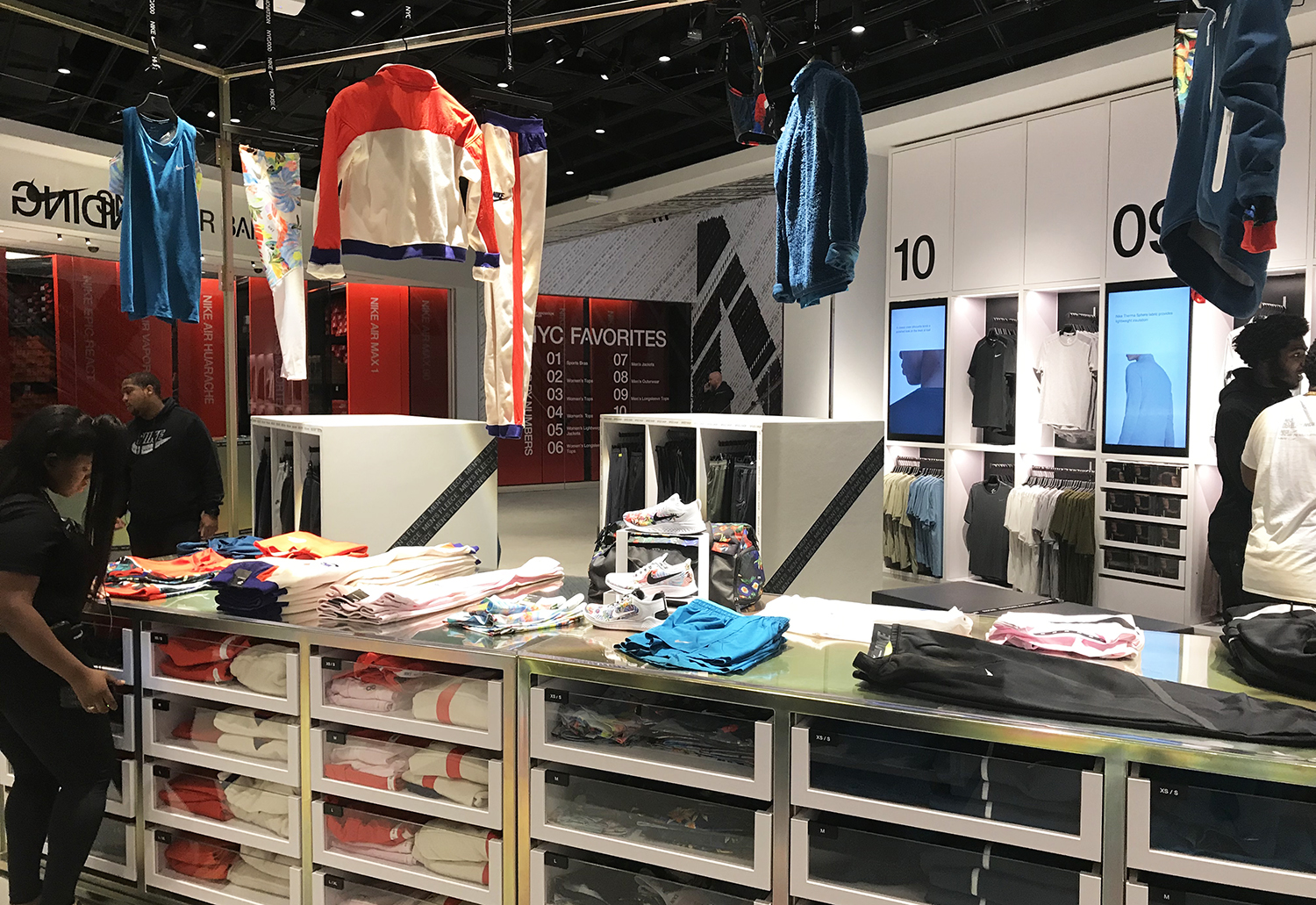
Twelve sections of products were on display in the Speed Shop, allowing consumers to shop by numbers within the app.
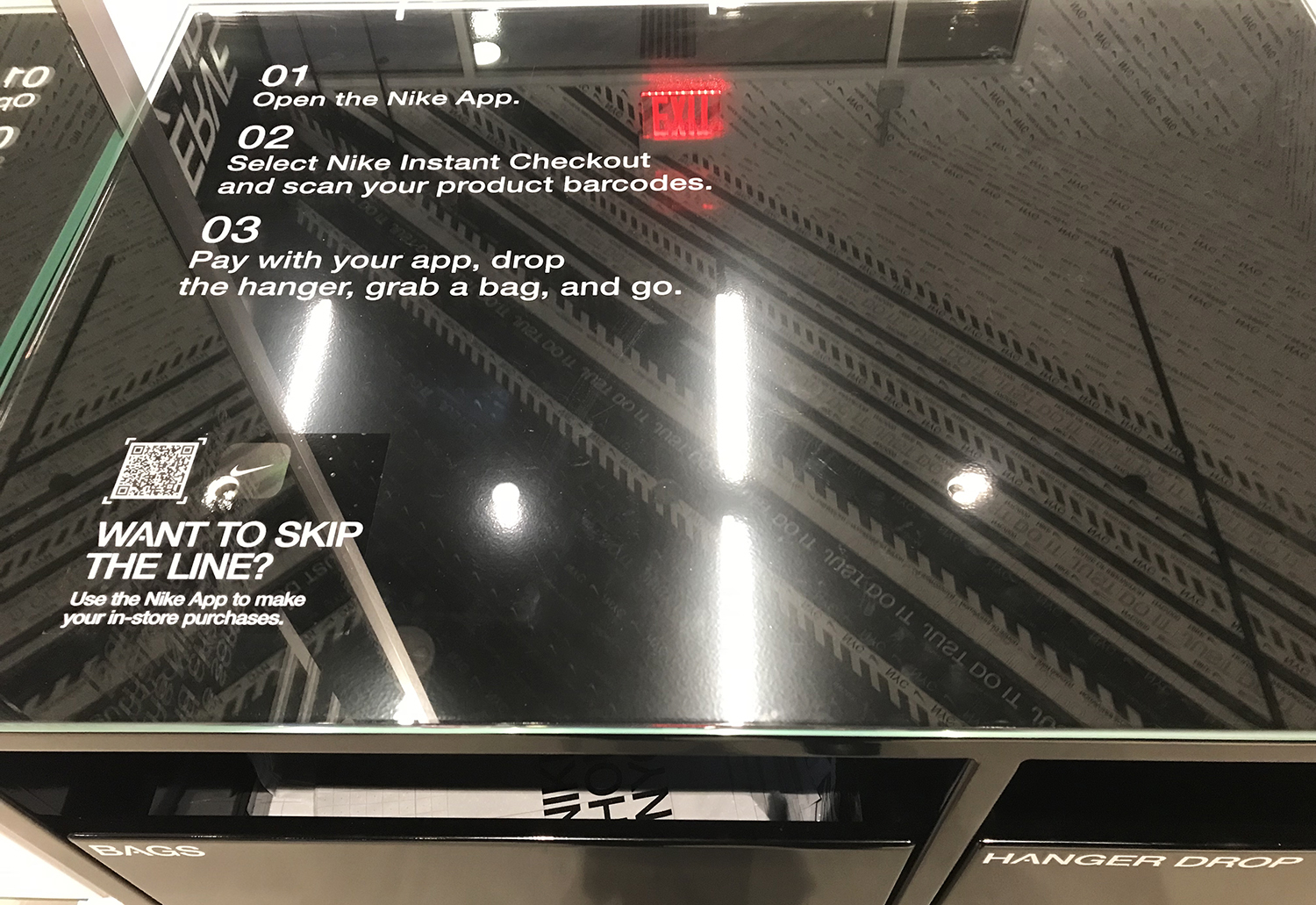
An express shopping option available in the app allows a self-checkout through scanning the product barcodes, paying within the app, placing hangers in a bin and grabbing a bag. These stations are placed on each floor.
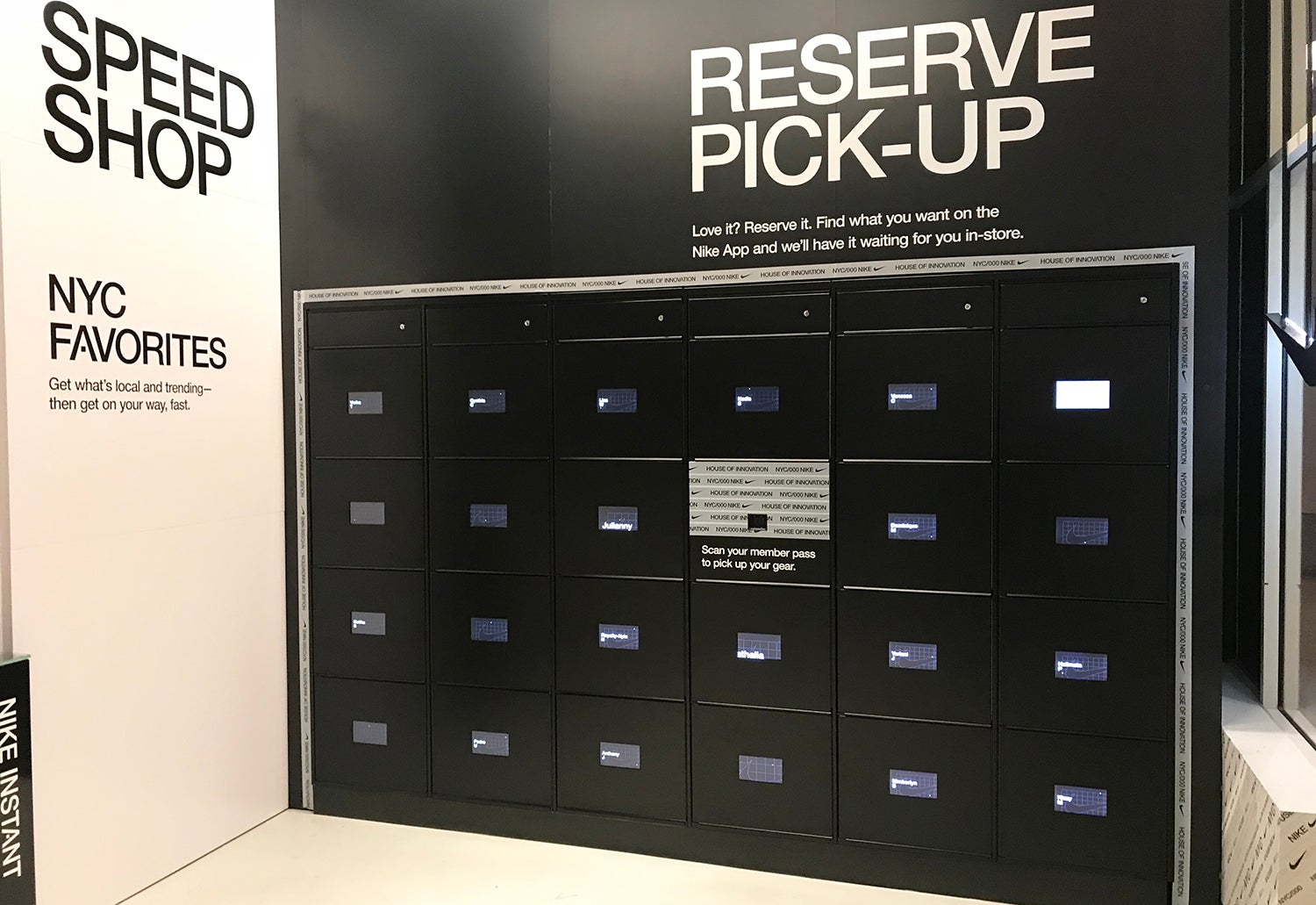
Consumers can reserve items within the app before entering the store and then picking up the gear at the Speed Shop lockers before purchasing.
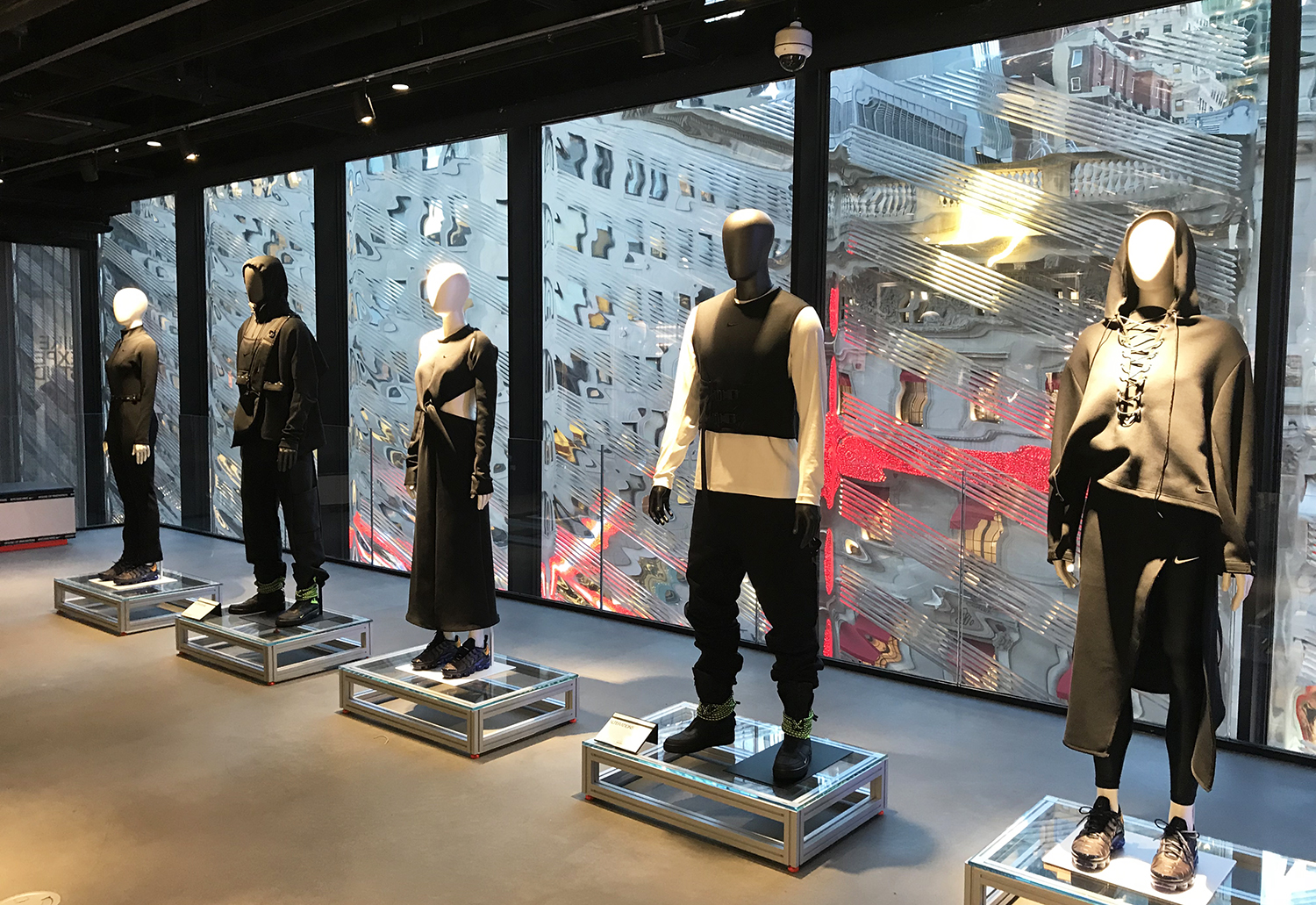
On the fifth floor is a Nike Expert Studio, where consumers who booked a private session go for a fitting and consultation. Shoppers are able to customize one of these outfits with alterations, color choices, fabrics and more, which are then ready in three weeks. Another digital feature: consumers can scan barcodes of the clothes on mannequins, find a size, and have the product waiting for them in a fitting room.
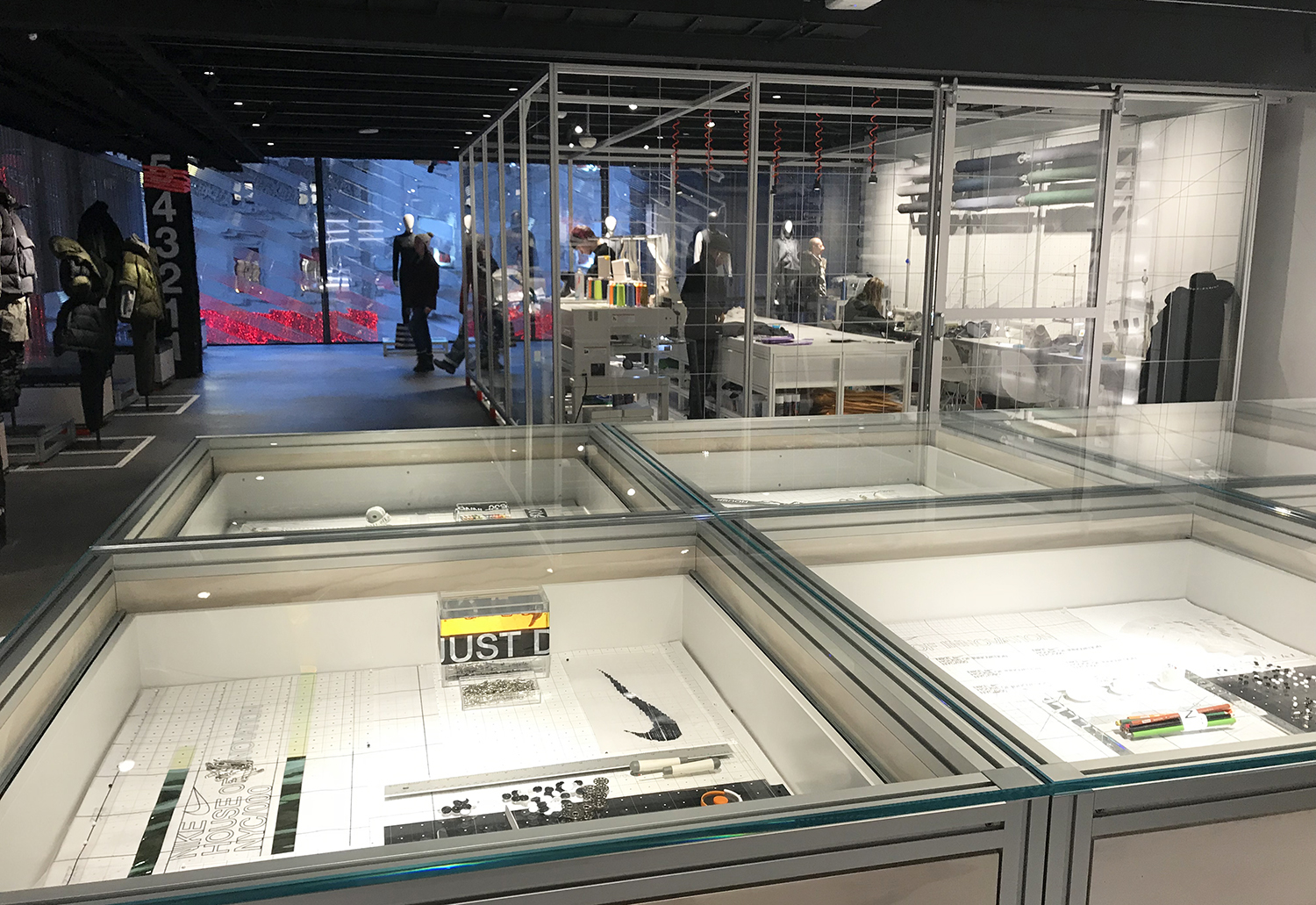
The store’s second Maker Studio is pictured here, located on the fifth floor, where Nike experts customize products for shoppers.
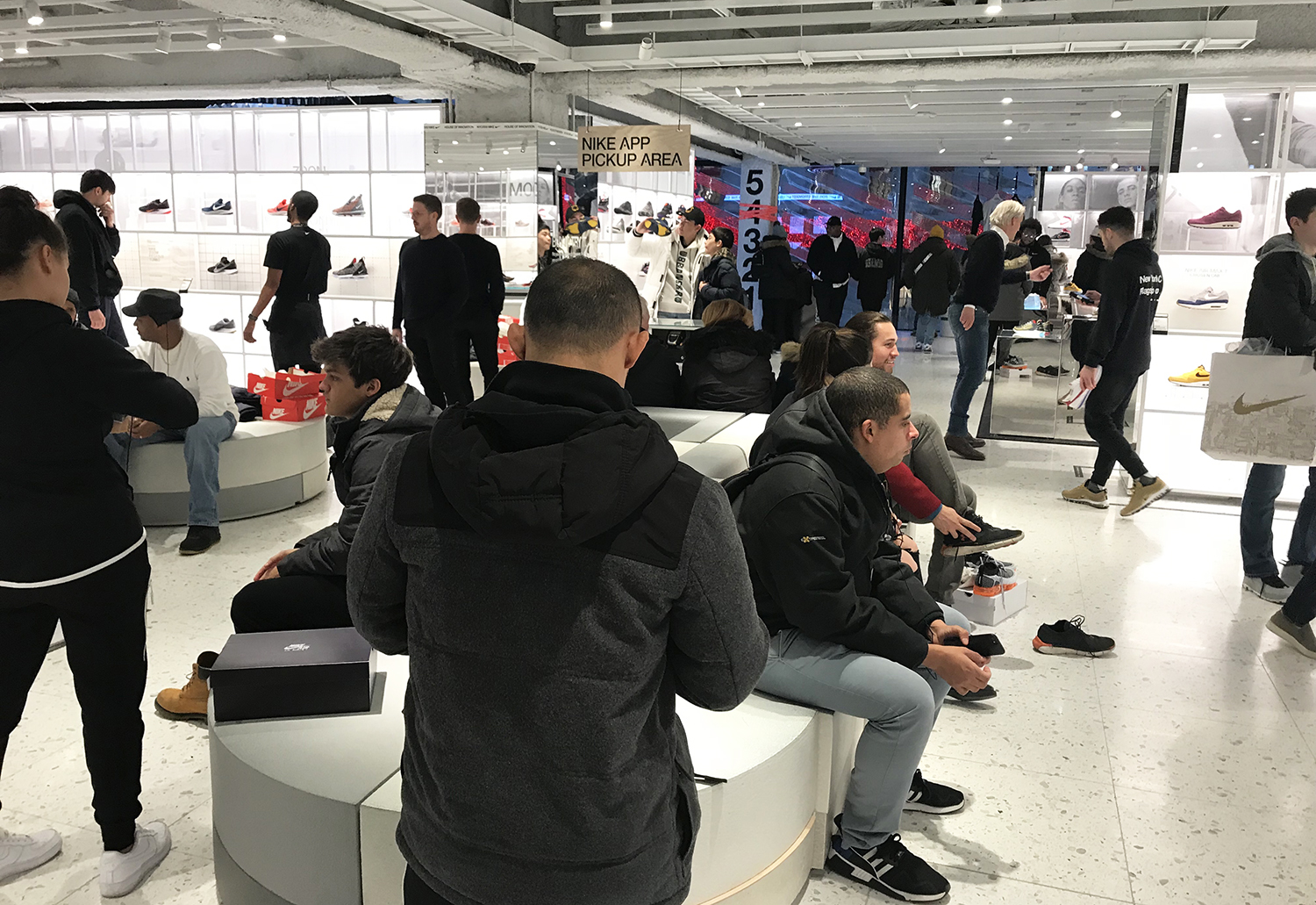
Floor four featured the popular Sneaker Lab, an enormous collection of Nike sneakers shoppable via the app through scanning product barcodes or the old-fashioned way with customer service reps. On each floor, consumers would congregate at a spot labeled Nike App Pickup Area after they scanned a product barcode. In the Sneaker Lab, however, plenty of shoppers chose to approach employees for sizes rather than go the digital route.
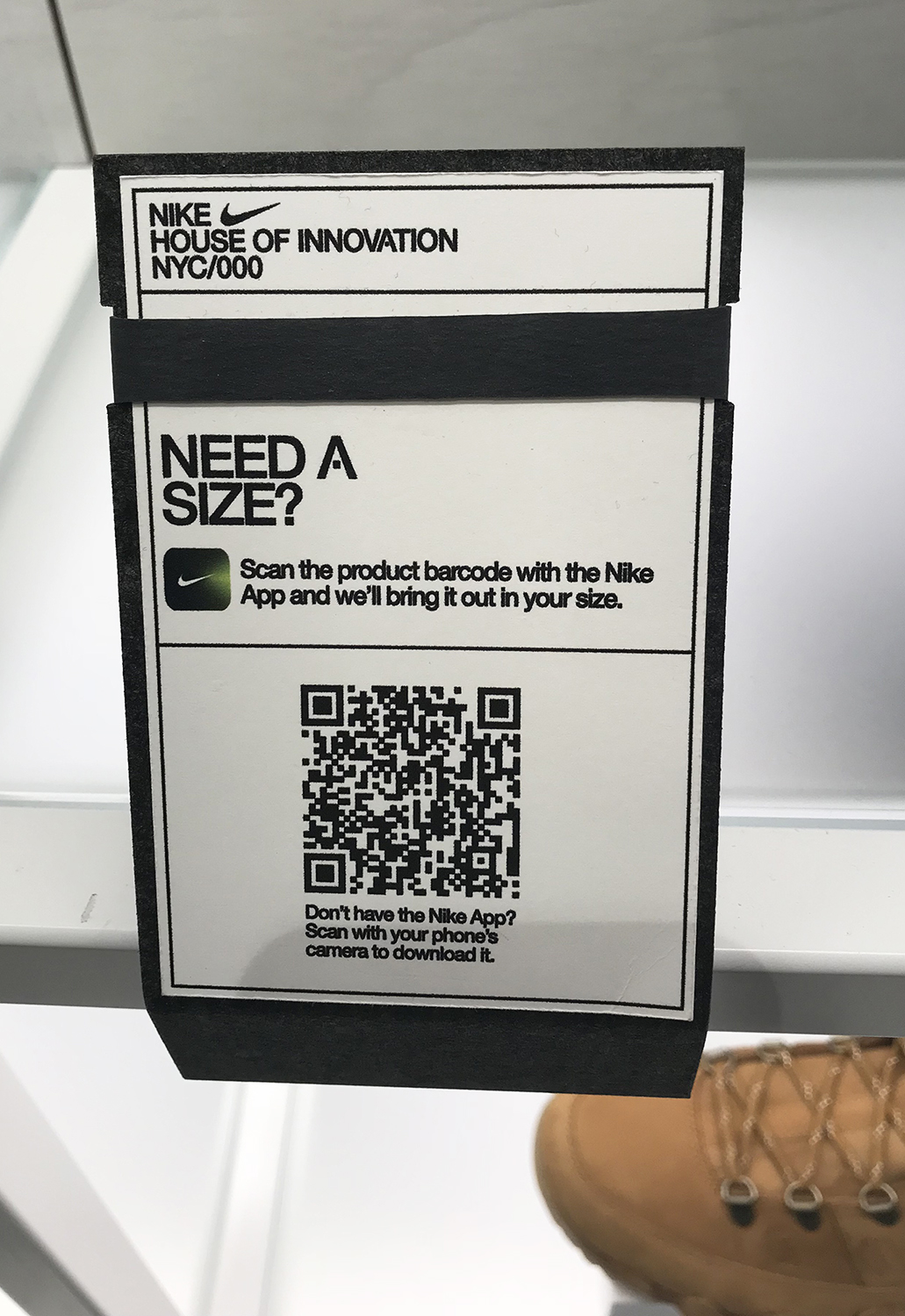
Prompts throughout the store to download the Nike app, such as here in the Sneaker Lab, featured QR codes to scan.
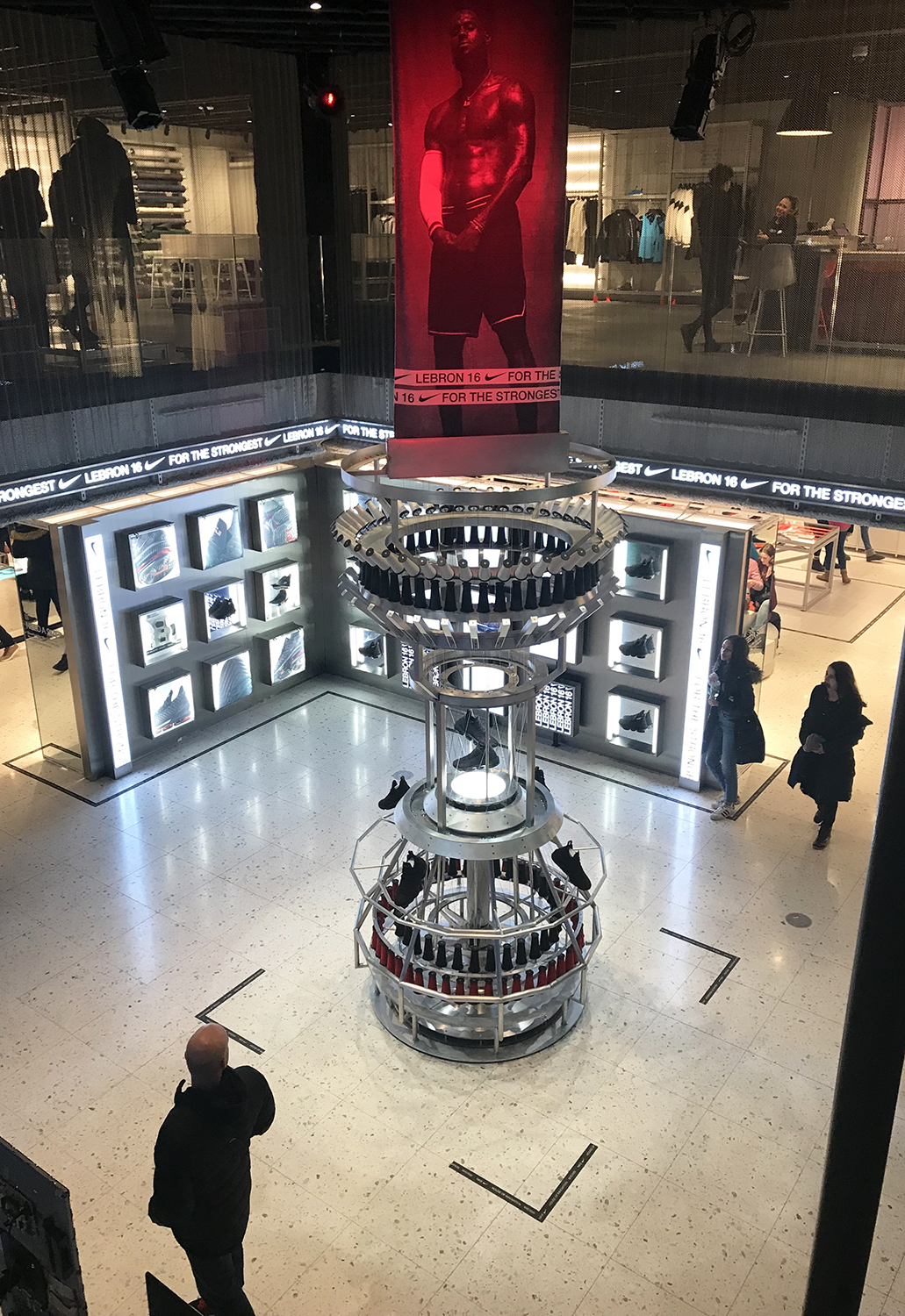
One of the store’s educational design components: An installation demonstrating the knitting process of the Lebron 16 shoe.
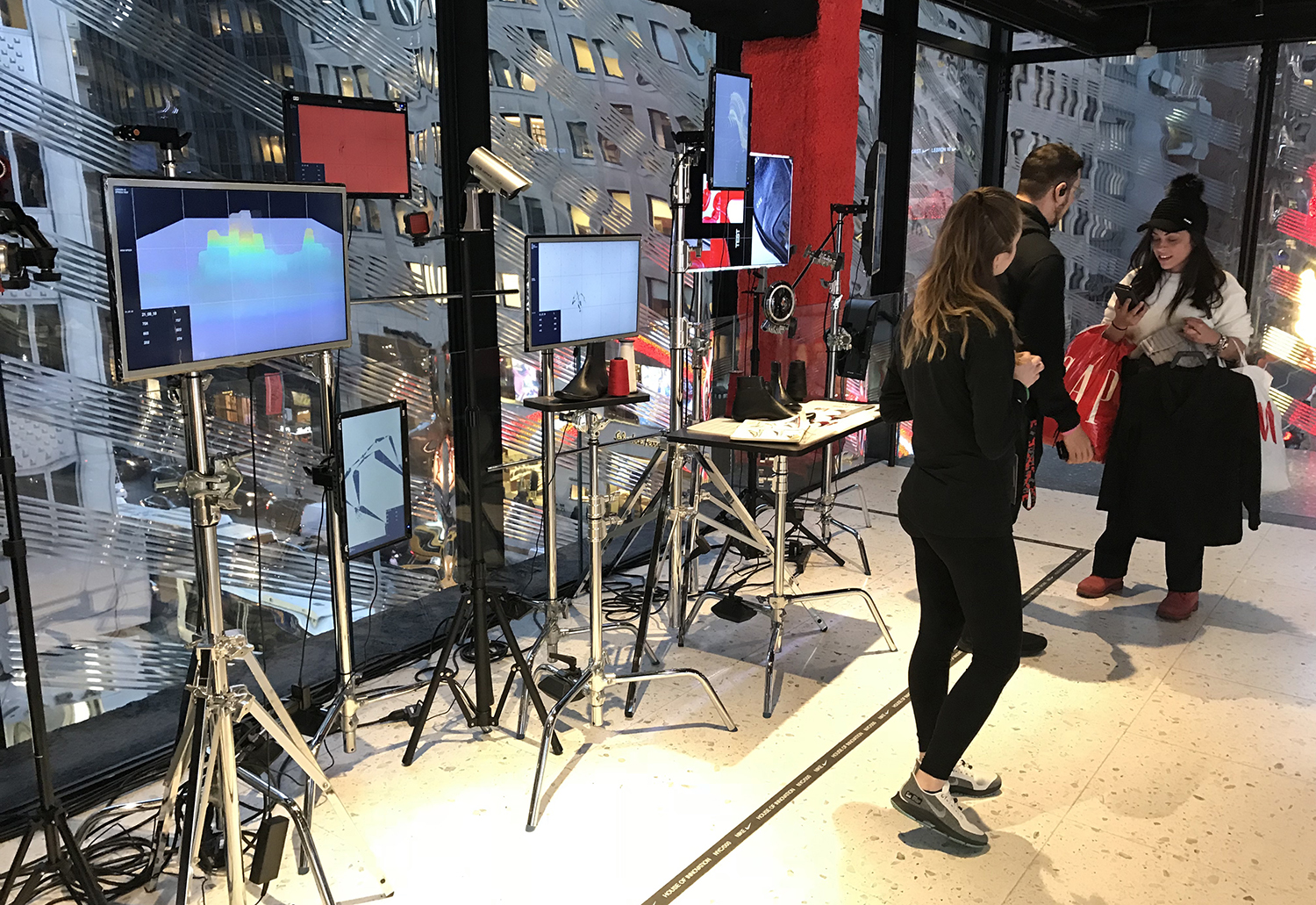
Here curious sneaker heads could explore through video how each portion of the Lebron 16 was made.
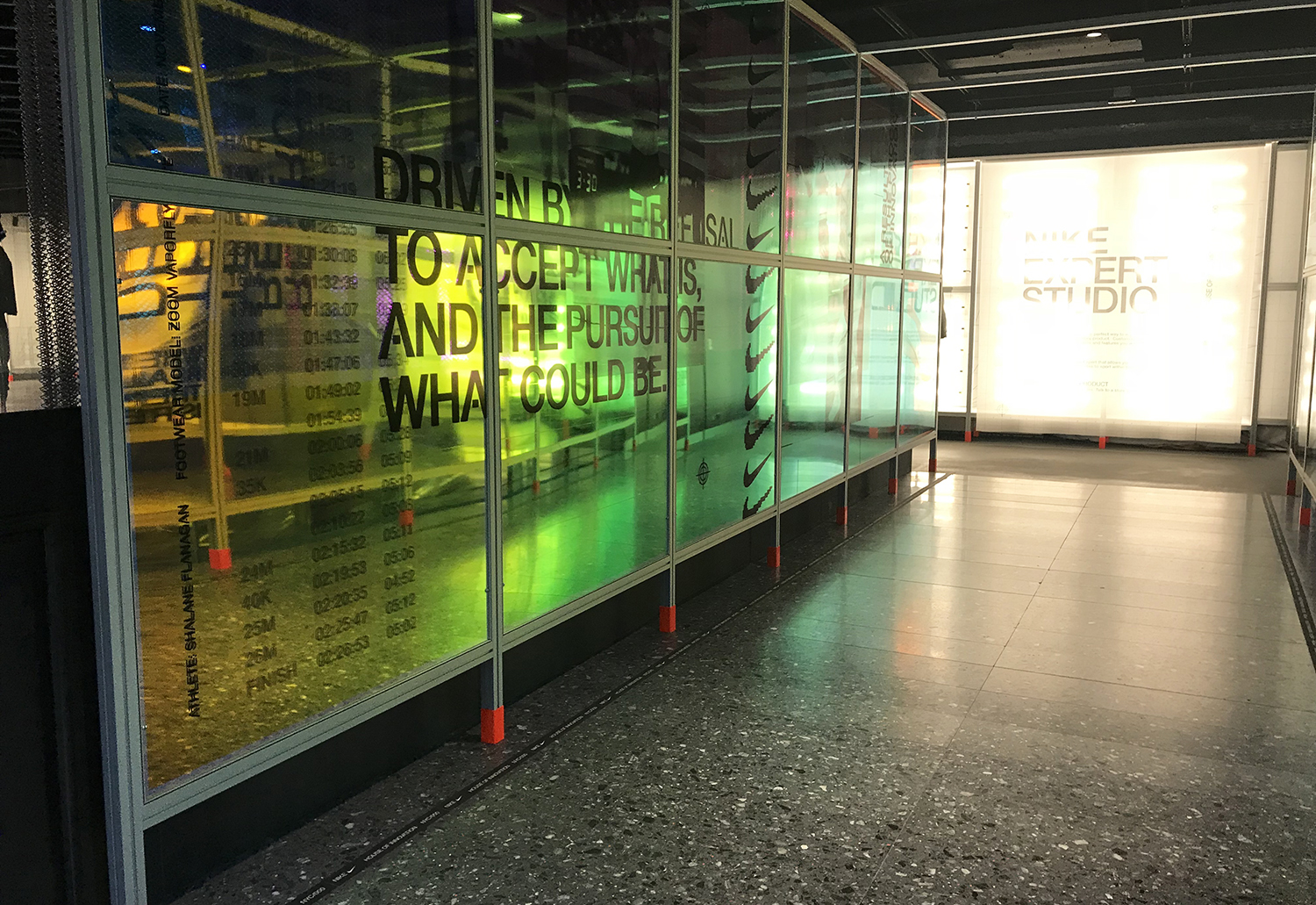
Consumers choosing to navigate the store by staircase rather than elevator (which had signage detailing what was on each floor) encounter Nike messaging, as seen in this hallway transition.
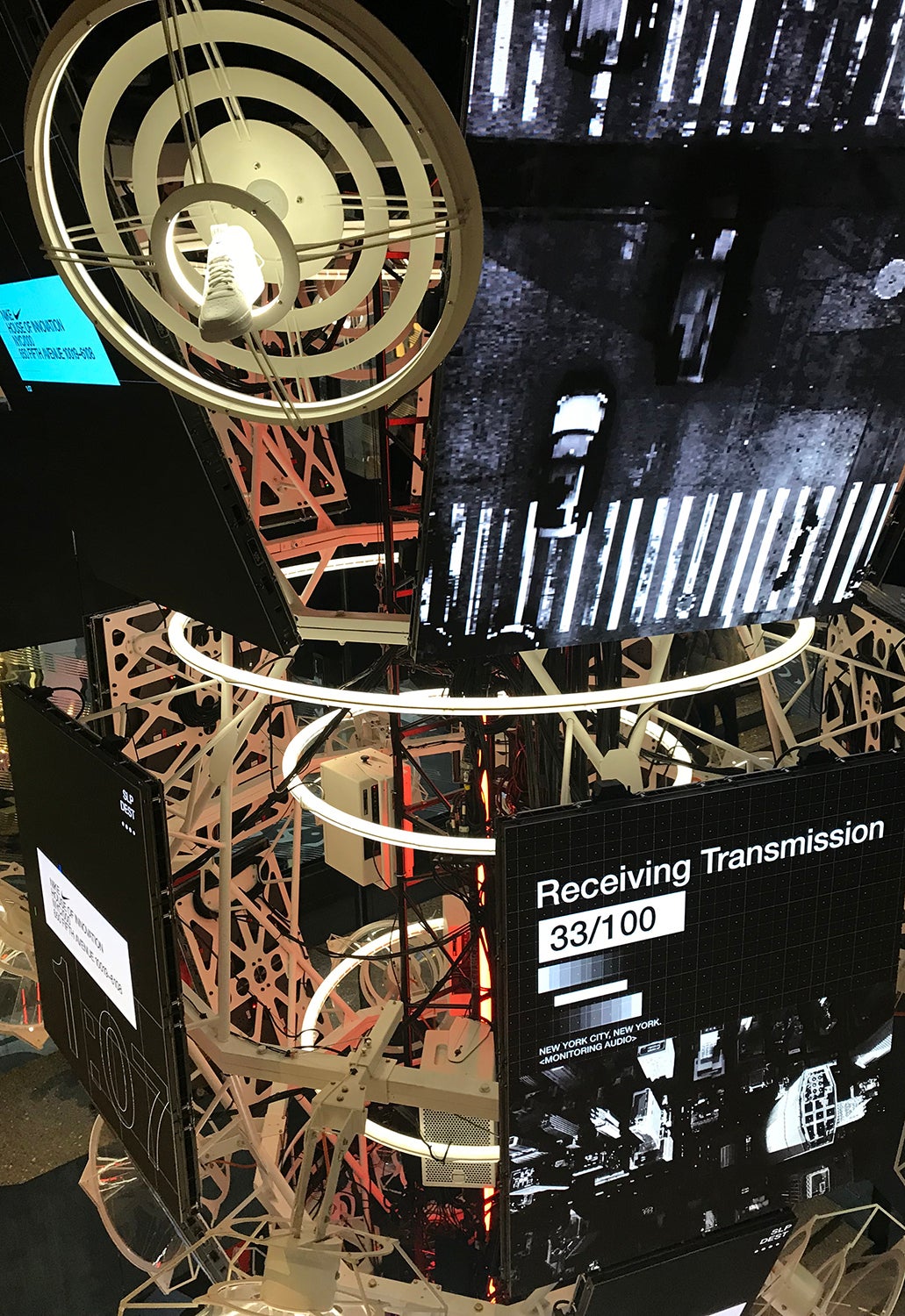
A massive, multi-story installation featuring black-and-white video clips of the Noise Collection athletes and audio tracks of New York City streets.
 More Experiential Retail Coverage: