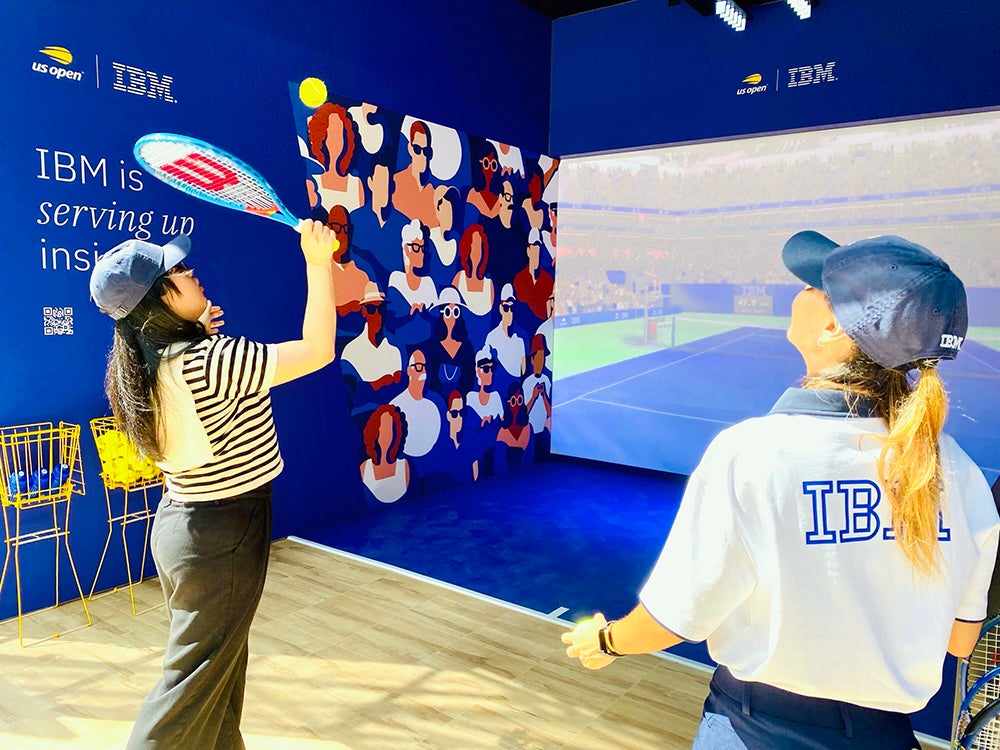
A new methodology is helping brands like IBM design for what matters most.
When an industry standard doesn’t exist, create one. It’s the mentality of a growing number of top experiential brands and agency partners who are embracing portfolio-wide measurement strategies to better track the often-long-range ROI of live events.
“It’s a fundamental gap for our industry,” says Fiona Bruder, global CEO at experience marketing agency George P. Johnson (GPJ). “Advertising has always had standard metrics that everyone stands behind. But with the expectations put on the CMO role in the last 10 years to drive business results, more investment in experiential means more accountability. It’s our job as leaders to invest not just in the future of our agencies, but in the future of the industry.”
GPJ’s internal strategy and decision science practices help clients plan for and, more importantly, design for ROI. The agency recently formalized its proprietary measurement methodology with the launch of Experience Intelligence System, developed and tested across multiple global events, according to the team.
“Experiential is now the tip of the spear, the primary channel for go-to-market, encompassing a growing share of overall spend, but the shift toward experiential-first campaigns is coming with the performance expectations marketers had for other channels,” says Brendan Brown, GPJ’s global head of strategy and planning.
We sat down with the team behind the methodology to explore three decisions that can help ensure event data translates into business intelligence.
Decision 1: What are your stakeholders’ goals?
Event marketers often set their objectives around the results of the experience itself—impressions, reach, total number of badge scans. But GPJ argues that 75% of the work—deciding what to measure and getting systems in place—can and should take place before the event. This includes conducting discovery calls with a variety of internal stakeholders, from product developers down to the sales force, aligning on objectives, selecting KPIs and developing a data capture plan.
For example, rather than assign an arbitrary badge-scan total, discuss up front what company or attendee profile could represent an opportunity, and then design a method to track that.
“One shift we’ve noticed is our clients talking about cohort buying, how multiple stakeholders within the same customer organization, attending your event, shortens the lead lifecycle,” says Mike Paglia, director of Decision Science at GPJ. “So, you might measure data around the percentage of cohorts coming back to your event, or what actions they took, which is data you can serve up directly to sales and help prove the event sped up that conversion.”
Longtime GPJ client IBM establishes what success looks like across audience participation, brand sentiment and business impact—emphasis on audience participation. For Sarah Meron, chief communications and brand officer at IBM, this approach lets the organization “think intentionally” about the journey it wants attendees to take with the brand.
“What do we want them to experience? What do we want them to understand? And what action or conversation do we want that experience to create?” Meron says.
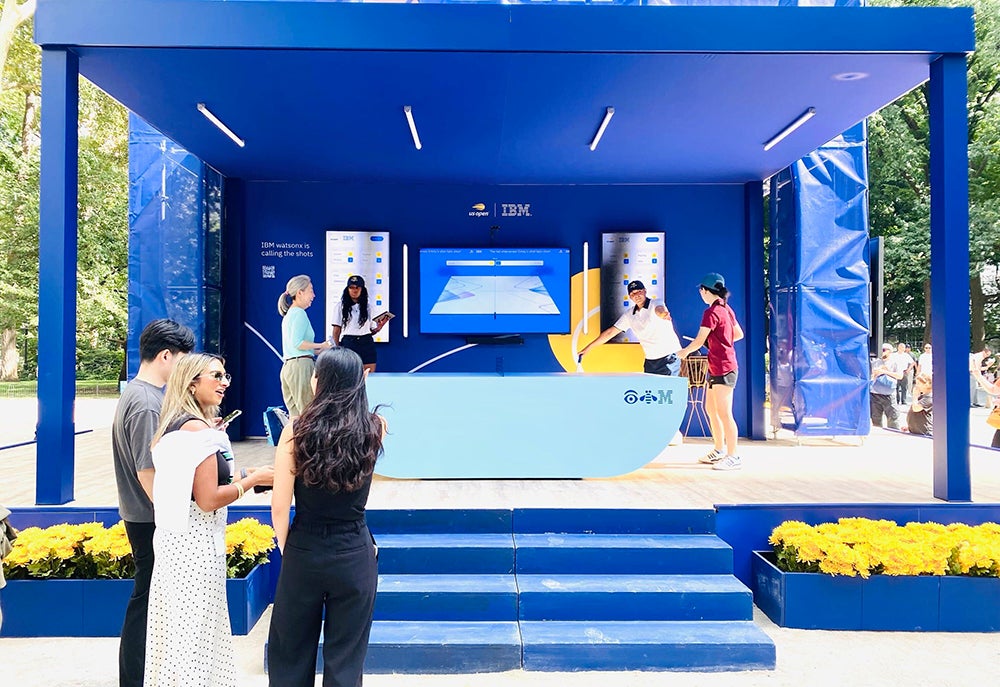
Decision 2: Is your portfolio ‘benchmark-optimized’?
IBM’s AI Sports Club is a vehicle for just that. The brand engaged GPJ to create the traveling sponsorship activation that makes abstract B2B technology culturally relevant and delivers on YOY metrics. What began as a temporary pop-up in New York City for the 2025 US Open has become a global experiential platform for activating IBM’s marquee sports sponsorships, including at The Masters, for UFC and for Scuderia Ferrari.
The goal of the activation is to make AI approachable through hands-on experiences, connecting fans and attendees to technologies and innovations powering different sporting experiences. It is storytelling that interests a broad audience that includes fans, locals, tourists, business leaders, students, “anyone curious about technology in general,” Meron says.
“The same three questions apply to a booth in Singapore and the AI Sports Club in New York: how did people take part, how did they feel about the brand, and what did it do for the business?” she says. “Asking them the same way every time means each event teaches the next one. We can see which moments pulled people in, which ones led to a real conversation, and which leads actually moved through the pipeline. We understand how the experience lifted the brand and moved the business.”
Standardizing how you’re measuring across all experiences, Brown adds, “unifies a team under a single source of truth so everyone knows what winning looks like. Clarity breeds motivation, so when a team sees their Experience Intelligence System score move in real time, it creates feedback loops that drive continuous iteration, but also alignment with teams so that they’re all rowing in the same direction.”
Decision 3: How will the data support growth?
As Paglia puts it, “Data gets better with age.” The AI Sports Club allows teams to look across the portfolio and identify what’s worth building on. Goals aligned with the business and an event strategy that sets the team up for benchmark data lead to portfolio-level continuous improvement, investment and strategic clarity that matters to the ever-expanding CMO role.
“The biggest shift is to stop thinking of measurement as a scorecard at the end of an event and start treating it as a learning loop. Yes, there is value in simply knowing how an activation performed but using those learnings to make the next experience better is always the focus,” Meron says. “I’d encourage leaders to look at their portfolio over time rather than evaluating every activation in isolation. A standardized approach gives you the ability to identify what is consistently driving engagement and make smarter decisions about where to invest. For IBM, that means continually asking how we can create experiences that people genuinely want to engage with. The opportunity is to show up in culture in ways that are useful, unexpected and human.”
Ultimately, the approach transforms experiential from a budget line item to a strategic communications and marketing channel, because it’s designed for multiple stakeholders. And as the GPJ team describes it, creating “executive-ready proof” of impact.
Featured Photo: George P. Johnson