

The last 21 months have proven that the challenges women in the event marketing industry face are unique and constantly
evolving. In the latest “Women in the Workplace” report, Leanin.org and McKinsey & Company reflect on the burnout catching up to women in corporate America. The survey revealed that 42 percent of women say they have been “often” or “almost always” burned out in 2021, compared to 32 percent in 2020. And in this business sector dominated by women, the impacts of the Great Resignation are likely reverberating a bit stronger.
We created our annual Women in Events program a decade ago to acknowledge, inspire and connect women in the industry through in-depth editorial conversations featuring leading women and, more recently, through in-person (and virtual) experiences for all. While the pandemic has amplified or created more challenges for women, it has also highlighted the unique skills women bring to the table—skills that have helped their organizations pivot and innovate.
A theme that often dominates our conversations with women in events year after year is balance. The innate ability to define and redefine it is helping women lead their organizations into a new era of events that prioritizes the well-being of team members and attendees for greater business success. Ceos now espouse the virtues of leading with empathy, but women have been privy to this secret all along.
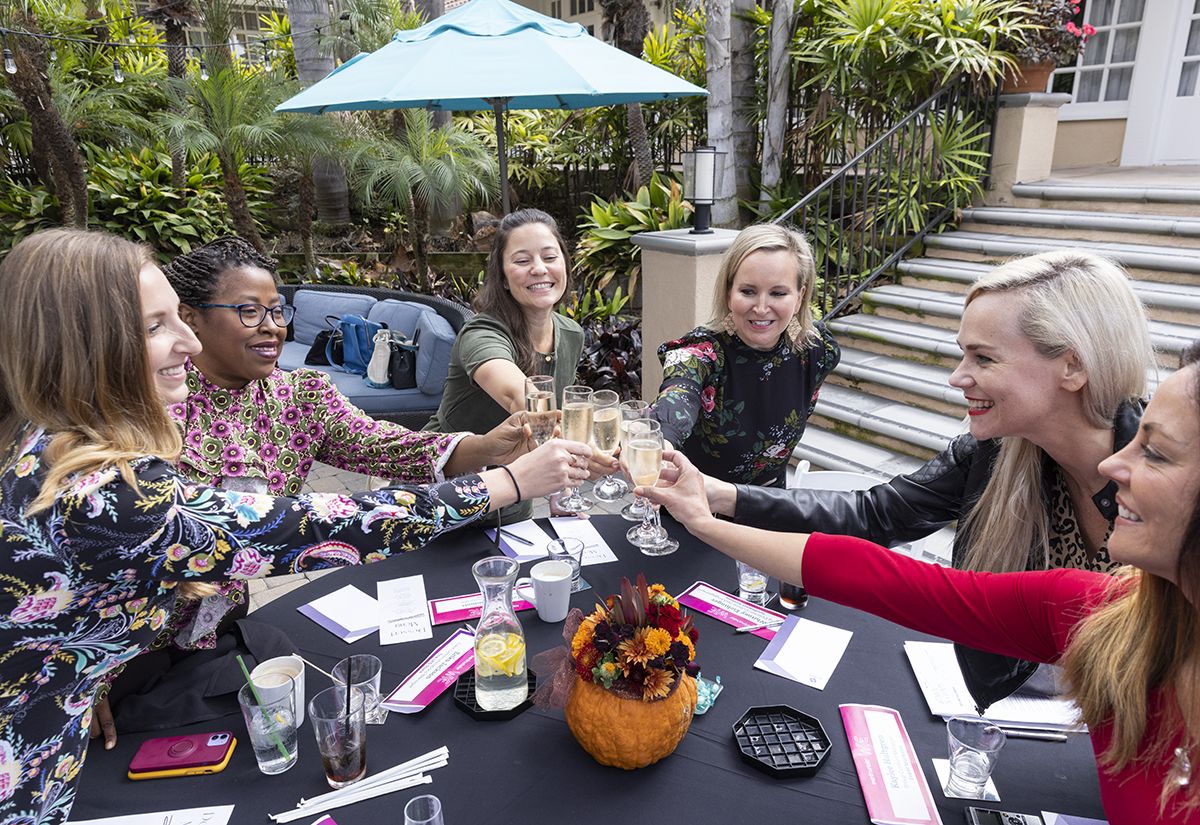
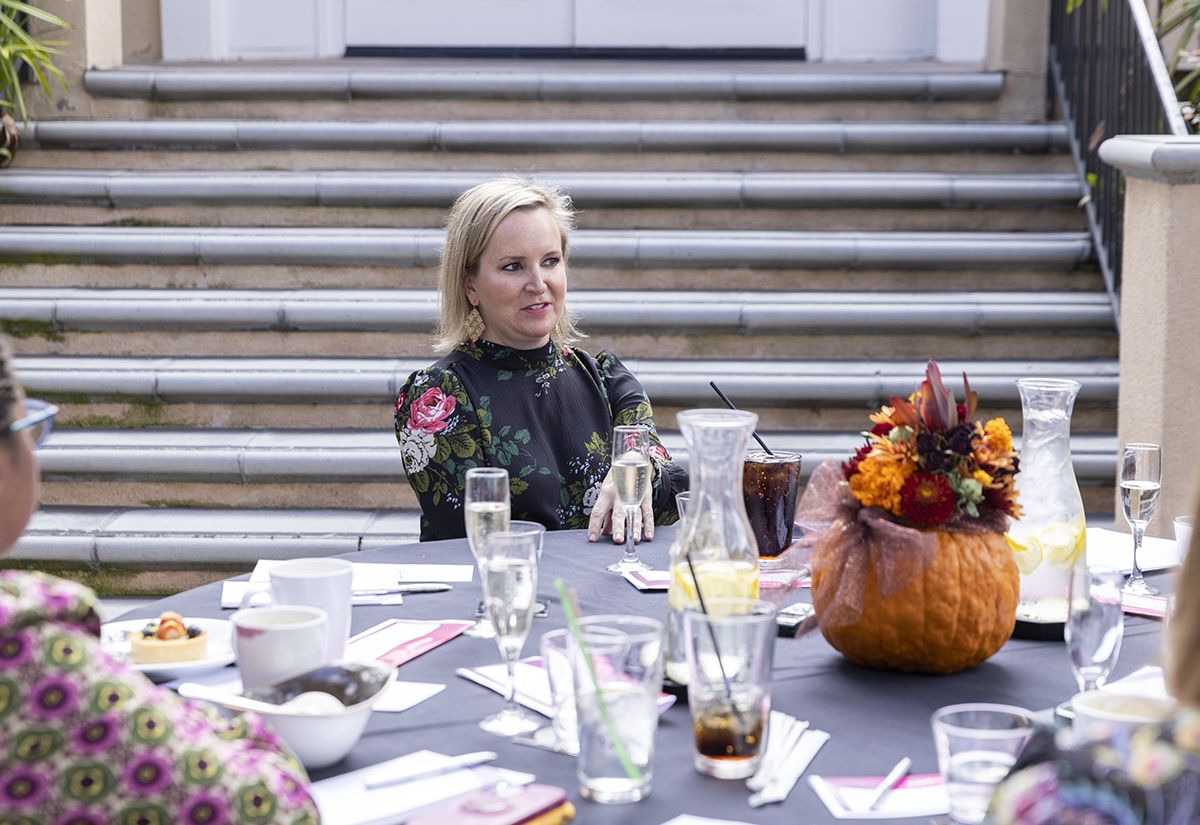
We delved into this and other commonalities and contemporary issues with our nine honorees during in-person roundtable discussions held in November in New York City and Newport Beach, CA. And as one of our participants said, offering advice to those freshly entering the industry: “Be excited” for this new era. Well, we’re excited to share their candid perspectives in these next pages. Let’s meet this year’s roster of Women in Events.
By Rachel Boucher

CAITLIN SPINWEBER
SENIOR SPECIALIST-EXPERIENTIAL MARKETING
AUDI OF AMERICA


Favorite motto or motivational quote.
My boss at my first internship gave me a picture frame with the quote, “Be who you are and say what you feel, because those who mind don’t matter. And those who matter, don’t mind.” It’s a Dr. Seuss quote.
Best career advice, given or received.
Don’t sweat the small stuff. I think things are constantly changing in our world, especially the last year and a half. It’s all a part of our industry now, and it’s better to use that energy to problem solve and adjust rather than stress over the fact that things have changed and are changing.
If you could change one thing about the industry, what would it be?
One of the positives that came out of the last 18 months is that events and consumer marketing have expanded beyond the physical footprint. With everybody at home, we had the opportunity to be creative and rethink how we engage consumers with our brand. There are so many different avenues now for people to experience events, which I think is amazing, because it gives us this opportunity to meet consumers where they are.
A pandemic-era solution you’re most proud of.
We did so much work with our vehicle fleets to get them out in the market and helping organizations that were helping people. After we went into lockdown, we had these cars just sitting idle and we wanted to use them for good. To be able to use the resources we have at Audi to help people out—that was special.
The ‘non-negotiables’ for you in creating events.
I’m big on attention to detail and the little things. For us at Audi, it’s rotating the wheel center cap so that our logo is horizontally aligned. It’s adjusting the lighting on the stage, or moving directional signage for the third time so that customers have a smooth entrance. I think it’s those smaller details that can make a big difference between a not-so-great and a premium space, or a not-so-great customer experience and a great one.

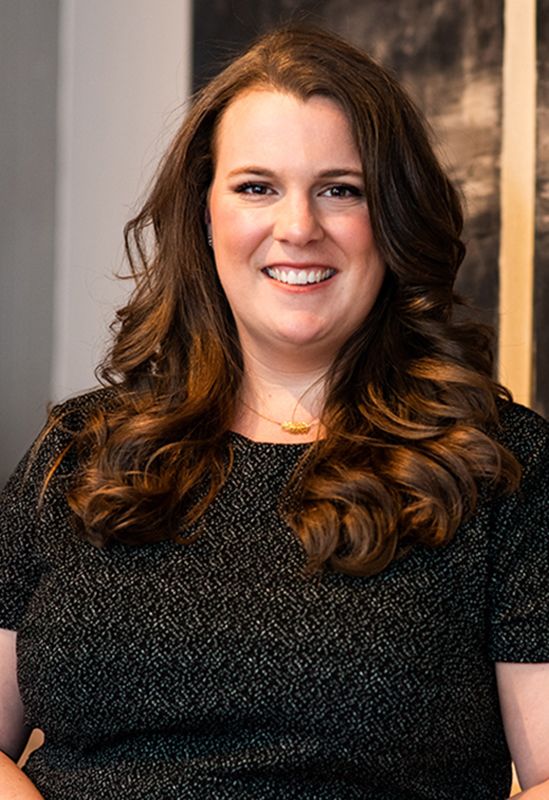
JESSICA VARGAS
DIRECTOR-MULTICULTURAL MARKETING
HBO MAX




Favorite motto or motivational quote.
“Para atras ni para cojer impulse. Siempre Pa’lante!” Which means: Always move forward, never look back.
Best career advice, given or received.
Be your authentic self. Everyone knows Jessica because I show up as my true self to everything that I do. I actually get paid to show up as my authentic self, because I work for multicultural marketing, and I need to be true to my community and my experiences in order to create experiences for the community that I am marketing to. There’s a blessing in that, which I know a lot of
people don’t get to experience at work.
The ‘non-negotiables’ for you in creating events.
The quality of the viewing experience is a must. We will spend the money on making sure that it’s the biggest, brightest, crispest screen ever because we’re a premium channel and we want the consumer to have a premium experience. It’s all about A/V.
Book, podcast or TED Talk that’s made the most impact on your career.
I’m reading a book called, “The Power of Habit,” by Charles Duhigg, and it talks about why we do what we do, and how we can make or break a habit, so that we can get to the best place in life. It’s a topic I find interesting in shaping my career and my life in general.
A pandemic-era solution you’re most proud of.
We had an amazing event for a Bachata documentary, which is a genre of music, and because of COVID, we couldn’t get the artist to come out. So we worked with a company and created the dopest hologram of him ever. It literally looked like he was within a box at our event. He was the first Latin artist to ever do that, and that technology allowed him to “be there” for the whole week.
If not working or at home, where would we find you?
Hiking in the mountains. I went to SUNY New Paltz, which is upstate in the Catskills, and it has the best hiking trails and the best views. That, or you’ll find me having breakfast—the best meal ever. If I can get away and do it, it’s a breakfast-hike situation.
KELLY KNOWLEN
VP-SALES ENGAGEMENT AND SPECIAL EVENTS
HILTON


Best way to boost confidence before a meeting or event.
Have a thorough pre-con meeting. Review all details. Answer any questions. And once that’s over, have a minute to relax, to go out to dinner with your team, have maybe a glass of wine, go to bed early, and get ready for the next day.
Book, podcast or TED Talk that’s made the most impact on your career.
We had a book that our leader gave us several years ago. It’s called, “The Leadership Playbook: Creating a Coaching Culture to Build Winning Business Teams,” by Nathan Jamail. He then came and spoke at one of our conferences. He gives really incredible advice on building an effective and cohesive team.
The most important skill an event marketer should have today.
The ability to really listen to your attendees. Maybe it’s a survey of your attendees before you start really digging into an agenda or content. And make sure that you build that content around your attendees’ priorities so you don’t get stuck in what you want to deliver or whoever it is that is driving your conference.
Favorite female role model and why?
My mom. No one has a bigger heart or a more giving nature than her. She was a teacher, she raised three kids and she’s got nine grandkids now and would do anything in the world for anybody.
A pandemic-era solution you’re most proud of.
I had the opportunity during the pandemic to work with a global, cross-functional group in our organization to create Hilton’s EventReady Playbook. It’s one of the most rewarding things I’ve done in my career. It’s a global resource for our customers and our hotels to reference and to feel confident as they plan upcoming events. We really put an industry-leading plan in place.
If not working or at home, where would we find you?
In the North Carolina mountains. We have a cabin in a little town called Banner Elk, and I just love to escape up there to the fresh air, the views and the wide-open spaces.
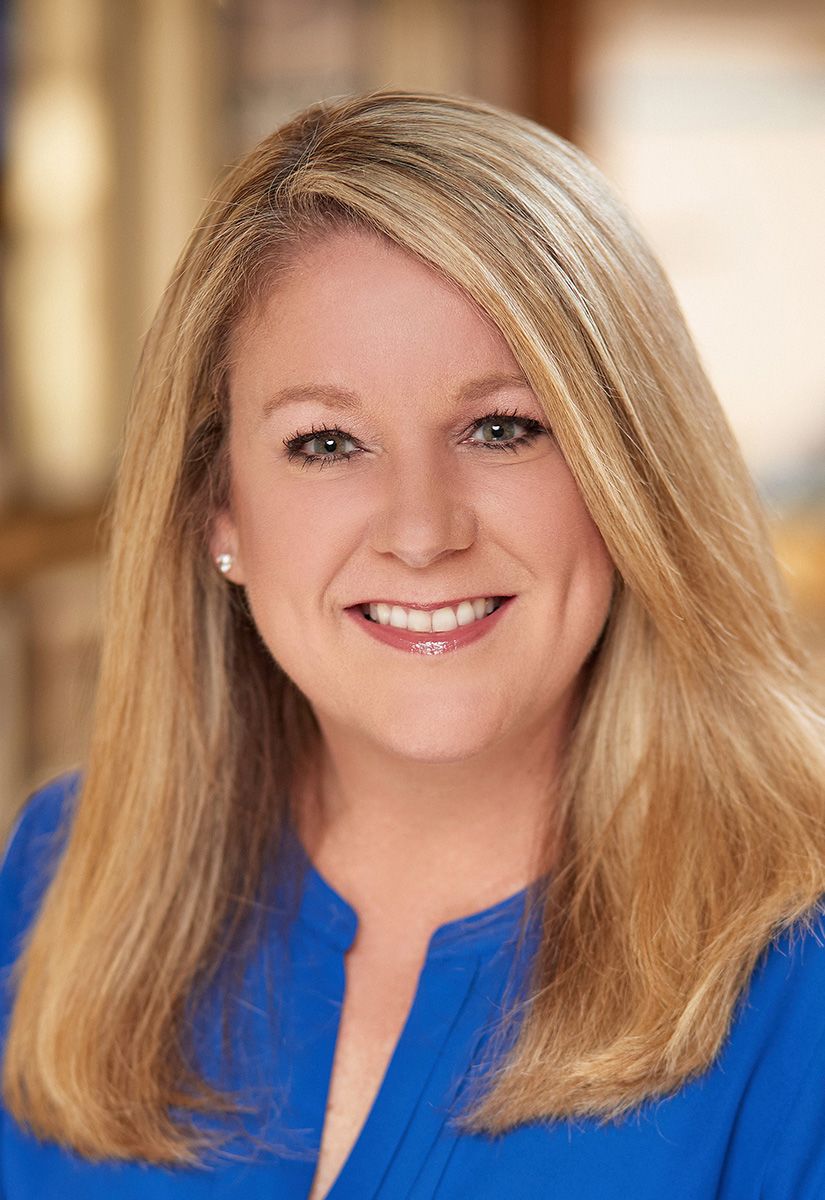
Kelly Knowlen
Kelly Knowlen
HEATHER KUGELMANN
EXPERIENTIAL & EVENTS MANAGER
HULU


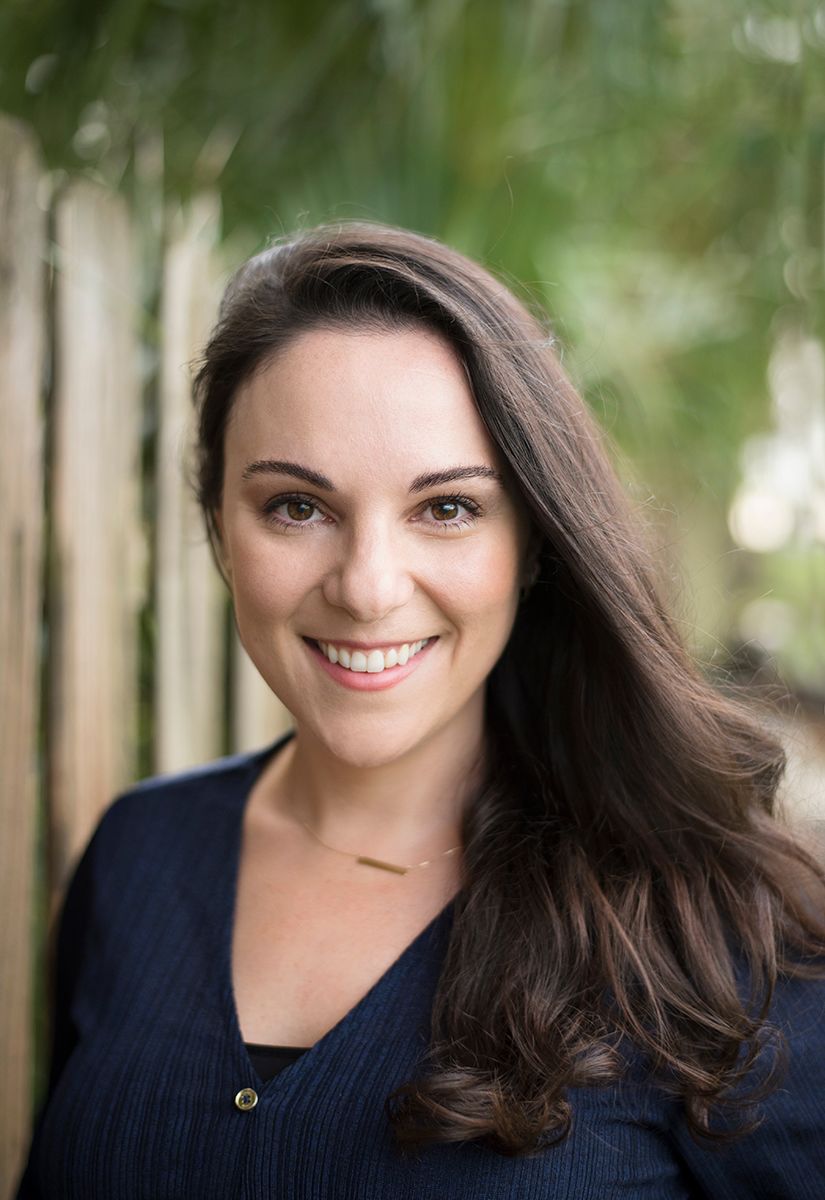
Heather Kugelmann
Heather Kugelmann
Favorite motto or motivational quote.
Contacts are your currency. I had a boss that used to tell us this all the time, and it’s so incredibly true. It’s not just about having the contacts, but it’s about the relationship-building. Whether it’s peers in your industry, clients, vendors, whoever, relationships are the most valuable thing that you’ll have throughout your career. But I also believe that to be true in all aspects of life.
Best career advice, given or received.
Always assume the best intentions. And I think when this is our outlook, it’s so much easier to work from a place of positivity. It fosters greater communication, stronger relationships, less stress, and obviously, more trust in the workplace.
Book, podcast or TED Talk that’s made the most impact on your career.
For me it’s a podcast and called, “Directionally Challenged.” The host, along with guests, discuss topics like productivity, failure, fear and friendship. You hear other women’s stories, and how they approach their challenges, and you realize in listening that you’re not alone in these experiences.
Something you’d tell your younger self if you could go back to when you started your career.
The biggest thing would be don’t be afraid to make mistakes. They don’t define you or your abilities, and they can actually be a great opportunity to learn and grow and improve.
The ‘non-negotiables’ for you in creating events.
For me it’s guest experience, and guest experience should be the driver of all decisions. I always want this to be top of mind throughout planning. And sometimes I do think it could impact creative decisions, but if your guests have any kind of bad experience, then it really won’t matter how creative you were.
If not working or at home, where would we find you?
Probably in a restaurant, because I love going out to eat with family and friends and trying new places, new foods, or getting to share plates, and just enjoying conversation and the company.
STEFANIE PEARCE
DIRECTOR-EXPERIENTIAL MARKETING
QUALCOMM


Best career advice, given or received.
One that I keep in mind is, “If people fear your power, then you don’t really have any power.” Leading with trust and mutual respect is really important to me.
Best way to boost confidence before a meeting or event.
I take the time to choose something to wear that makes me feel confident. Something that’s also comfortable to wear, so I’m not distracted because I’m uncomfortable. Then giving myself time to not be hurried to get out the door and to the event.
Book, podcast or TED Talk that’s made the most impact on your career.
I was at an industry event maybe six years ago, and Jillian Michaels was the keynote speaker. She’s such a savvy entrepreneur, but also just a strong female personality with a lot of deep philosophical ideas and knowledge.
If you could change one thing about the industry, what would it be?
There’s so much waste in events. In these days of climate change and sustainability, I think we have the opportunity to really dig in and change the way we do a lot of things, like with an exhibit. Maybe it’s more building, keeping, storing and reusing things. Food and beverage, too. How can we come up with programs that, even when we go into different regions, areas of the world, how do we give back in a meaningful way instead of just being wasteful with leftover food?
The most important skill an event marketer should have today.
The ability to think creatively and take risks with new ideas. Even if it’s a group idea, it’s not easy to say, “Yeah, let’s do this event differently. Let’s try this new thing that we’ve never done before that somebody might not like.” But putting it out there to whomever the decision-maker is, to do something different, is how you’re going to learn and grow—and also help your stakeholders do something different and show up to their customers or audience in a meaningful way.
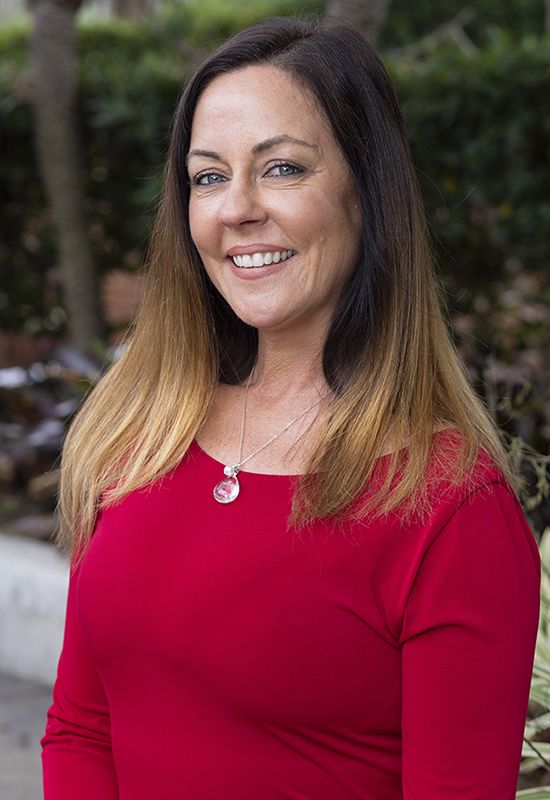
WHITNEY EICHINGER
MANAGING DIRECTOR-CULTURE AND ENGAGEMENT
SOUTHWEST AIRLINES




Favorite motto or motivational quote.
Always run your own race. It’s never crowded on the extra mile. Whenever I’m getting tired or worn out, I just think: I can do this. I think running your own race is really important.
Best career advice given or received.
It’s great to have a plan, but never be afraid to divert from the plan that you put in front of yourself. Never let a window close. If the window’s open and someone comes to you with an opportunity, there’s a reason that person thought of you. And if the opportunity makes sense, it could be the best decision.
Something you’d tell your younger self if you could go back to when you started your career.
I like to be open to new challenges. To be open to doing something different than what you earned your degree in, to be open to different perspectives and opinions and respect them. Also, always remember to be patient. That’s always hard to remember, especially as you are growing up and early in your career.
Your best sources of inspiration.
Well, I draw a lot of inspiration from my son. He’s very curious and always researching for the next big thing. He wants to be an entrepreneur. So just that openness. I also draw a lot of inspiration from my friends and travel. I think travel, in general, is probably one of the most important things you can do to keep your perspective.
The ‘non-negotiables’ for you in creating events.
We always put our employees first. So, how can we update and change the way that we celebrate and plan events for those who can’t be there? I think that the pandemic is giving us these virtual experiences, and now we’ll forever be moving forward with both virtual and in-person options. I think making memories is most important for us during these events, and we’re able to do that successfully by thinking about what the audience is really looking for.
AMY TEAL
MARKETING MANAGER-EVENTS
STRATASYS


Favorite motto or motivational quote.
Oprah has said, “Anything you can imagine, you can create.”
Best career advice, given or received.
Again, it comes from Oprah, and it’s: don’t worry about being successful, but work towards being significant, and then the success will follow. So many people focus on that next title, but it’s focusing on what you can actually impact.
Best way to boost confidence before a meeting or event.
It’s funny—I always feel eerily calm before an event. You get to a point where you can only do so much, and there’s not much more that you can do. So, for me, it’s breathing and just knowing that you’ve done everything you can up until that point, and everything will fall into place to a certain extent.
Your best sources of inspiration.
Much of my inspiration comes from digging into the audience. We touch many, many industries, and it’s trying to figure out how to connect with each of those different audiences. I try and draw inspiration from our potential customers and audience.
A pandemic-era solution you’re most proud of.
We created and drove a mobile showroom around the country, pulling into our customers’ parking lots and inviting them in in small groups. It proved to be more successful than any of the trade shows we’ve ever done, because we were able to target the right customers. You cut through the noise when targeting the right folks and you’re pulling into their parking lots.
If not working or at home, where would we find you?
I enjoy doing house projects. I remodeled my last house and I’m looking forward to building a deck at the new house that I just recently moved into. I like working with my hands and building things.

ERIKA JACKSON
EVENT COMMUNICATIONS MANAGER
The UPS Store



Best career advice, given or received.
The best career advice that I’ve been given, and I share it with everybody I come in contact with, is—don’t be afraid to speak up and share your perspective. Because your voice matters. Your voice has value. Just share your perspective, whether it’s event planning or project planning, because you may bring a different perspective that people didn’t see.
Best way to boost confidence before a meeting or event.
My motto is: if you look good, you feel good. And feeling good really sets the stage for you to shine going into any meeting or event. Always have a go-to look or go-to outfit that you absolutely love on standby.
The most important skill an event marketer should have today.
It’s people skills. You have to have them to be successful in this industry, and that includes the ability to be an active listener and a clear communicator. You have to embrace and connect with people at all different levels, whether it’s C-level executives or vendors, customers and event attendees. Working with a wide range of people, resolving conflicts and serving as the negotiator and the happy warrior. It’s how well your event is produced.
Something you’d tell your younger self if you could go back to when you started your career.
I would say, embrace failure. It’s kind of scary, and it’s hard to do, because nobody likes to fail. But failure gives birth to learning. To me, if you aren’t failing at something, then you really aren’t taking the risk that ultimately is going to lead to the most passionate and fulfilling accomplishments.
If not working or at home, where would we find you?
At sporting events. Any sporting event–football, basketball, tennis–you name it. Seeing that raw competitive spirit really gets my juices flowing. There’s only one winner, but it’s back to embracing failure, right? You appreciate the journey, and then learn whatever lessons you needed to learn to come back and achieve success.
JITTER GARCIA
HEAD OF EVENTS, SENIOR DIRECTOR-EVENT MARKETING
UNIVISION COMMUNICATIONS


Favorite motto or motivational quote.
Somebody said this to me once and you see it written and used in various ways, but “You can do hard things” has really spoken to me over the last two years, especially, but also throughout my life in general. It’s something I think we all have to remember and reference in our careers.
Best career advice, given or received.
One of my mentors advised me that “management is not the same as leadership.”
Best way to boost confidence before a meeting or event.
I “superwoman” pose all the time. It actually helps, because it opens up your body and creates a response that makes you feel powerful. I do that before important meetings, events or speaking engagements.
Book, podcast or TED Talk that’s made the most impact on your career.
The book “Maybe You Should Talk to Someone” by Lori Gottlieb, which is about remembering that everybody you come in contact with is dealing with something, and understanding where they’re coming from can help you in all areas of life.
If you could change one thing about the industry, what would it be?
That we do a better job educating college kids about the career paths available in the event industry. Had I known then that there were all these possibilities, I may have set myself up differently for a career in it. Thankfully, I found my way here.
Favorite female role model and why?
My big sister, who is incredibly successful. She’s a dancer, performer and choreographer. She’s in the entertainment industry, and she’s one of the kindest and most genuine people you’ll ever meet. I look up to her because she embodies kindness as an imperative, and she’s successful because of that.
Your best sources of inspiration.
Living in New York City. I am so grateful to be able to walk around the city and see the creativity of brands and people on display. If you’re ever mentally blocked, I suggest you just walk around your neighborhood.
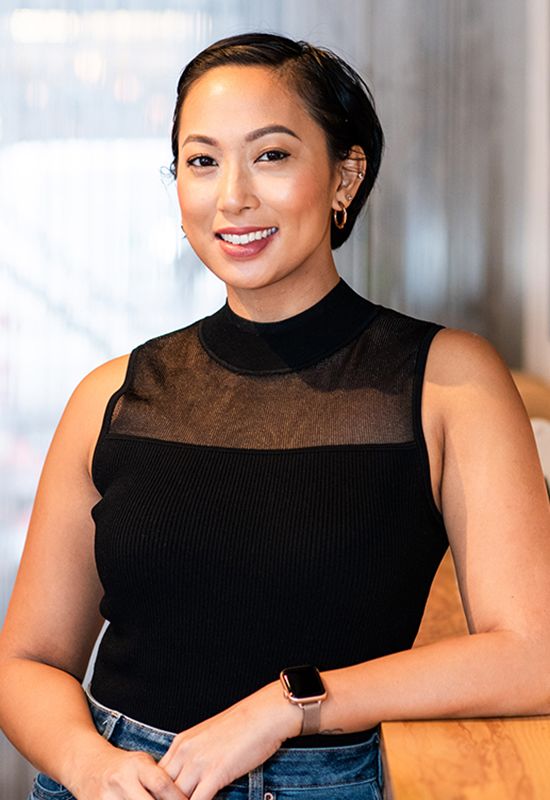
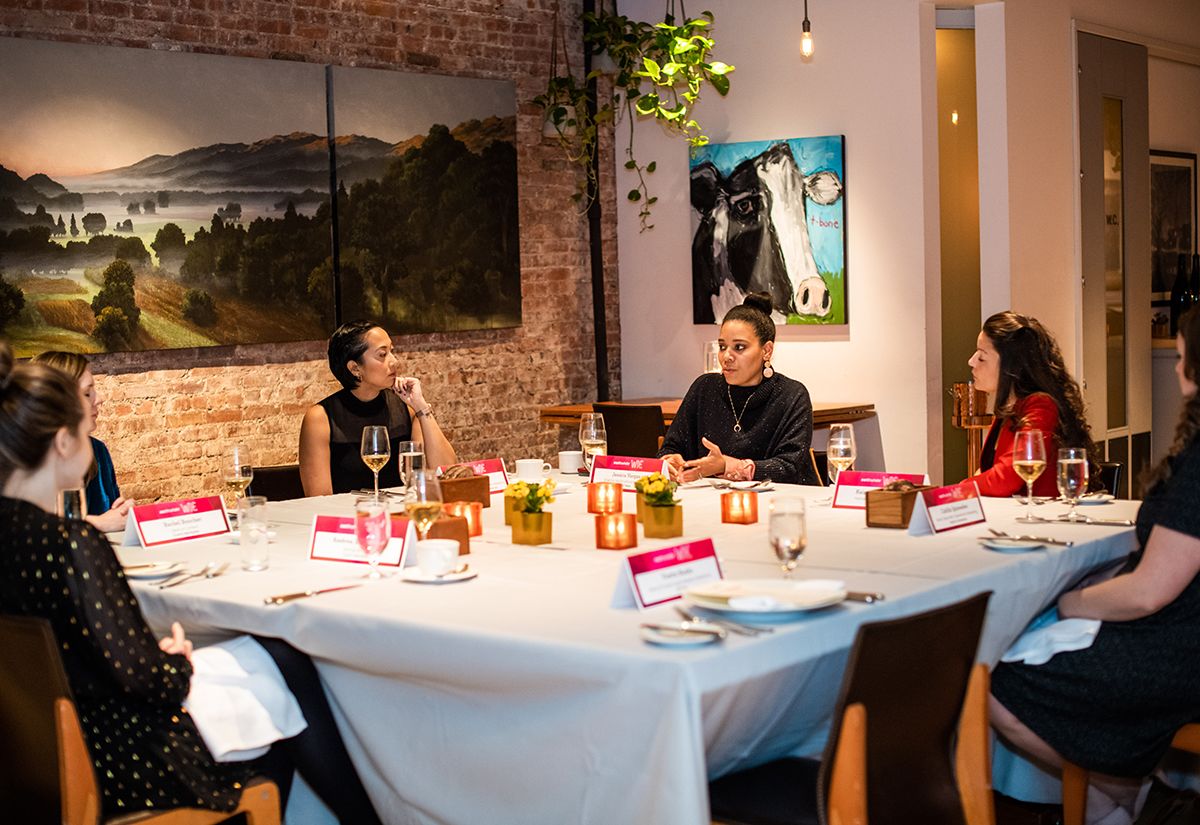
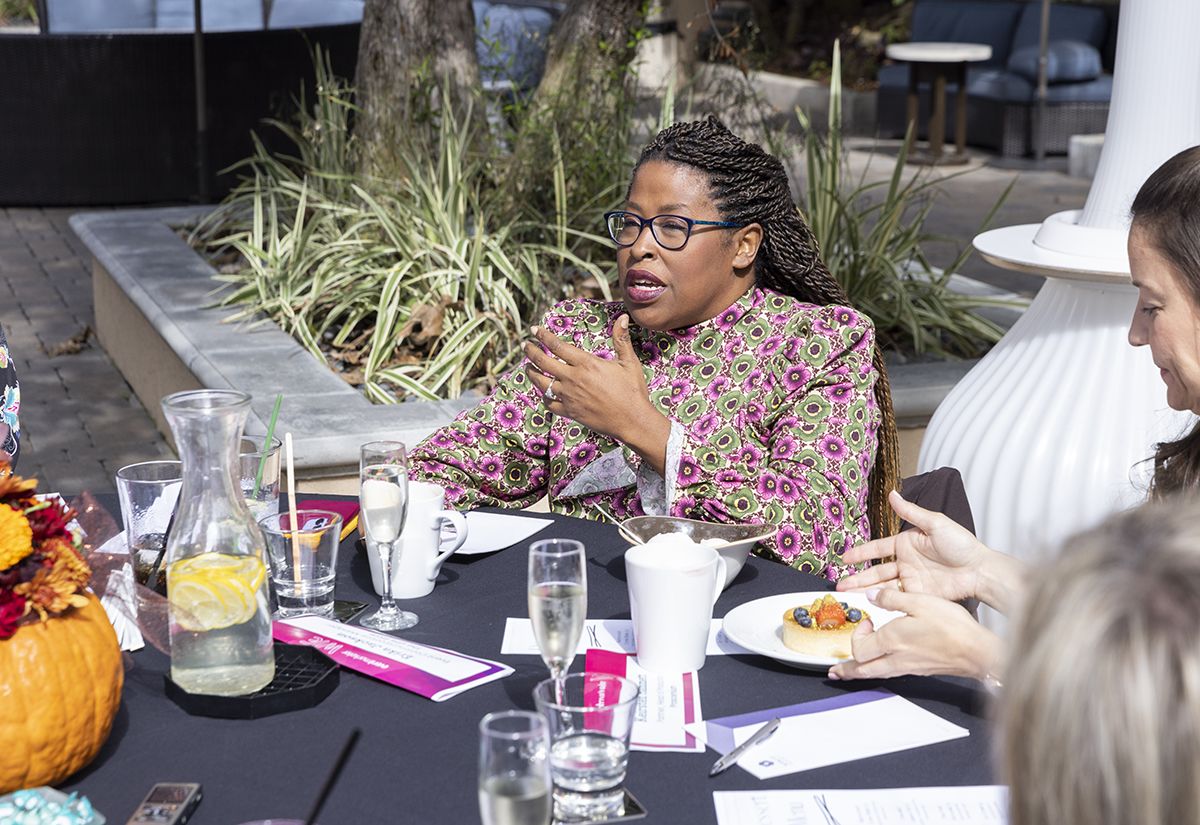
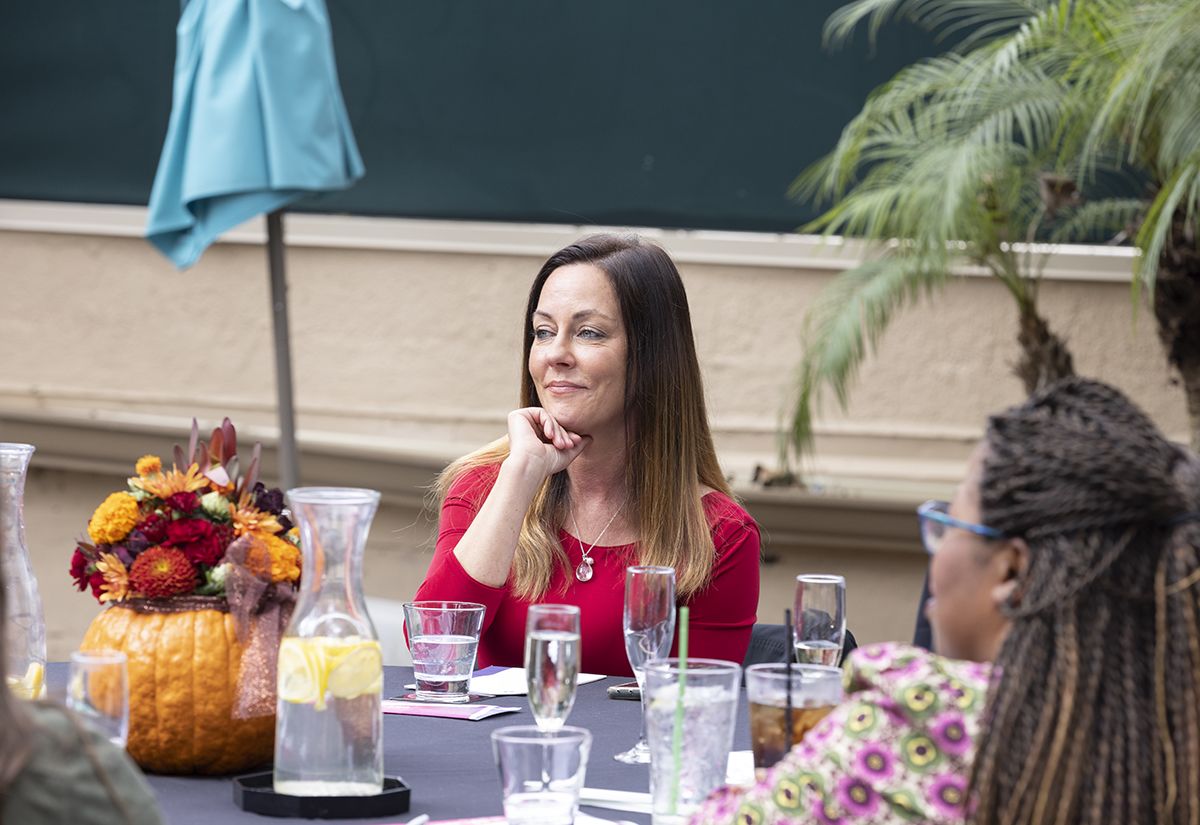
IN THE ROOM
Grab a seat at our table with
this year’s Women in Events

THE PARTICIPANTS:
Caitlin Spinweber, Senior Specialist-Experiential Marketing, Audi of America
Jessica Vargas, Director-Multicultural Marketing, HBO Max
Kelly Knowlen, VP-Sales Engagement and Special Events, Hilton
Heather Kugelmann, Experiential and Events Manager, Hulu
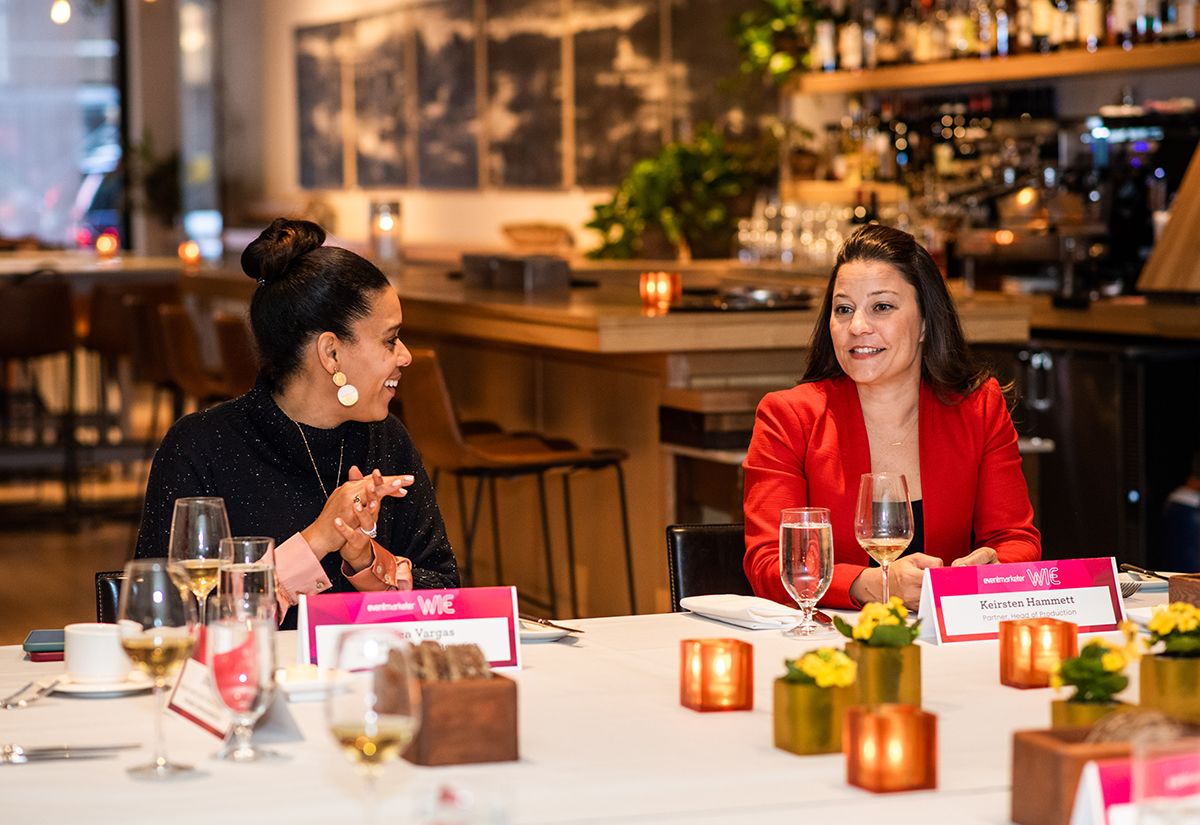
Keirsten Hammett, Partner, Head of Production, Proscenium
Stefanie Pearce, Director-Experiential Marketing, Qualcomm
Whitney Eichinger, Managing Director-Culture and Engagement, Southwest Airlines
Amy Teal, Marketing Manager-Events, Stratasys
Erika Jackson, Event Communications Manager,
The UPS Store
Jitter Garcia, Head of Events, Senior Director-Event Marketing, Univision Communications
THE MODERATORS:
Rachel Boucher, Head of Content, Event Marketer
Kaylee Hultgren, Group Content Manager, Event Marketer & Chief Marketer
Produced in partnership with:


EVENT MARKETER: Women in events face certain challenges that men in the industry and women in other industries may not. What is your experience?
JESSICA VARGAS: It’s being a mom. A lot of my peers aren’t moms, and I have this extra layer of this thing I have to worry about. I often get to an event in the afternoon, we have the event, I’m out on the first flight, and I’m asked, “Oh, why do you have to leave?” While I want to be a kickass, top woman marketer, that comes with having to find a balance. Even if you have a village, it’s difficult.
JITTER GARCIA: When I first started in this industry, and you know that the travel is very demanding and the hours are very demanding, I would talk to people who are more experienced and had been in the industry for a while, and the advice I would receive was, “Do it now while you’re young before you have a family, because you’re not going to be able to have this lifestyle.” And now that I have more experience and have lived this life for a long time, I don’t know if that’s the best advice to give to somebody who’s just breaking into the industry, because you now have this tainted view of what your life can be and how it will change once you do find a partner and you have to think about people other than yourself. There’s a stigma against living the way that we do and having the lifestyle that we live while feeling like you can’t think about anything or anybody other than yourself. I don’t think that men getting in this industry are given that same advice.
CAITLIN SPINWEBER: One of the first questions that gets asked when people are getting to know you is, “So, are you married? Do you have kids?” That wouldn’t be a first question they ask a man.
KEIRSTEN HAMMETT: When you think about it in terms of events, specifically, because the events world is so female-dominated, it creates a little bit of a false bubble within the larger context of women in business. There are so many other layers that we all work directly with—executives, internal stakeholders at companies, speakers on stage, the people actually signing off on budgets. And when you think about those layers, there’s definitely still work to be done. There can be a little bit of almost complacency in the events space. Like, “It’s all ladies here! We’re all in director positions, and we’re vps, and we’re running teams and we’re making decisions!” True, but who’s presenting to the ceo? Who’s taking the proposal that everybody worked their asses off on, and is actually presenting it? Are you handing it over to another team to present, and who’s at that table? It feels like there is still work to be done and it can often be overlooked because there are so many women in this industry.
STEFANIE PEARCE: I don’t have a lot of challenges within the events community relative to my gender, but you’re right, once you get into the business, that’s where it happens. It’s a unique area to work in. And a lot of people in business and corporations and companies don’t look at it for what it is. They think, “You plan menus, you put the centerpiece on the table.” They don’t have the perspective of everything we do. Whether you’re a man in events or a woman in events, it’s an event marketer’s challenge.
WHITNEY EICHINGER: The pandemic has shown that events are immensely important and being together is so important and being able to showcase, whether it’s a product or a big announcement for your company or whatever the reason you’re coming together for the event, is so very important. And I think that doesn’t change dependent on the gender. I think we’re all lucky, probably, in our positions to be respected for what we do. And it makes me even more proud that leadership can trust us and has realized how important events are.
AMY TEAL: When you’re in events, a lot of the senior managers that you’re working with are men. You’re telling them what to do and giving guidance on how they should be doing things, even though they may be the president or the ceo. I know I’m in a lucky position where I feel very respected in what I do, but it’s not always the case for other women.
ERIKA JACKSON: I concur with what Amy is saying, especially working within a traditionally male-dominated field, sometimes there’s the challenge of being taken seriously, or really understanding that I am the subject matter expert. What I’m saying really should hold more weight than what you may think. This is my expertise, so listen to me. Navigating that path sometimes can be challenging.
CAITLIN SPINWEBER: It also depends on what industry you’re in. Automotive is a very male-dominated industry and on our marketing team, we’re mostly women. It’s an interesting dynamic to be surrounded by such powerful women that are very respectful of one another and to have a leader who’s fantastic and very supportive. And so, when you do get into those other spaces, outside of the team, you have to remember that that’s not what the whole industry looks like. I think it’s smart for all of us to find the spaces where we feel supported and where we have female leaders ahead of us who can help us grow, because that’s the only way it’s going to change is if we grow our own people.
KELLY KNOWLEN: I lead a team of mostly women, though we recently hired a man on our team, which is great. But for me, it’s leading a team and making sure that I set the example for my team as another female leader in our organization. There’s a responsibility that you carry as a leader, right? To bring everybody up and face those unique challenges. That rests on you a little bit to do that. We have some incredible female leaders in our organization, and I feel so fortunate to be one of them and to have had a long career with Hilton. And I want to set that example for others to follow and know they can achieve what they want to achieve in our organization.
EVENT MARKETER: Let’s talk about the unique skills and talents that women bring to the table, and what they need to be successful in events today.
KELLY KNOWLEN: Having a voice is really important. It’s also important to always having an opinion and be confident that you can share your voice and opinion in any setting—whether it’s in a boardroom or with vendor partners or in front of your organization’s leadership, male or female. You’re not always going to be right. There are going to be times where you get, “Oh, let’s not go in that direction.” And that’s OK.
WHITNEY EICHINGER: You have to be completely flexible. Maybe the weather has affected the event, or something’s not there and you have to be able to make it just as great and lead a team through it and have a positive attitude about it and still execute with a million different variables affecting whatever you’re doing. And now with supply chain issues, you may not have hamburger buns, so we’re just going to not do that. I think you have to be really flexible with anything that you can bring to it and encourage those who are participating in it to be flexible, too. And then still have a successful rollout with attendees who won’t notice anything different.
STEFANIE PEARCE: The ability to not hurry into a decision just to get a box checked. Especially these days as things are so in flux and changing day to day. “What are the parameters in this city?” It changes so quickly. You often have to stop yourself and think: This has to get done. I have to make the right decision now. But do you really? If not, then put that over here and let that one go. Give yourself the time if you can.
ERIKA JACKSON: You have to be comfortable with knowing that you may need to make a different decision down the road, right? But for right now, this is the decision that needs to be made now.
KEIRSTEN HAMMETT: I would say a big one, going off what Whitney was saying, is adaptability, but more along the lines of being willing and having your team ready to learn new things constantly. I think certainly working through COVID taught us that. We all had to learn a different aspect of our jobs overnight while doing it. And figure out how to be comfortable in an uncomfortable space that none of us really knew. It was survival—100 percent survival—to stay alive and keep things moving. Today, you need to know how to be a fast learner and be a good teacher, and to be able to support your team members as they learn new skills and make mistakes and know that it’s OK. All of these things became really apparent through COVID and shifting to virtual.
JESSICA VARGAS: For me, it’s the troubleshooting. Women see the problem two steps ahead of everyone else. As females, just in our natural DNA, we’ve had to feed our babies and figure out how to survive as a species, and it’s the same thing in this wild, wild world of events where we are working with all-male A/V teams, all-male security teams—we have to be problem-solvers and know how to get things done, no matter the circumstances.
JITTER GARCIA: I think having grace under pressure is not solely a female trait, but I think that women can sit in a meeting with our executives and suppress the cramps that we have and suppress the things that only women go through and still master what we have to in that space. I don’t want to speak for all females, but I think there’s an insecurity that comes with that and you have to overcome it and outwardly express that you are confident and you’re comfortable, and you know what you’re talking about. I think we feel it more in some ways knowing that it’s not a level playing field from the start. We have to overcome that, in addition to owning the space that we do own.
CAITLIN SPINWEBER: Sometimes female emotions are seen as a negative, and I think it’s the opposite. Do we all have our moments? Yes. We’re human. And I think our ability to have a wide range of emotions and have that empathy makes us better marketers, better partners and better leaders. Relationship-building is so important in our business. So, is being able to relate to people. Our feelings are our strong suit.
JITTER GARCIA: I’ve been called sensitive many times over my career because I’m passionate about the experiences that we’re putting on. Somebody tells you that you’re sensitive, and you want to reply, “No, I want this to be executed the way that I envisioned it.” You know? And when it doesn’t happen, God forbid I show some emotion!
KEIRSTEN HAMMETT: The phrase “emotional intelligence” has only recently been connected to business and been seen as a positive. To Jitter’s point, there is something about being able to master an effective way to communicate and connect with whomever you’re speaking with. So, whether that is the venue team versus the ceo that you’re working with backstage—you’re talking to so many different audiences all day long and knowing what the effective way to communicate with them is a natural skill we have.
EVENT MARKETER: Women in events, despite making up a majority of the industry, still face many of the same issues women in other sectors face as it relates to promotions and leadership opportunities. How have you overcome these sorts of obstacles in your career?
CAITLIN SPINWEBER: It’s finding your support system—someone who will advocate for you or say, “You know what, you are super strong over here. This is what you need to grow to the next level.” Whether that’s a manager, a mentor or fellow colleagues.
JITTER GARCIA: This is less about being a woman, though I’m sure it comes into play a bit, but in my career, I was given really wonderful opportunities early on. And that really messed with me a little bit in terms of advocating for myself and feeling like I could strike that balance between—I know I don’t have as much experience as other people or feeling like I wasn’t as qualified because of the number of years that I had been working, you know? At the same time, I was delivering on things that somebody who was in my position previously with 30-plus years of experience wasn’t able to. If you don’t have the fortune of having a mentor who wants to invest in you, you have to believe in yourself and you have to find the confidence and the courage to advocate for yourself. If you don’t then nobody else is going to do it for you.
JESSICA VARGAS: The sad part is, we will often fight for anyone on our team, but we won’t fight for ourselves. My cousin and I are the first ones to finish college, and in our family it’s, ‘They made it,” right? And they tell us not to jeopardize that. “You should be grateful.” So for many years, I just thought my work would speak for itself. And I have friends who are vps and svps, and I’m like, wait—what’s happening? I’m learning that I need to push myself.
AMY TEAL: When I think about my career path, it’s not traditional. I went to cosmetology school out of high school, worked and did hair for a while. I’ve always loved planning events, but I didn’t have a marketing degree when I stumbled into this. And being able to work hard, be creative and think about things in a different way, you can develop whatever path that you want. It’s figuring out what path gives you drive and passion to work that hard, and to want to be successful in what you’re doing. Working towards promotions, you have to ask for what you want. You have to go in and have the confidence that, “I’m kicking butt” and I deserve to get a promotion.
ERIKA JACKSON: It’s about knowing your own worth, right? Knowing that you’ve worked hard, you put in the work, you have the skills and the ability and you deserve to be promoted. And then asking for it, because traditionally women would work hard and just wait for somebody to notice that they’re doing the work and they deserve a promotion. But these days, you have to be ready to raise your hand and say, “Hello, look at me.”
STEFANIE PEARCE: You learn that along the way. I definitely did.
KELLY KNOWLEN: You have to make sure that you always express to your leadership what you want out of your career and what you want your next step to be and to ask for help in getting there. I’ve seen that a lot of times in my career—maybe I’ve had a position that I’ve been hiring for and someone will come to me and say, “Well, you didn’t even give me a chance.” You didn’t apply for it! You didn’t tell me you were interested. Get your supervisor’s commitment to help you get there. Create a plan together.
EVENT MARKETER: Let’s dig into that a bit. Do you think women struggle with taking credit, given what we talked about with the emotional intelligence part of it? How do we ensure that our hard work is recognized?
WHITNEY EICHINGER: If someone says good job, I always say, “Oh it was the team”—just immediately as a response. I don’t know what the answer is to this question. I have a hard time with it.
ERIKA JACKSON: Oh yeah. Even with this event. When I told my husband and my kids about it, and I was like, “Oh, I don’t know if I’m going to go.” They said, mom you really do well in your job. And while I don’t feel I need a pat on the back or to be celebrated, they reminded me that I do. Because everybody needs to be celebrated and recognized, right? And I think women—we’re just built that way. We’re like, no, no, it’s OK. But everybody deserves to be celebrated and recognized for their accomplishments and what they’re good at. And we, as women, have to get better at being OK with that.
KEIRSTEN HAMMETT: I think we all struggle with taking credit sometimes. It feels different than how men are sort of socialized to talk about their accomplishments. Tying it back to what we were talking about earlier and how women are asked about relationships and children as the first question—when you think about the things that women are sort of taught to be most proud of, it’s more about their home life than their work life, where men might be taught to focus on their work accomplishments first. But I think that the way we talk about it could probably be changed where it’s not so much about self-promotion but about tracking your own accomplishments, so that when you are in the room for the promotion or the raise, you have that list ready to go—the amazing things I’m doing, the extra work I’m putting in on the weekends. In mentoring younger women, we can say you don’t have to remind people of the work you are doing every day, but you should certainly be writing it all down.
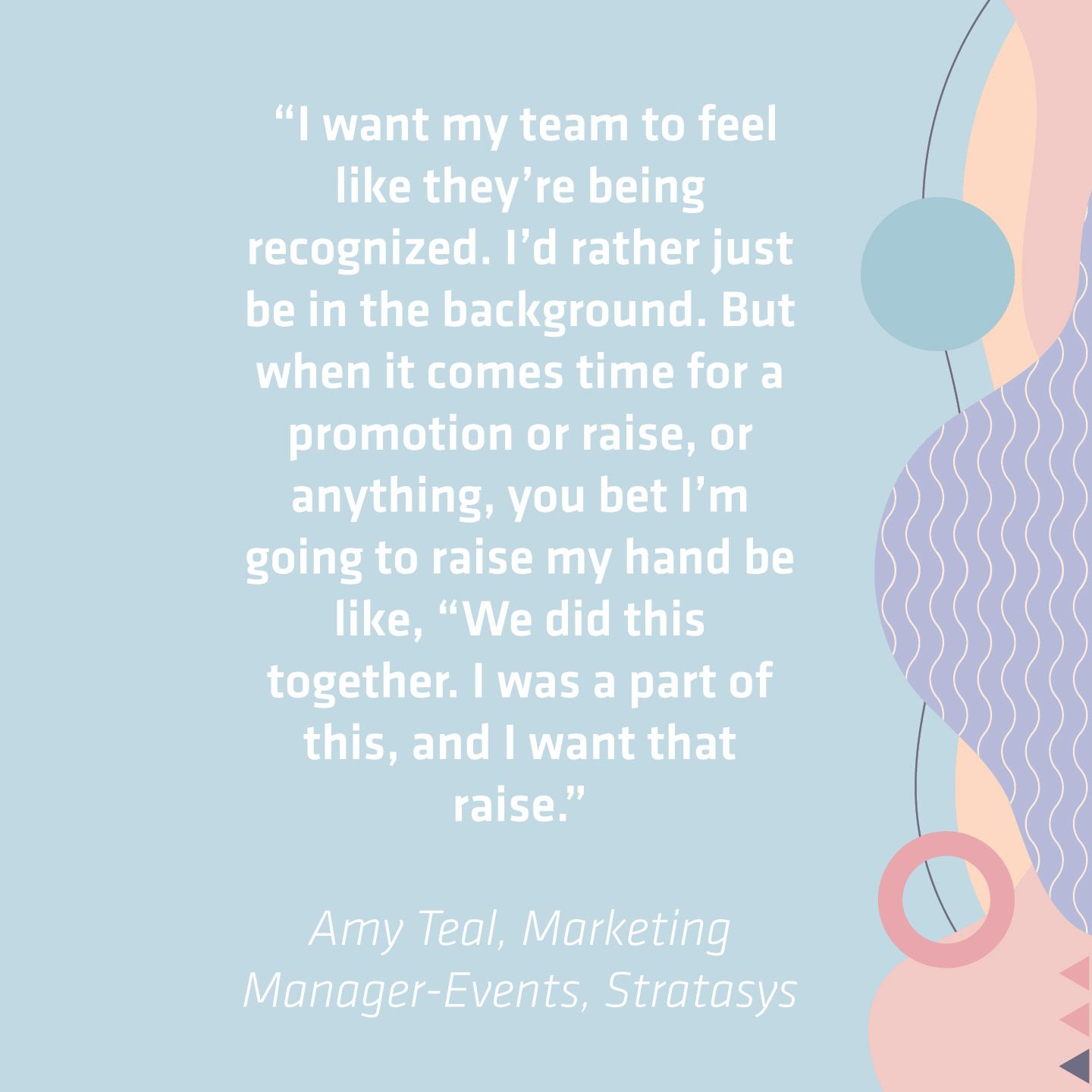
AMY TEAL: We don’t like to self-promote and we don’t talk about our accomplishments. And I don’t know if you all are like me, but I don’t like to be front and center. It takes a whole team to make an event happen. It is not me that made this event happen. And I want my team to feel like they’re being recognized and I’d rather just be in the background. But when it comes time for a promotion or raise or anything, you bet I’m going to raise my hand and say, “We did this together. I was a part of this and I want that raise.”
WHITNEY EICHINGER: On the corporate side, it’s talking about how what you’ve done in events can translate to other parts of the company. At a place like Southwest Airlines, you’ve got options on both sides to be able to say, “Here are all the things that I’ve done, here’s all the skills that I’ve honed and sharpened, and here’s how they apply to these other roles.” I think you can do that, of course, externally, too, but within our company, we’ve had some great success stories on how people can translate all the hard work they’ve done in events, if they eventually want to turn that into a different opportunity within Southwest.
HEATHER KUGELMANN: This is something that I sometimes struggle with. But for me, I try to make sure the work is visible so that it can be recognized and celebrated. So, posting about an event that I’m leading, sending an event recap, emailing the highlights, the big wins, the metrics, the engagement, and sharing photos and videos in department-wide meetings.
EVENT MARKETER: Do we still need to educate others about what event professionals do and bring to the table?
STEFANIE PEARCE: We were always the corporate and product events team. We recently just decided to rebrand ourselves as experiential marketing, because of that pigeonholing that is so prevalent in our industry. And I think that helps because it could be anything, a mobile unit that you’re driving around or it might be a company event, or it might be a Halloween event—we do it all. And it’s not always just an “event.” We create experiences.
ERIKA JACKSON: Events is really the high-level name for it. Like you said, you have to really spotlight the skills that come under event planning. It’s budget. It’s logistics. It’s people management. It’s every type of business acumen that anybody needs—that falls under events.
WHITNEY EICHINGER: When I think about the budgets allocated to these things, all of it is a serious investment. And I think all of us start with, what’s the goal of this event? It’s not just ordering catering. It’s: What is the message? What’s the product? What’s the strategy? And you work from that. You have to be able to manage at so many different levels just to do any of that.
KEIRSTEN HAMMETT: And the interesting thing about not just the level of respect that this channel gets compared to the others, is that if you think about a lot of corporations, the teams that are running events have some of the most exposure to the C-suite out of anybody. We often help shape their messaging and certainly their delivery to their most important audiences.
WHITNEY EICHINGER: I think it takes a lot of self-assurance to say, “I know this is going to look right. You’re going to like it. So, let’s fix your collar.”
AMY TEAL: Every time our president comes off the stage, he asks, “How was it?” They always want feedback from us. And they’re not going to the other senior-level managers for it. There’s a level of respect there that’s incredible.
EVENT MARKETER: Here’s one of those questions that might not be asked of men, which perhaps is problematic. But let’s talk about the confidence boosters you have learned along the way that have helped you.
WHITNEY EICHINGER: Confidence comes from experience. And I think that that comes from just trusting that things will work out. The first step is you have to have a great team. You have to work with people that you trust—trusting the process of pulling an event together. Having multiple levels of experience on a team is really important, because even though I’ve done it a certain way the whole time, I might be learning something, or there might be someone who’s had another different perspective, so remain open to that and be flexible. I think it goes back to our question earlier of speaking up. To me, that’s like jumping off the diving board. Once you do that the first time, you’re like, “That’s right—because I was right.”
KELLY KNOWLEN: I think back to early in my career when I was a sales manager in a hotel—I didn’t start out in events, I started out in sales—and I remember being so nervous and shy sitting in any kind of boardroom setting until I had that experience and then my confidence grew over time. If you’re the kind of person that doesn’t have natural confidence, know that it will come with time. And try and not expect things to always be handed to you. The more that you reach out and make those relationships, the more your confidence will grow.
STEFANIE PEARCE: The other thing I think that helps me feel more confident and that I have to continue doing to keep that up is doing more things like this with other peers in my industry and talking. You build yourself up a little bit more when you can commiserate with other professionals in the industry and just get out of your little bubble.
WHITNEY EICHINGER: I work on both sides of events. Sometimes I am the main speaker and I rehearse. Even if you’re doing a briefing with the event team before, rehearse that. Rehearsing is not silly. Doing that even in your hotel room before you go anywhere really helps build that confidence that you’re like, OK, that sounded weird. Maybe I’ll try a different way. Or I need to remember this.
KEIRSTEN HAMMETT: Doing the work. It’s one of those things that you see someone who seems really confident and you don’t really attribute it to the work that they put in. They think of it as a personality trait and less of the work that went into it. But if you think about it, even an internal meeting or something that has nothing to do with clients should be prepared for and rehearsed. What are you going to say so that it comes across well and you feel good about it? Don’t say it for the first time in front of them. You’re going to sound more confident if you’ve said it out loud before.
CAITLIN SPINWEBER: Preparation. I think my lack of confidence comes from feeling like I don’t know what I’m doing or feeling like I’m not qualified to be there. Whether it’s doing an extra run and looking at the run of show and everything that could possibly go wrong or going through my notes or doing a rehearsal of the presentation, whatever it is—preparing and taking a minute to myself to be like, “I got this, I know what I’m doing. I know what I’m talking about.” And then I can go into that scenario, whatever it is, more confident knowing that my lack of confidence comes from a little bit of imposter syndrome.
ERIKA JACKSON: I have two rules. One, know before you go. That’s the whole idea of being prepared and doing your homework. And the other one is just basic: When you look good, you feel good. And when you feel good, you’re going to perform well. So, have an outfit that you love, so you love the way you look and you love the way you feel. It’s comfortable. You just love everything about this. You’re going to exude that confidence and you’re going to be ready to hit everything at all angles. And then you have that knowledge because you know before you go, so you’ve already been prepared. And when you marry the two, it’s just going to be awesome.
EVENT MARKETER: Who among us suffers from imposter syndrome?
JITTER GARCIA: Sitting at this table I have imposter syndrome!
KEIRSTEN HAMMETT: I definitely struggle with the imposter syndrome sometimes and it can be hard to overcome it. What I’ve tried to do is think back to a recent situation where I felt going in that I was lacking confidence, but then once I was in the situation, I felt completely comfortable and in control—that things went well. And I remember how I felt afterwards, knowing that I came out of that situation feeling really proud of what I had done and feeling competent and deserving.
JESSICA VARGAS: For me, it’s my team. I personally hired each one. I was a team of one. And we’ve grown to a team of six now. They are my hype team because they know I’ll go to bat for them. I usually am the person who’s doing the opening remarks on stage and it can be scary. But my team gives me the confidence. They call me “El Jeffe.” I’m a latchkey kid, the whole nine yards, but then I get on that stage and I know I’m a boss in that moment. And I remember how the energy felt—amazing. My team pushes me.
CAITLIN SPINWEBER: Yes, having a good tribe around you. Your people at work, and your people at home.
JITTER GARCIA: I agree. I have a pretty similar experience with my team where I feel very strongly that I’ve cultivated this environment and this team that inspires me and gives me so much confidence knowing that they’re behind me. Can you imagine if they didn’t support you, that would be such a downer, right?
EVENT MARKETER: Wage disparity is always an interesting topic, and more so lately as stories come out about people within organizations publishing their salaries and demanding transparency. What is your experience with salary negotiation, and what tips do you have for women in events who are ready for open and honest conversations about their value?
JITTER GARCIA: This goes back to something that we said earlier, remembering that we are a part of the event industry, as much as we are a part of a company, because a lot of times the conversation goes back to, “Well, this is in line with what everybody else at the company at your level is making.” But our event roles are so specific and so different across the industry. We are responsible for millions of dollars, you know, that maybe, within the same company, people at your level are not responsible for. It’s very different. And I feel like you have to do that due diligence and understand and get that data—because everybody loves data—and put that in front and use it to your advantage when you’re advocating for yourself and asking for more money or an appropriate amount of money that you should be being paid.
HEATHER KUGELMANN: I think that there is always wage disparity and not just between men and women, but also between women doing the same job. And so when it comes to negotiating your salary, I think you have to know the range you should even be aiming for. And, you have to know your value in order to get the pay that you deserve. I think you should never walk into negotiations without a number in mind.
CAITLIN SPINWEBER: I think that’s a really good perspective though, too, from not necessarily a negotiation standpoint, but from a company standpoint. There’s so much research out there now about keeping your employees happy and spending a little bit extra to invest in their salaries and their benefits and being competitive. You’re going to get better work. You’re going to get better product. You’re going to get wealthier.
JESSICA VARGAS: And for me, it’s not just salary, right—what are the perks of the job? Is there flexibility and are there opportunities. When we weren’t traveling, I told my manager that half the reason I’m passionate about this job is the traveling, and it’s hard that it’s not happening.
CAITLIN SPINWEBER: We don’t have a nine-to-five job. There’s a lot that we give up in our day-to-day lives, and that should be acknowledged. Another thing, and Jitter you mentioned this earlier, is age when it comes to salary and benefits and just compensating your employees for what they do rather than years of experience. If they’re doing the job and they’re doing it well, we should compensate them for the work.
KELLY KNOWLEN: I’ve worked for Hilton for a long time, and I don’t have probably the best view on this, because I haven’t worked across multiple organizations to really understand if there’s a wage disparity. In our organization, we’re extremely conscious of being fair. But you have to have three things to have a successful career or feel balanced in your career. And that is: You’ve got to like the people you work with; you’ve got to like what you do; and you’ve got to feel like you’re fairly compensated. And if something’s out of balance, then you’re probably going to end up frustrated or unhappy. If you can’t say “Yes” to two out of the three, then you should probably look for a different opportunity.
EVENT MARKETER: Many women this year have found themselves in a new role, with changing responsibilities, or leading a new team. What has helped you in times of transition in your career?
ERIKA JACKSON: Every time I have transitioned in my career, it has been a lot of hard work. Worth it, but it’s always just a lot of hard work. The getting up to speed, learning new things, learning new teams, learning new processes and procedures. And it’s not a bad thing. It’s not anything that needs a solution. With change comes hard work. But it’s all worth it in the end.
AMY TEAL: And I think it’s taking the time to learn about it before you go in thinking you’re going to be changing things. Like you had said, learn the teams, learn about as much of it as you can. That’s probably more important if you’re changing roles or changing teams or companies. But you can’t go in thinking that everything’s going to change right away. We really need to learn everything as much as we can and then start implementing things of change.
ERIKA JACKSON: And that’s how you inspire and lead. When I’ve dealt with people who’ve come in during change that have been my supervisor or manager or whatever, they’re always wanting to make an imprint. So they’re trying to change things so that they can make a name. “I came in and I changed this. I made this better.” That doesn’t inspire in your team the type of fortitude and teamwork and camaraderie, because that says it’s all about you and it’s not about the team. When you take the time to really learn the new ins and outs, new procedures, what everybody does, how everybody works, your team is going to appreciate that.
KELLY KNOWLEN: Oh, gosh, we’ve gone through a lot of transition. Most of my team was furloughed during the pandemic. When they returned after six months, only about half the team came back. We went through a lot of change. Now we’re building back the team, but it was hard when they all came back and we had a different way of doing business. It wasn’t easy. I think having patience with each other is really important and making sure again that we recognize that we’ve all gone through a lot of change.
HEATHER KUGELMANN: In times of change in transition, I like to ask a lot of questions, because I want to make sure that I have clarity around expectations, clarity around how to navigate the new situation or even clarity around potential challenges. I also just try to remember that all change becomes routine at some point.
EVENT MARKETER: Let’s close with career advice that you have for women coming up in the industry—what you wish you had known, and what they should know about growing in their roles in the post-pandemic era.
JITTER GARCIA: I think this is a really exciting time for anybody who’s joining the industry because none of us know anything anymore! It’s so different. There’s that institutional knowledge that is not as important anymore because everything is changing so quickly. This is the best time to break into the industry and to create inroads and establish new processes. I would say that if you’re just joining the industry, take that into account and be excited because it is an exciting time.
JESSICA VARGAS: You have to like it. You can’t just put it down. It’s not a part-time job. It takes your full being. It’s all the senses and you can’t half-ass it or you’ll have a half-assed event. It’s like, what’s the passion inside of you to make things. When you get that call while you’re vacationing in Mexico, would you pick it up or not? Is the event going to be what you envisioned if you don’t?
CAITLIN SPINWEBER: It can’t just be a job. There are jobs that just pay the bills—and I have a lot of respect for those people that can just go nine to five, do their job, and go home. This is an industry you have to have passion for. And because of that, we need to take care of ourselves because this is such a demanding industry and life.
AMY TEAL: My advice is: trust your instincts. A lot of times your first gut reaction is right. We second-guess ourselves quite often, or at least I do.
STEFANIE PEARCE: We are so passionate about events and getting to that on-site. We can’t wait to be there. And then that’s all I want to be is at that end goal of being on-site. But really, that process and that path to the on-site event is just as important. You can learn just as much and grow just as much through what you’re doing in that planning stage. There’s so much growth that can happen if you step back and give yourself a chance to take it all in along the way.
ERIKA JACKSON: My best advice is always going to be, don’t be afraid to speak up. Because I think everybody’s perspective and thoughts have value, whether it’s, ‘Oh no, we don’t want to go that way.’ Well, that has value because now you’ve eliminated that, and gives you more direction. As you speak up each time you become more confident about speaking up and not being afraid to speak up as your career goes on. Because oftentimes as women, we may feel well, I don’t want to rock the boat or I have a dissenting opinion so I’m not really going to share it. But your dissenting opinion may spark an idea or open up the mind of a decision-maker that then helps you create a memorable event.
WHITNEY EICHINGER: One of mine would be just remember to be open, be flexible. So, be open to taking any role within event planning, if that’s really what you want to be doing. And remember that a lot of it is what you experience behind the scenes. It’s not always the end product. Sometimes people who get into events can’t wait [for the event itself], but there’s so much that leads up to that, and there’s a lot of sweating involved. So, I feel like you need to remember that it’s all hands on deck for so many different things, planning and, even at event time, remembering that you could be asked at any moment to carry someone’s briefcase or make sure that everyone’s walking on stage on time.
KELLY KNOWLEN: There are so many opportunities in our industry. You can go into a lot of different areas of the business. So network across them and get to know people, get involved, build those relationships, make time for coffee. I was in a women’s leadership class years ago and on the panel was our general counsel, who is one of our executive committee members. She’s female, and she’s incredible. And she was giving this advice to the group and she said, “Reach out and ask for a cup of coffee.” So the next day I emailed her and asked if we could get a cup of coffee. And I went up to the executive level and had that coffee. We still keep in touch.
KEIRSTEN HAMMETT: I would have three pieces of advice. I would say to be picky about who you’re working with. If there are red flags about people not supporting you or not bringing you up—get out of those situations quickly and, instead, find people who see your value and who want to bring you up, and want to train you, and want to invest in you.
The second thing is, identify a mentor early in your career. Someone that, as you run into difficult situations, you can consult for a gut-check or to get some advice. That’s something I am spending more time on in my career now, and I would have probably benefited from early on.
The third thing is, honestly, being not just willing, but eager to do any job and to get the job done—meaning, whatever your job title is, all of us need a successful event, right? You have to keep that in mind at every level. It does not matter what title you have. You should be more than eager to do anything for the collective good. And that is something you have to hold on to that, through your entire career. It will make you a better teammate. It certainly will make you a better leader.




 Built with Shorthand